

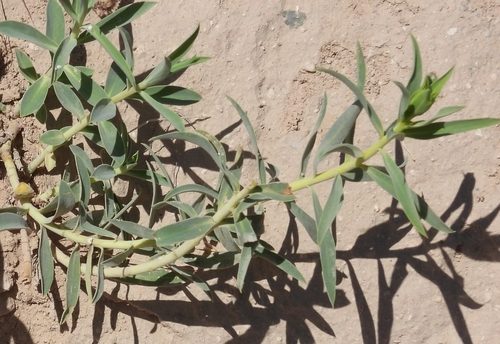
Euphorbia macroclada
A very common spurge of Anatolian steppes and overgrazed pastures; its exposed nectar glands provide forage in spring and early summer.
- Nectar
- Medium
- Pollen
- Medium
- Flowering
- JanFebMarAprMayJunJulAugSepOctNovDec
- Height
- 0.3-0.6 m
- Life cycle
- Perennial
🐝 Add to my apiary
Log in to add it to your apiary.Value for beekeeping
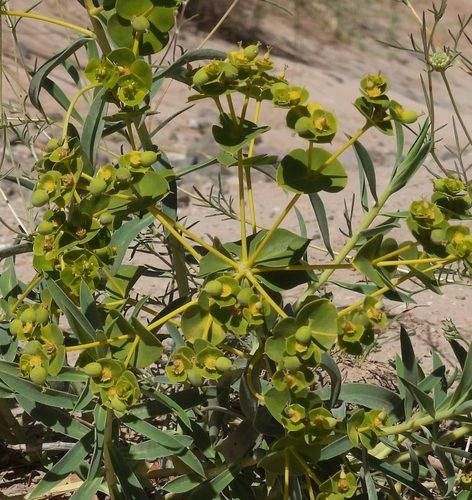
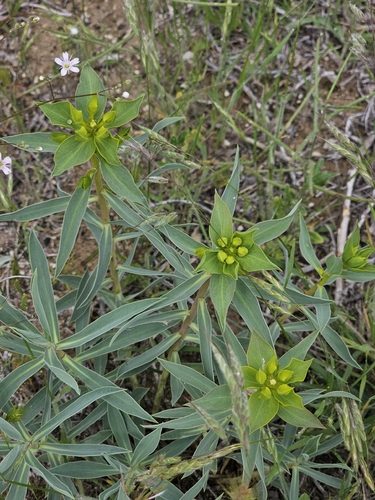
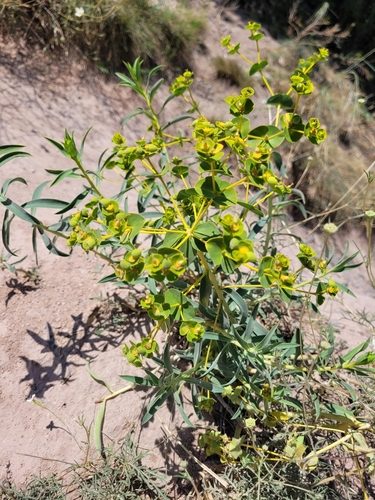
Euphorbia macroclada is a perennial with yellowish-green flower clusters, very common on the steppes of Central and Eastern Anatolia, along roadsides and on overgrazed pastures. Because livestock do not eat it on account of its poisonous latex, it covers large areas on degraded pastures. The glands in the flower clusters secrete nectar in the open, and bees visit them.
Flowering
It flowers from April to July, for periods that vary with altitude.
Honey and pollen
It is not known as a separate honey; its nectar may go into steppe and mountain honeys. Pollen is collected too.
Warning
The plant's milky sap (latex) irritates skin and eyes. In Morocco, honey from other spurge species is known for its burning taste in the throat; there are no detailed data on honey from this species.
Note for the beekeeper
The values in this entry are based on limited sources and should be confirmed by local observation.