

Ferulago galbanifera
Perennial yellow-umbelled umbellifer of dry grasslands and steppe slopes; its open nectaries feed many insects, including honey bees, in early summer.
- Nectar
- Medium
- Pollen
- Medium
- Flowering
- JanFebMarAprMayJunJulAugSepOctNovDec
- Height
- 0.6-1.5 m
- Life cycle
- Perennial
🐝 Add to my apiary
Log in to add it to your apiary.Value for beekeeping
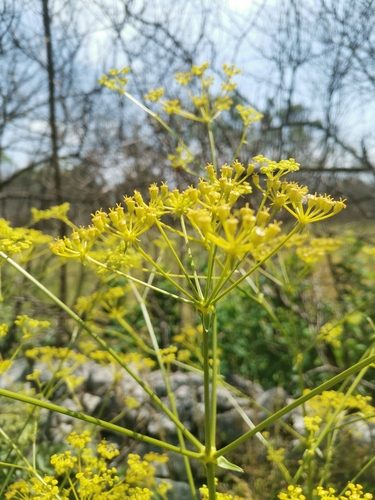
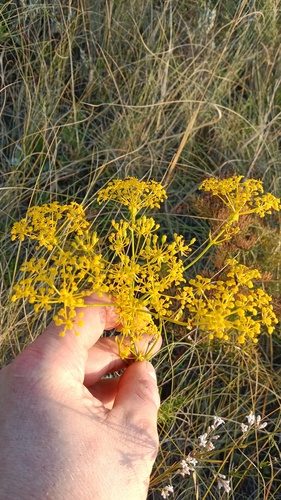
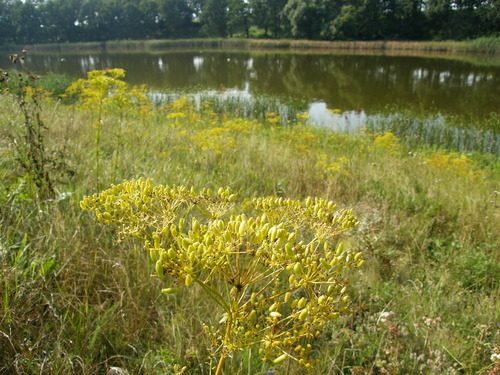
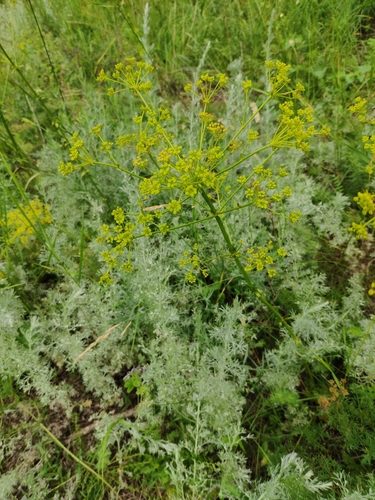
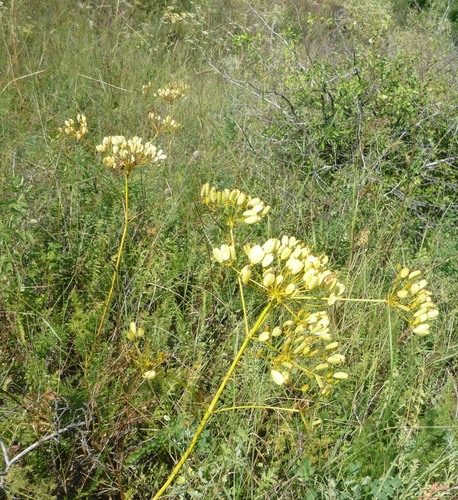
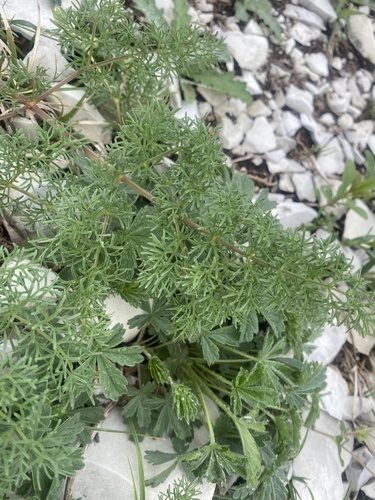
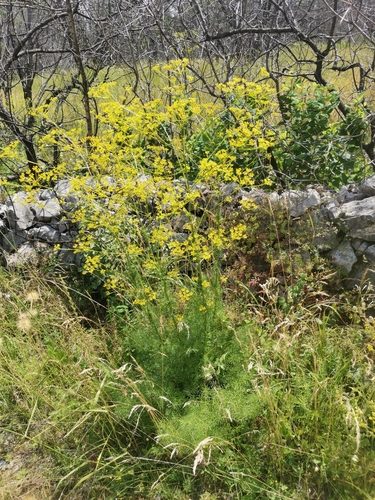
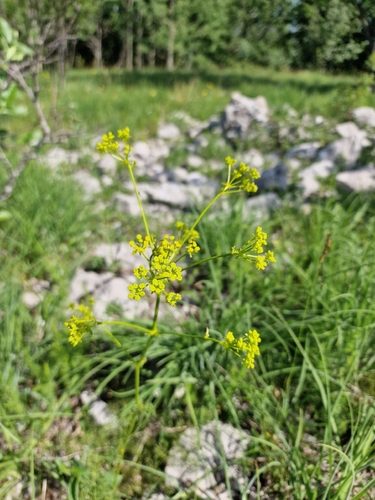
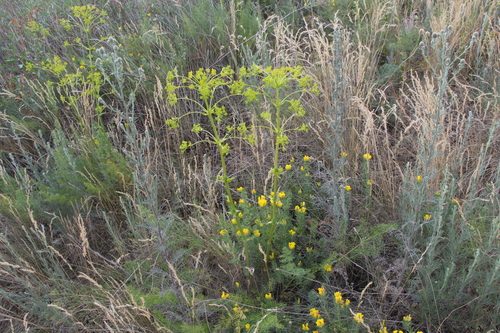
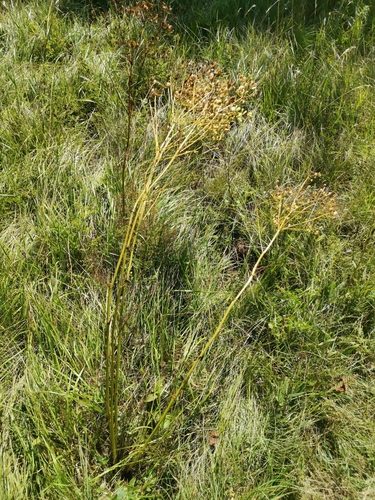
This Ferulago species is a perennial umbellifer with finely divided leaves that grows in dry meadows, on steppe slopes and along the edges of open oak woods in the Balkans, the area north of the Black Sea and Thrace. Its yellow flowers are gathered in large compound umbels. As in most umbellifers, the nectar lies on the exposed disc in the centre of the flower, so it is easily collected by flies, beetles and honey bees.
Flowering
It flowers for about 3–4 weeks in June–July.
Honey and pollen
It has no honey of its own; it contributes to early-summer steppe and meadow honeys. Pollen is also collected.
Note for the beekeeper
The naming of the species is confused; some sources list it as Ferulago campestris. In Turkey many species of the genus Ferulago are known as çakşır and are visited by bees in the same way on the highland pastures. Since there are no figures on this species for beekeeping, the assessment rests on general information at genus level.