

Sea-buckthorn
Wind-pollinated, nectarless thorny shrub; male plants offer early pollen in March–April before leafing, and fruit set does not depend on bees.
- Nectar
- None
- Pollen
- Medium
- Flowering
- JanFebMarAprMayJunJulAugSepOctNovDec
- Height
- 1-6 m
- Life cycle
- Perennial
🐝 Add to my apiary
Log in to add it to your apiary.Value for beekeeping
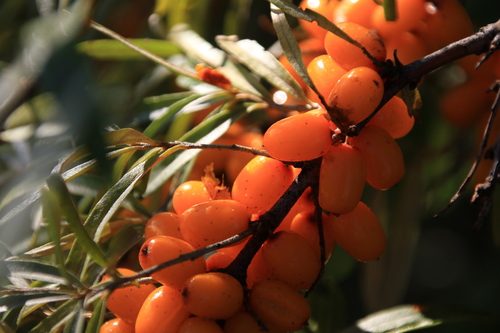
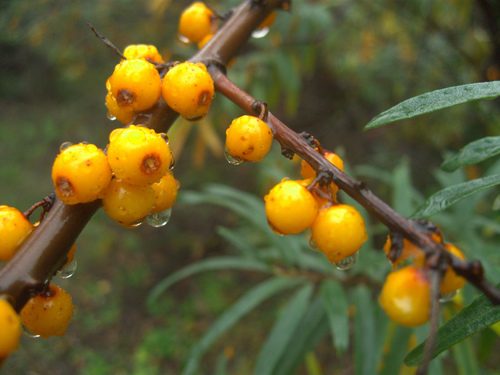
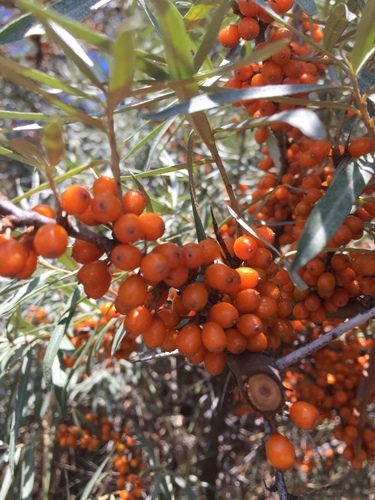
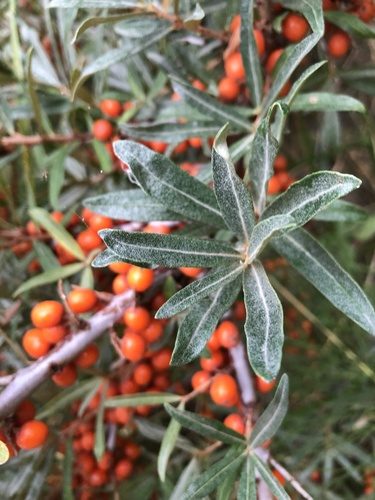
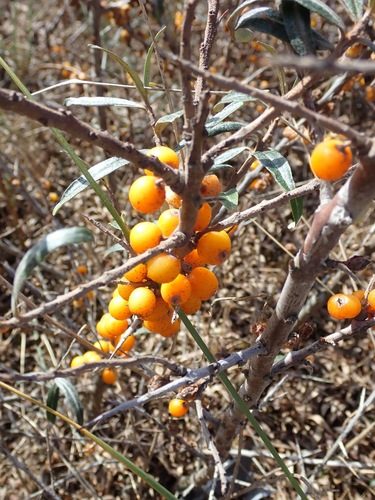
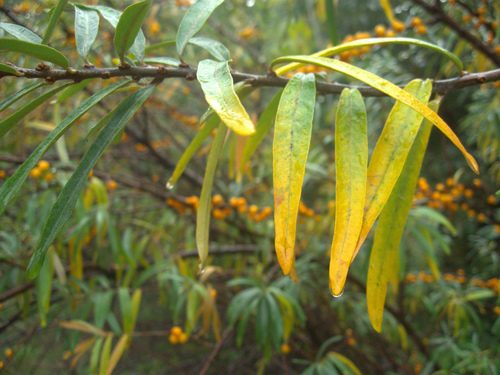
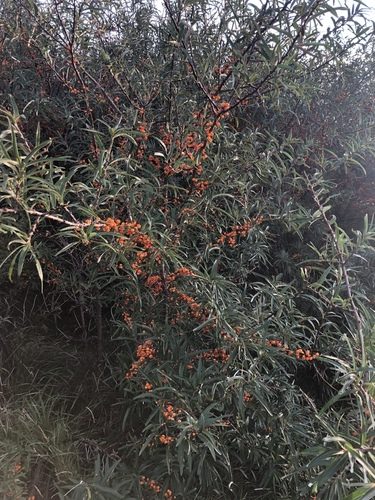
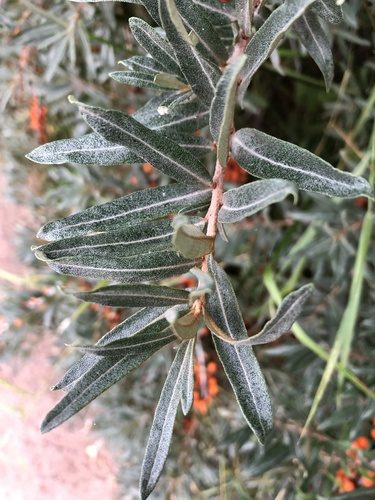
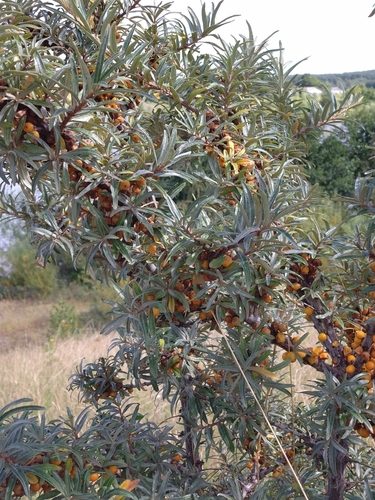
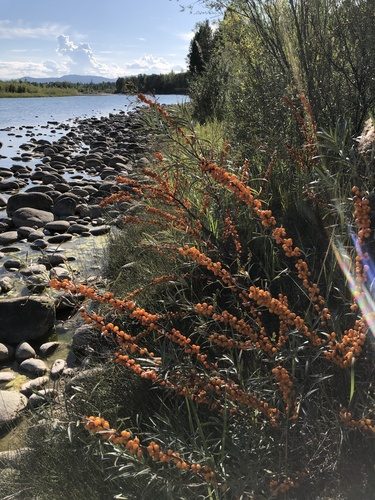
Sea-buckthorn is a thorny, silver-leaved species that forms dense thickets on dunes, gravelly stream beds and mountain foothills. In Turkey it occurs naturally above all along the rivers of northeastern Anatolia, and it is also planted in orchards for its fruit. It is dioecious and wind-pollinated; its flowers have no nectar.
Flowering
In March–April, before the leaves open, it bears small, inconspicuous flowers. Male plants shed plenty of pollen within a short time; bees make use of this pollen on mild days.
Honey and pollen
It is not a honey source. Its pollen value is moderate, and early in the year, together with willow and elm, it supplies colonies with their first protein.
Note for the beekeeper
In fruit orchards the yield depends on wind pollination, so there is no need to place hives for pollination services. Orchards usually have one male plant for every 6-8 female plants; it is these male plants that are valuable to the beekeeper.