

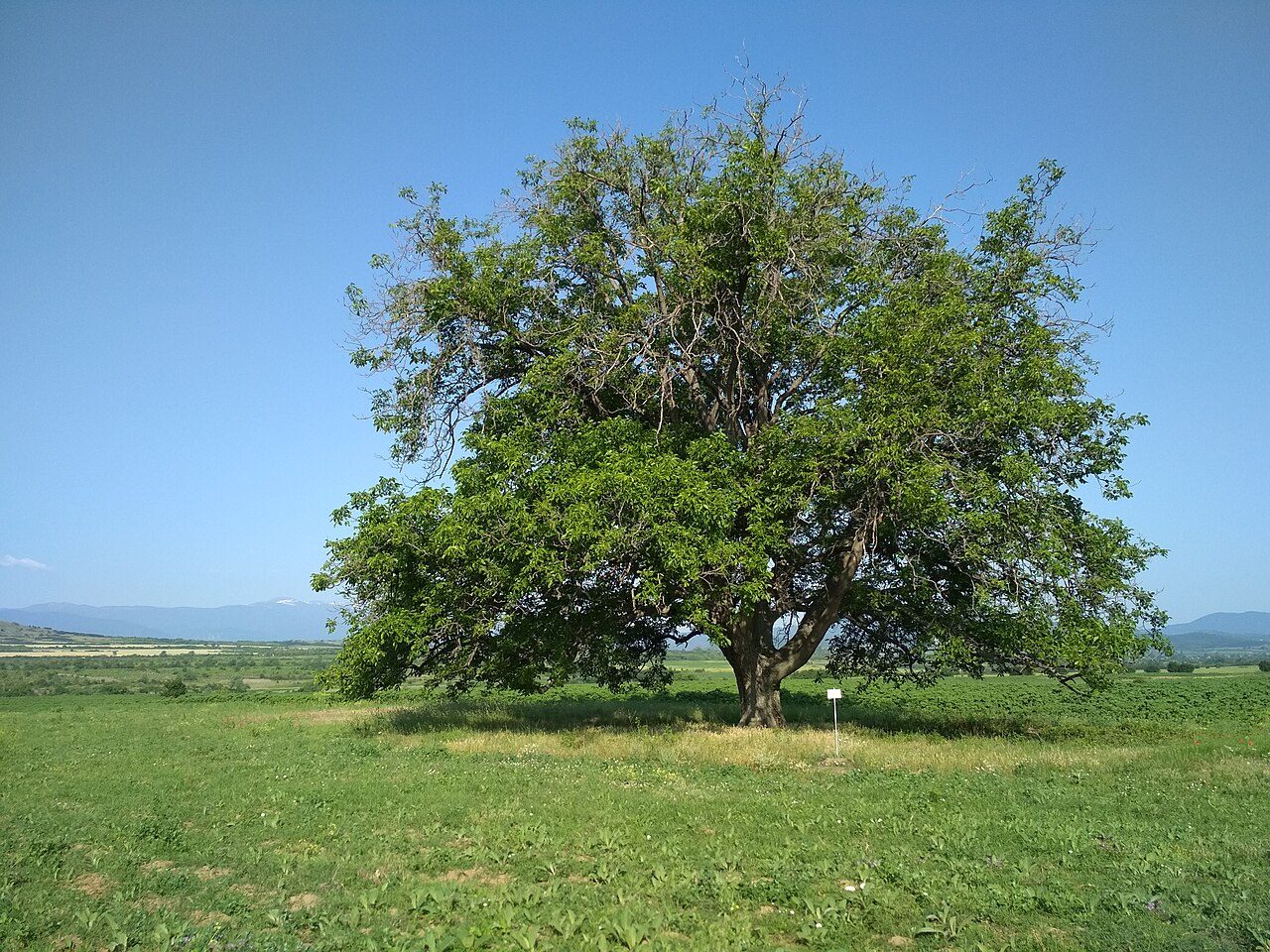
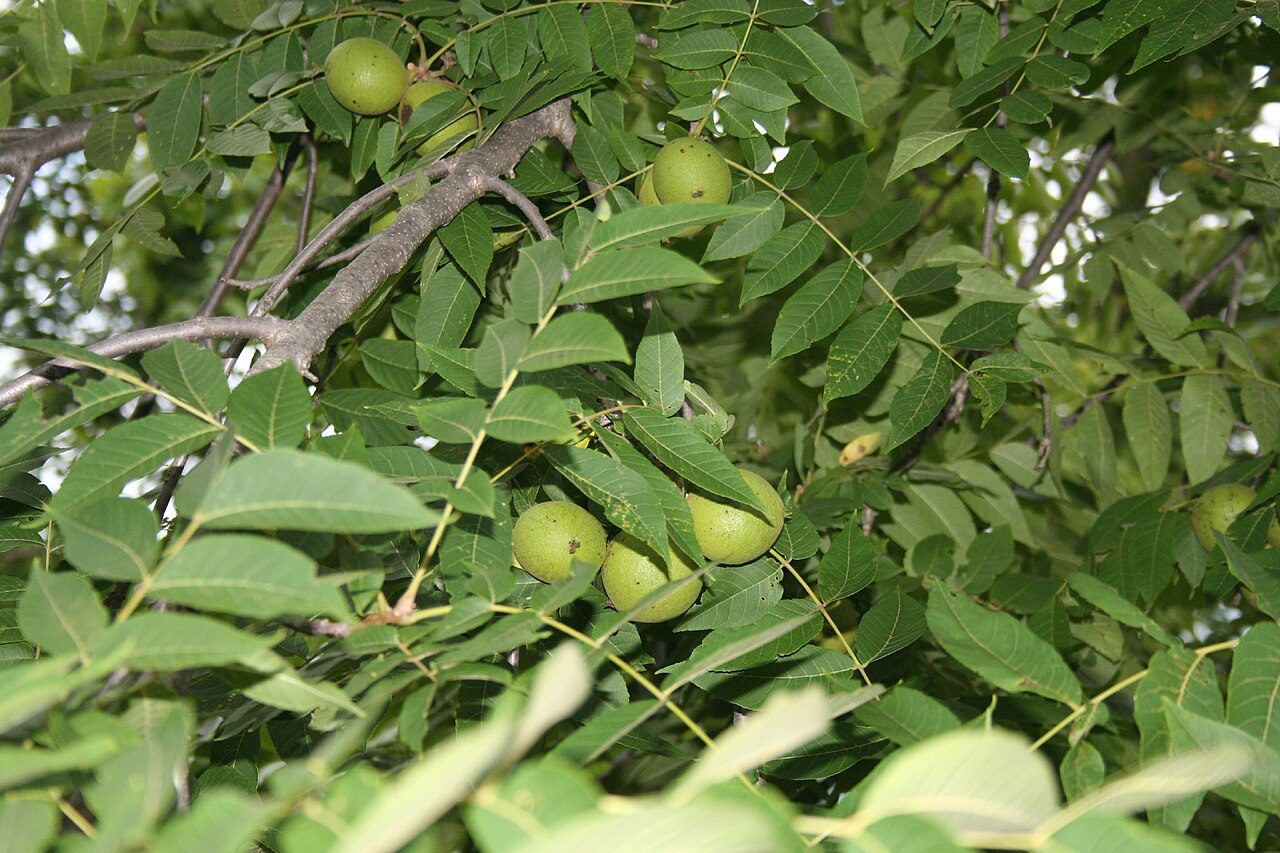
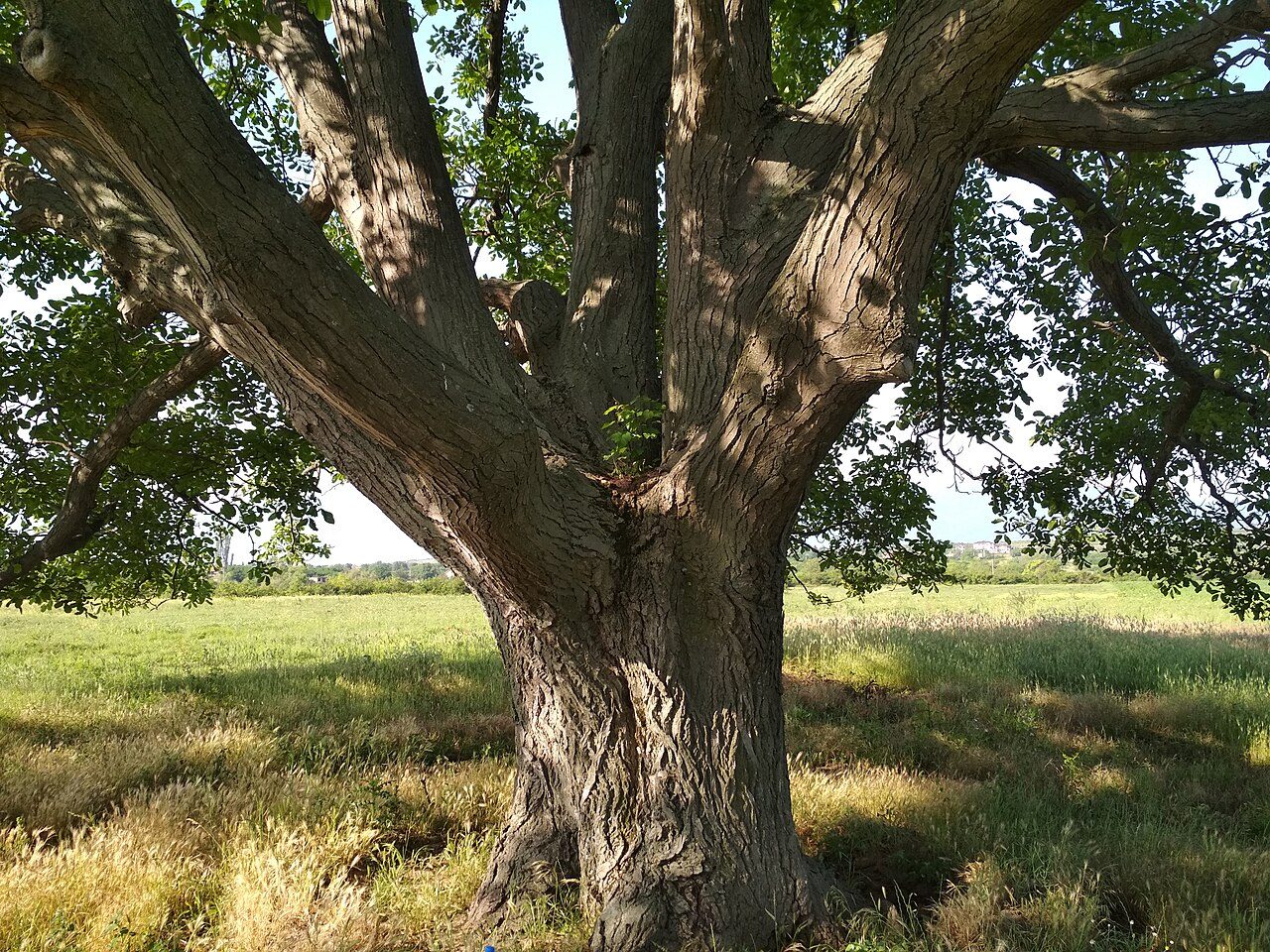
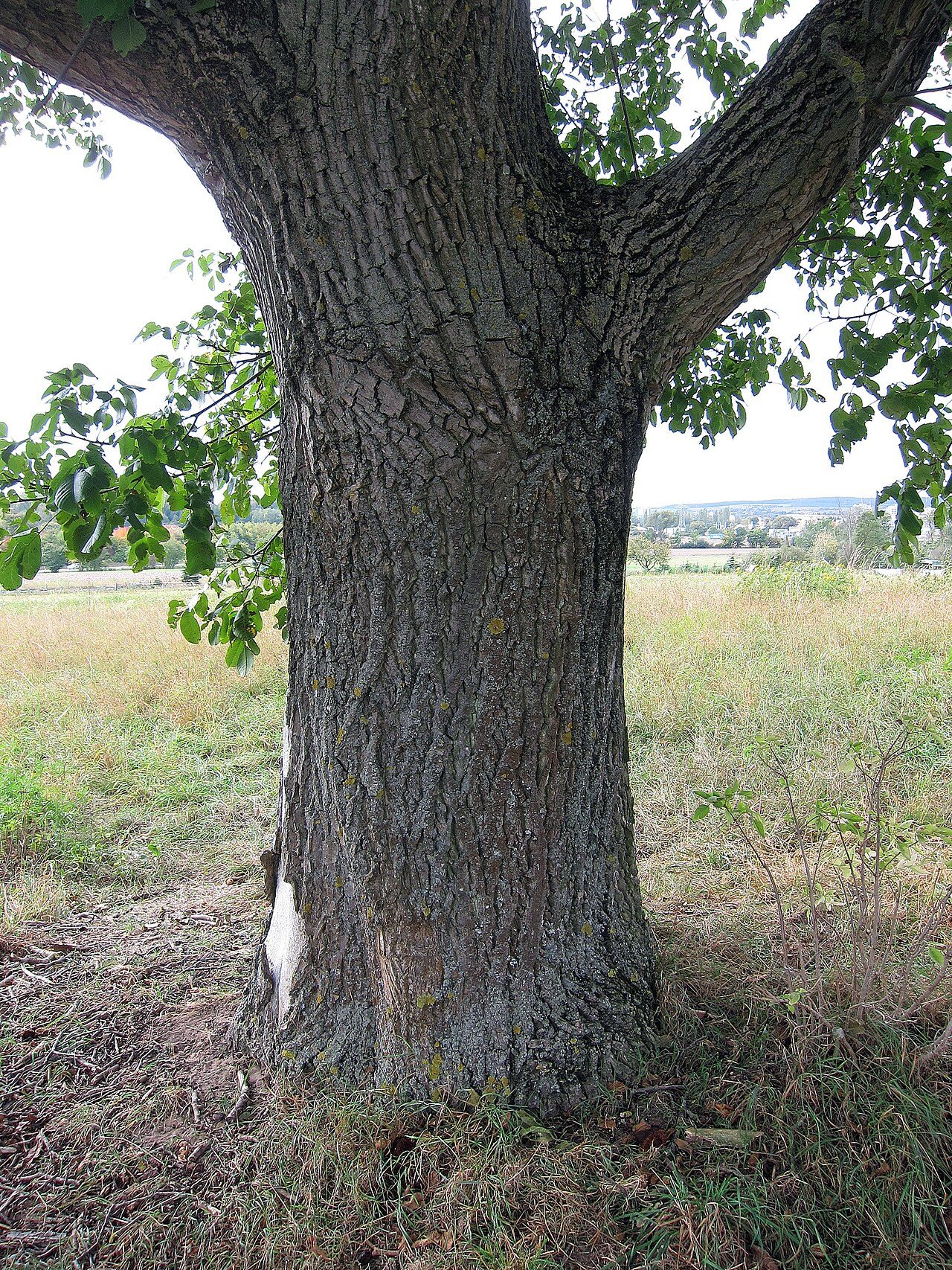
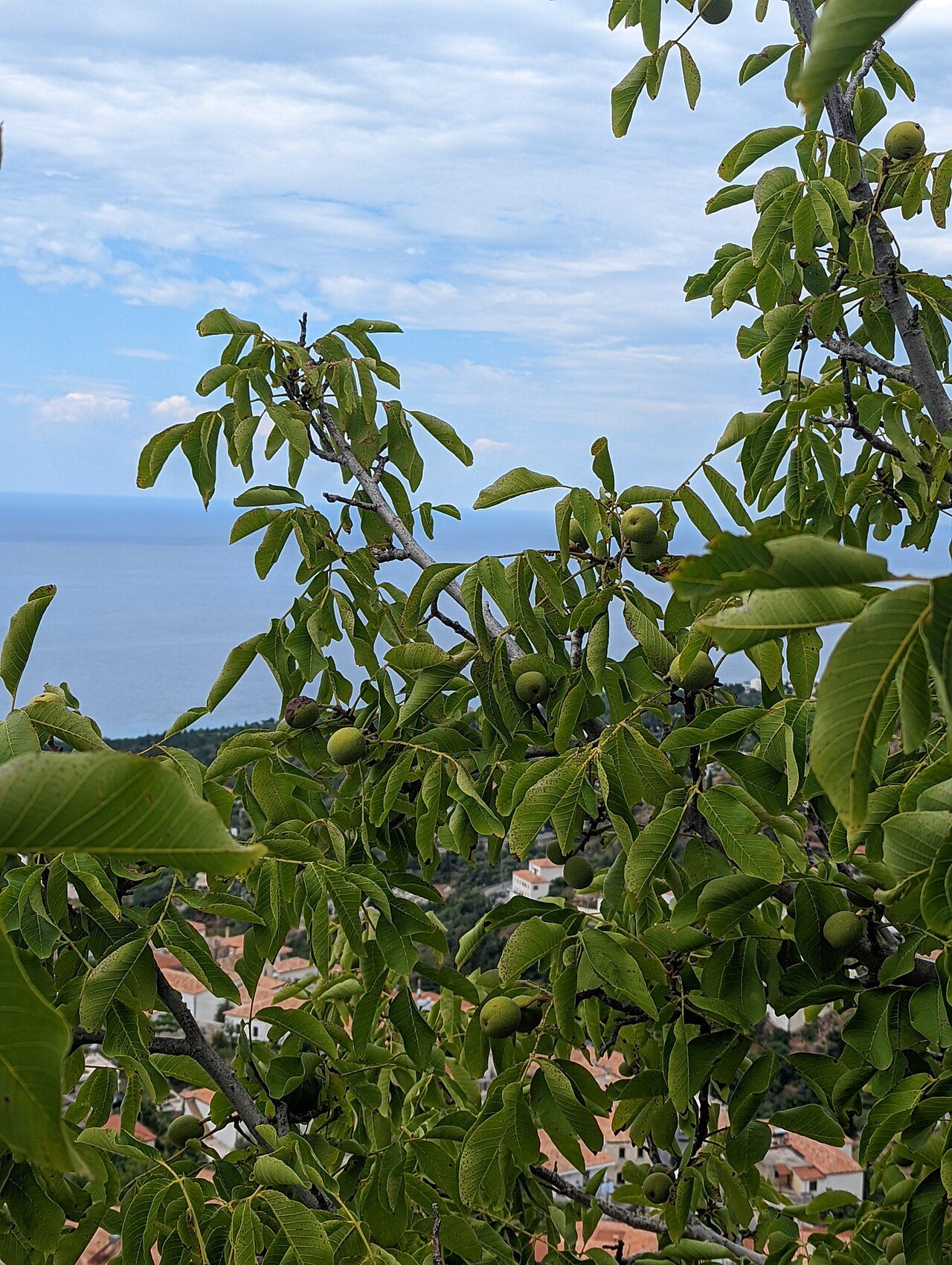
Common walnut
Wind-pollinated tree without nectar; it offers catkin pollen in spring and sometimes aphid honeydew in summer.
- Nectar
- None
- Pollen
- Medium
- Flowering
- JanFebMarAprMayJunJulAugSepOctNovDec
- Height
- 10-25 m
- Life cycle
- Perennial
🐝 Add to my apiary
Log in to add it to your apiary.Value for beekeeping
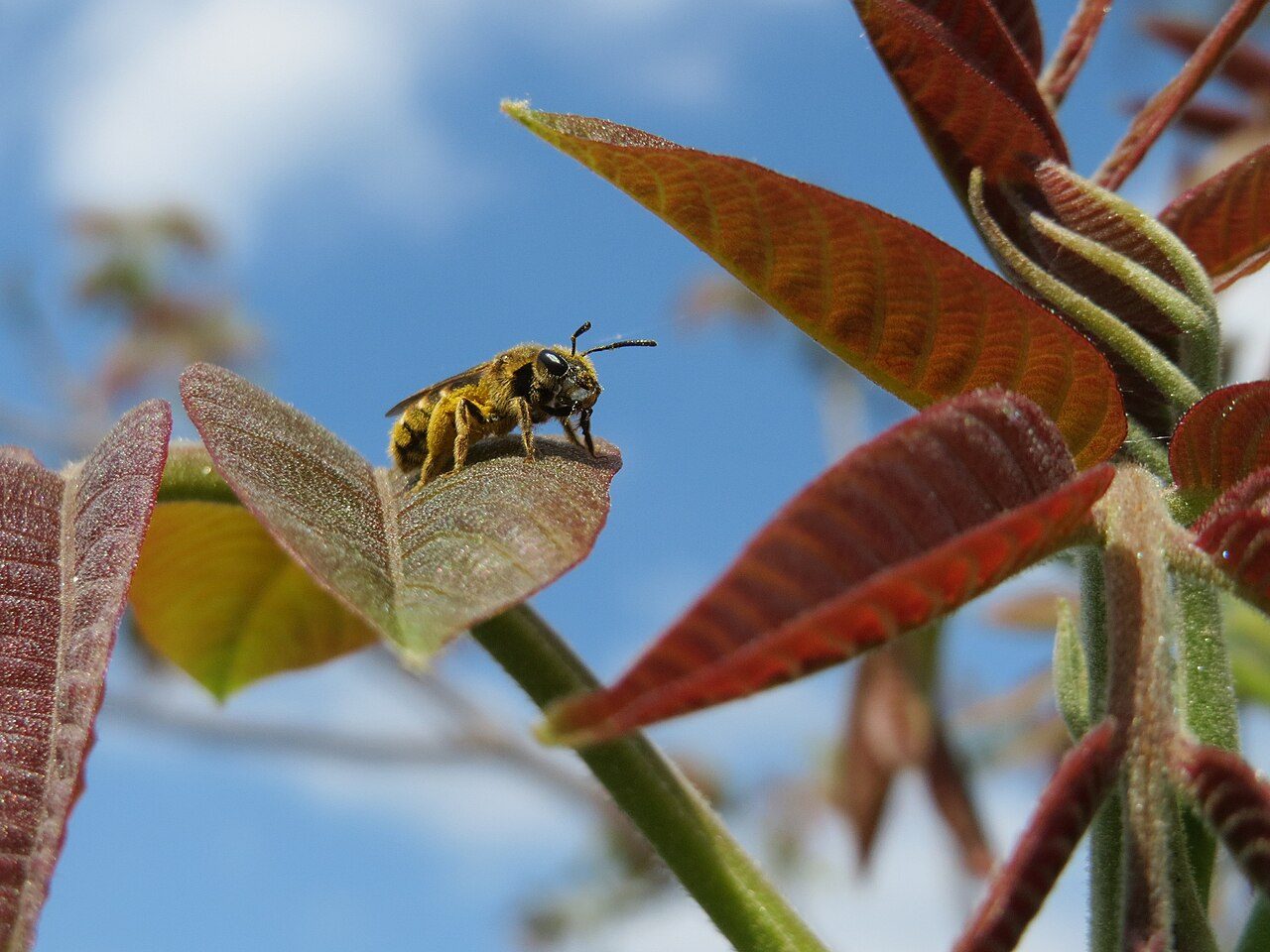
Walnut is wind-pollinated and gives no nectar. Its male catkins produce plenty of pollen, which bees collect especially when other sources are scarce. In summer, walnut aphids feeding on the leaves can leave honeydew, and bees collect this too.
Flowering
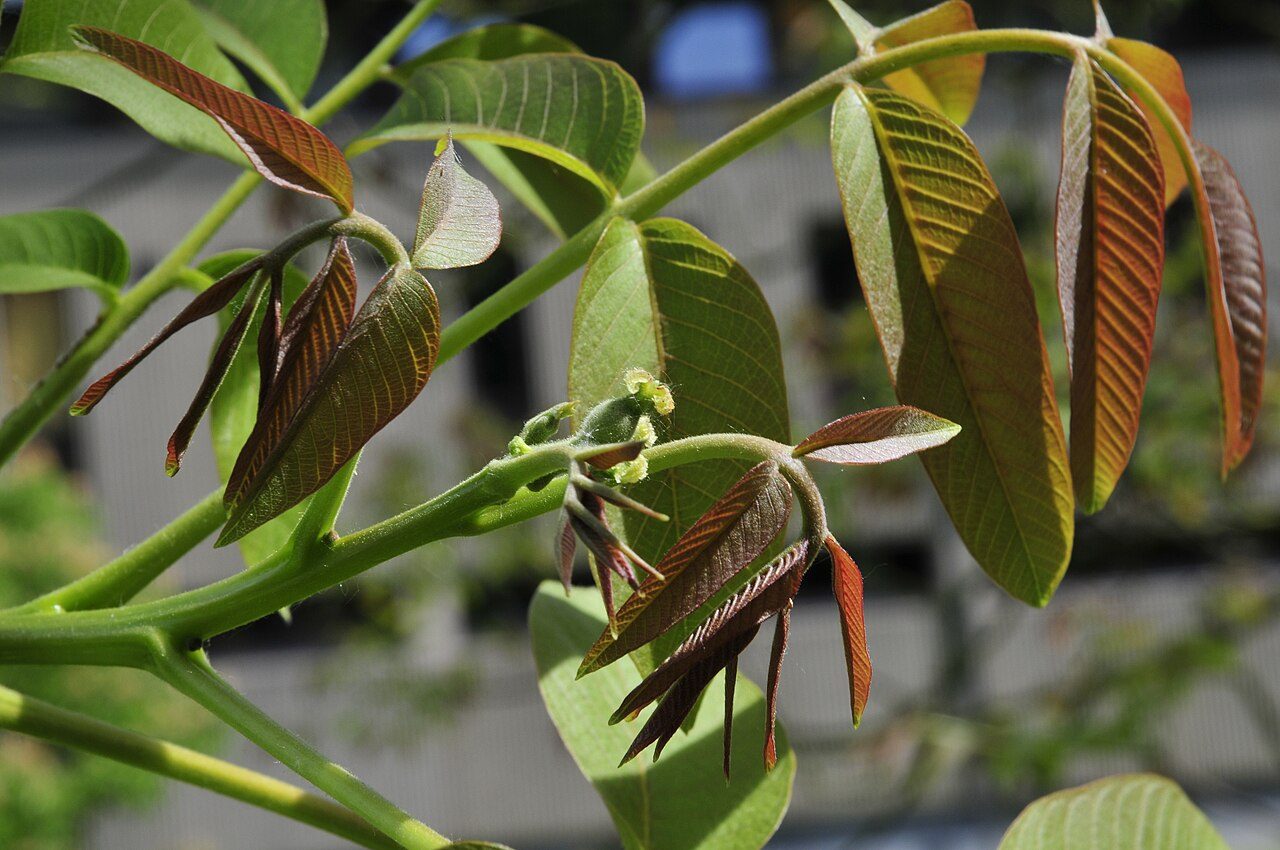
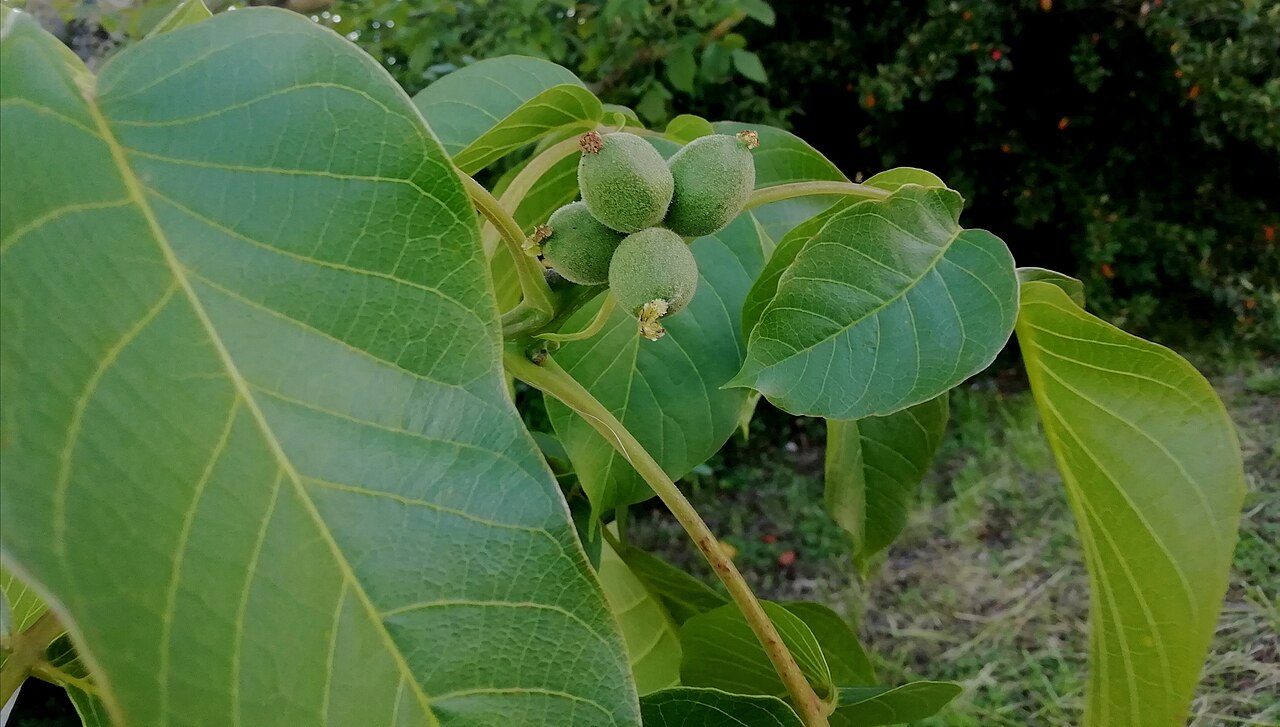
It flowers in April-May as the leaves unfold. Male and female flowers are on the same tree but in most varieties mature at different times, which is why pollinator varieties are used in orchards.
Honey and pollen
There is no separate walnut honey. Small amounts of aphid honeydew can go into summer honeys.
Note for the beekeeper
Walnut orchards are of low value as bee forage, but they provide pollen support in spring. Because walnut suppresses the vegetation beneath it with the juglone in its roots and leaves, bee plants grow poorly under walnut trees. In hot regions, placing hives in walnut shade can ease the midday summer heat.