

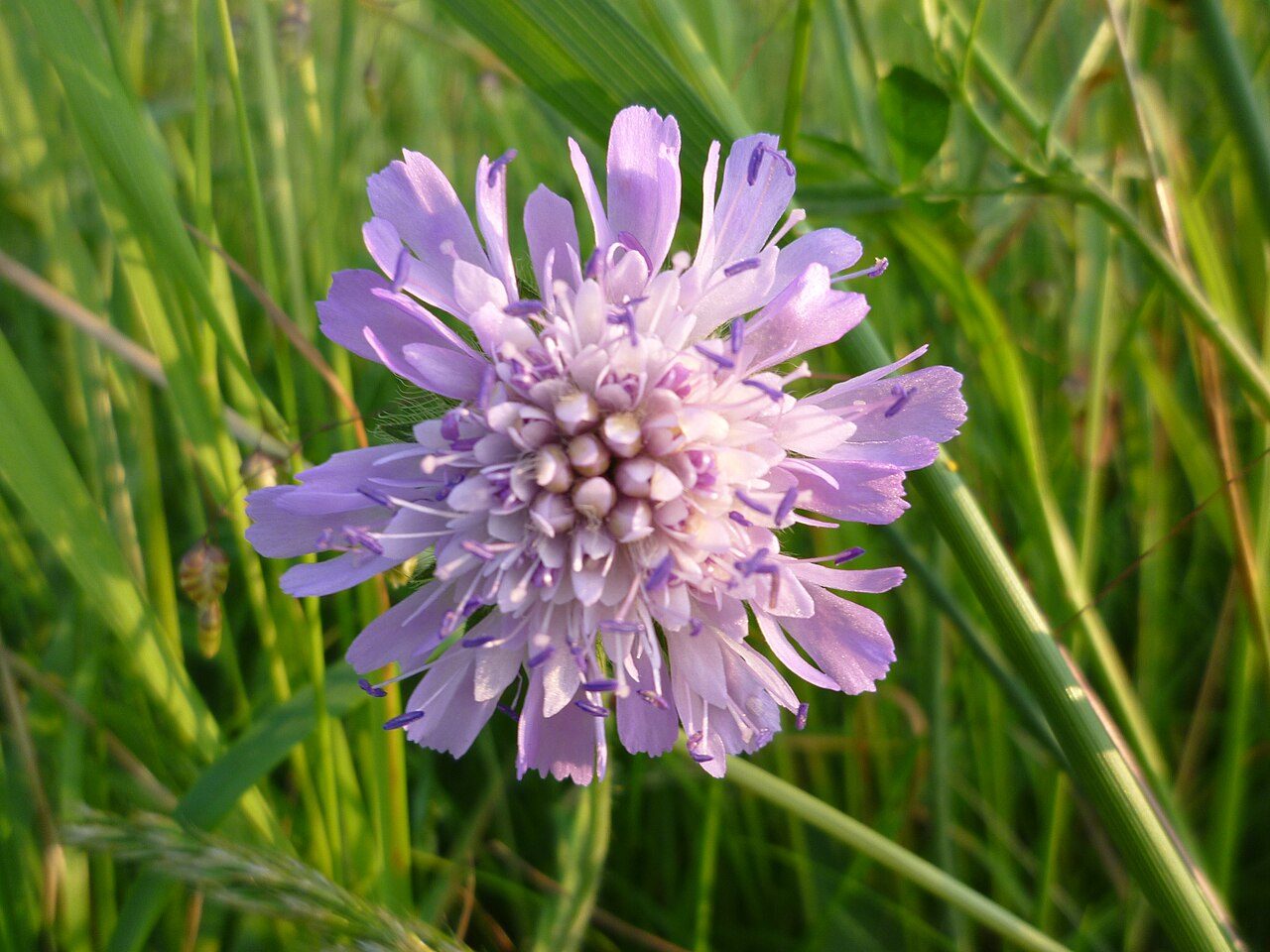
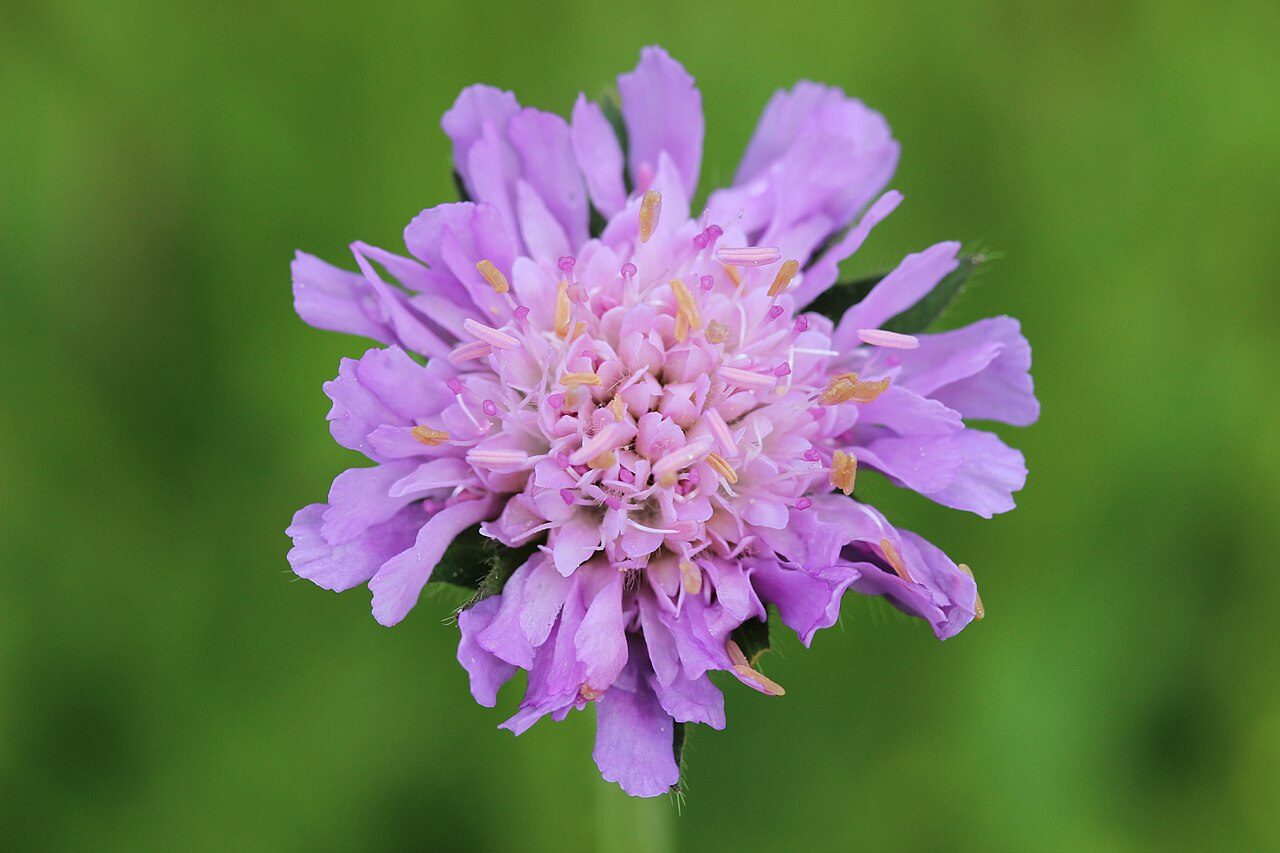
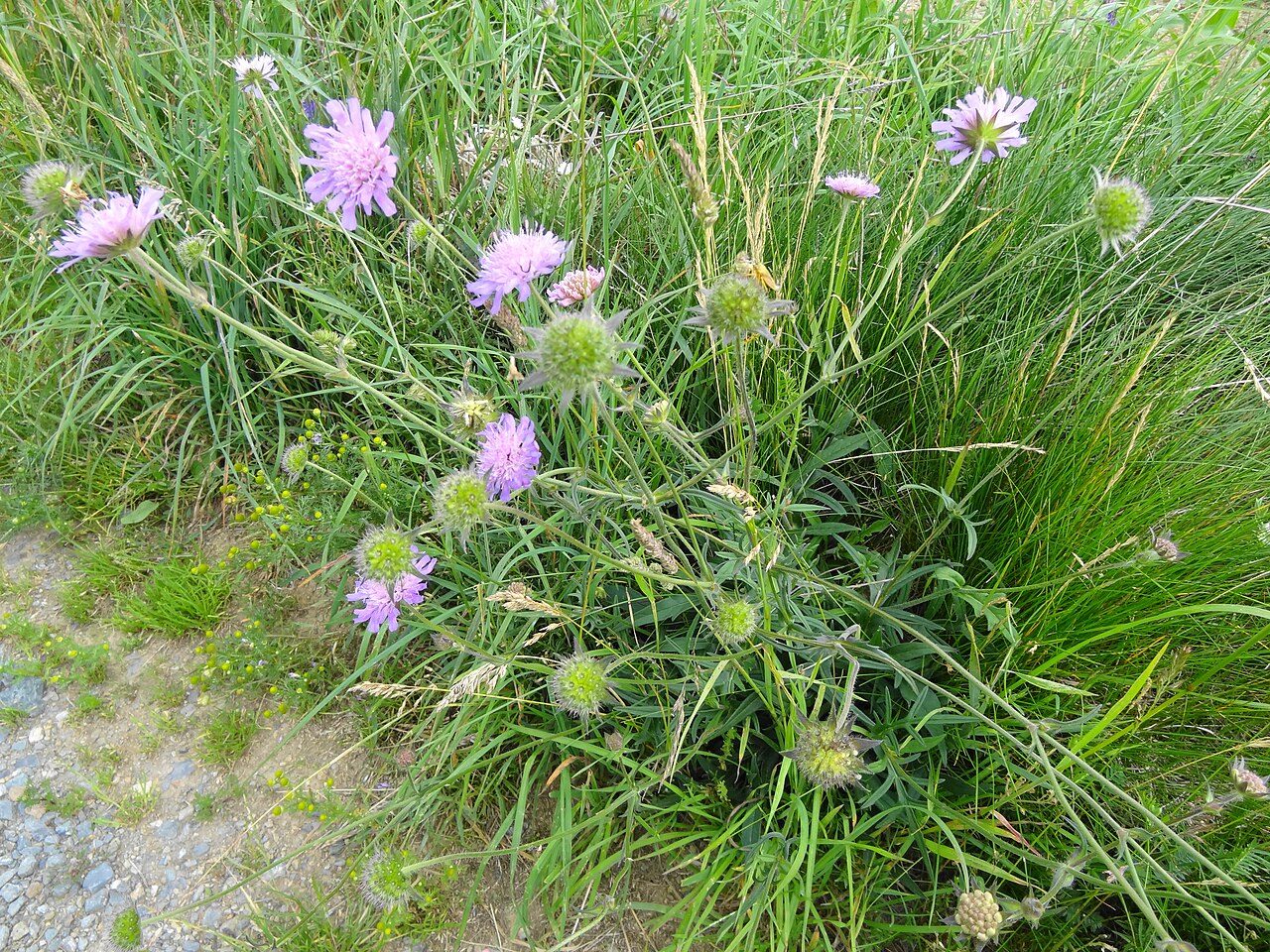
Field scabious
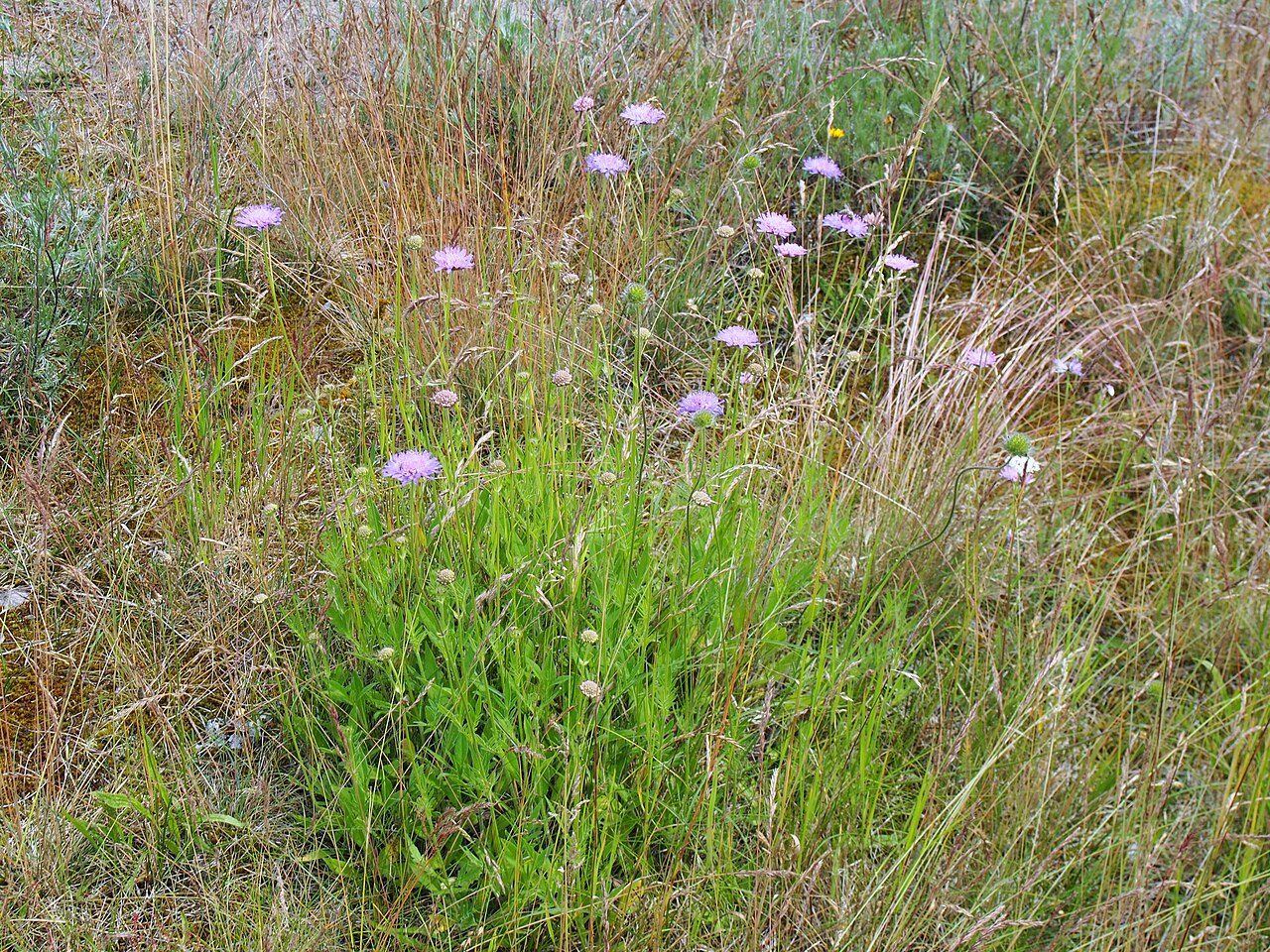
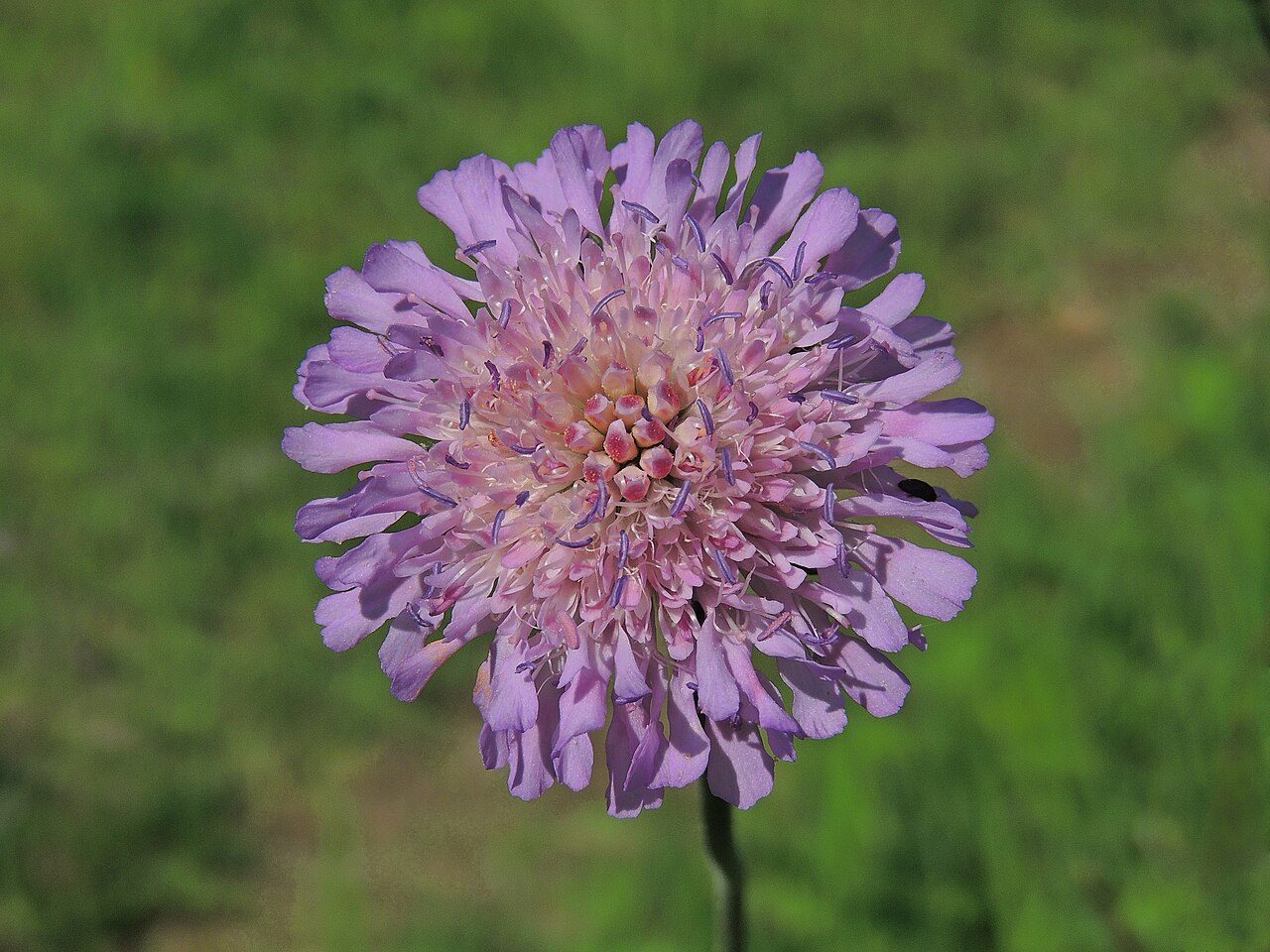
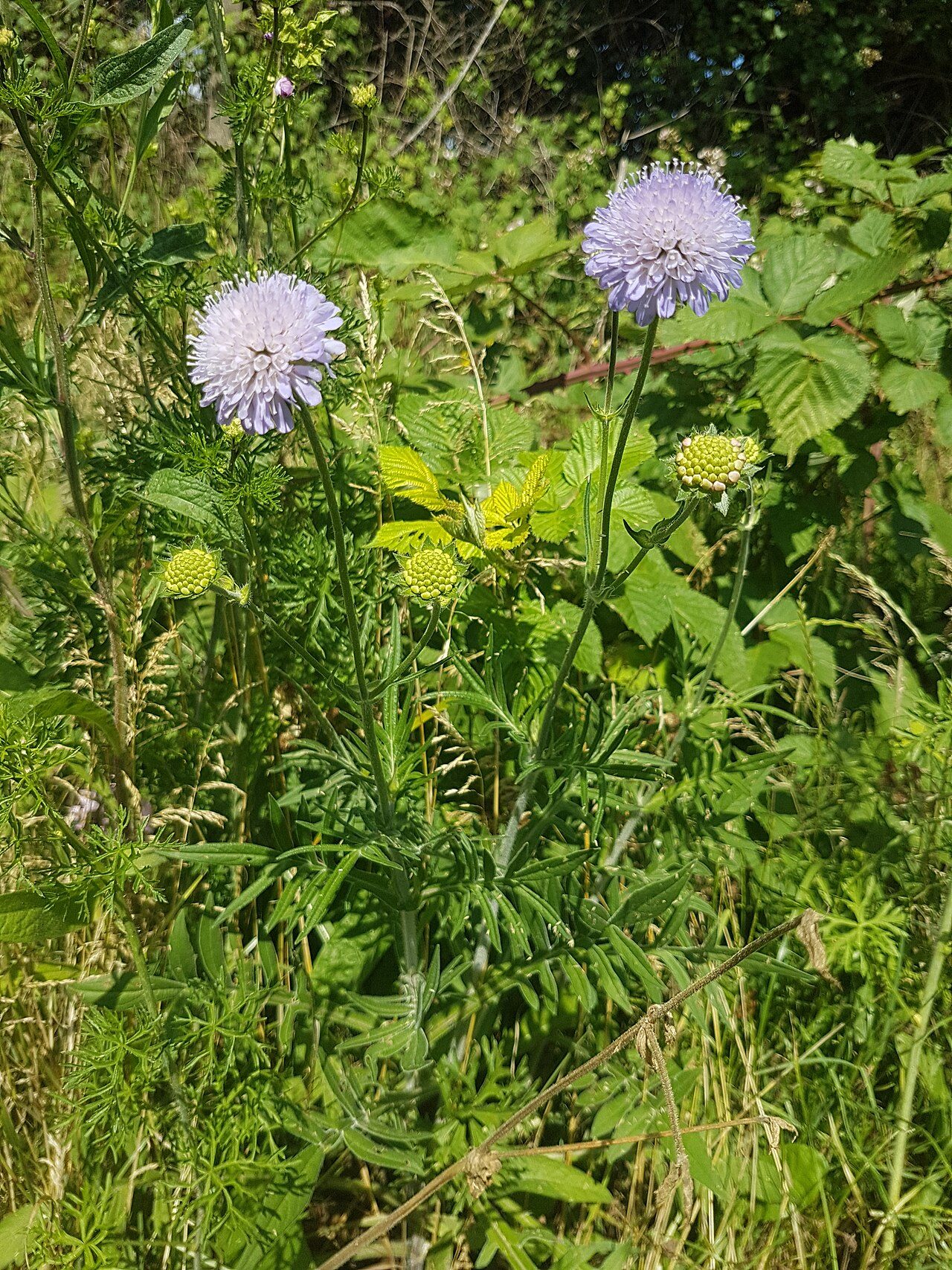
A long-flowering meadow perennial with lilac heads; it gives honey bees moderate nectar and pollen and is very important for wild bees.
- Nectar
- Medium
- Pollen
- Medium
- Flowering
- JanFebMarAprMayJunJulAugSepOctNovDec
- Pollen colour
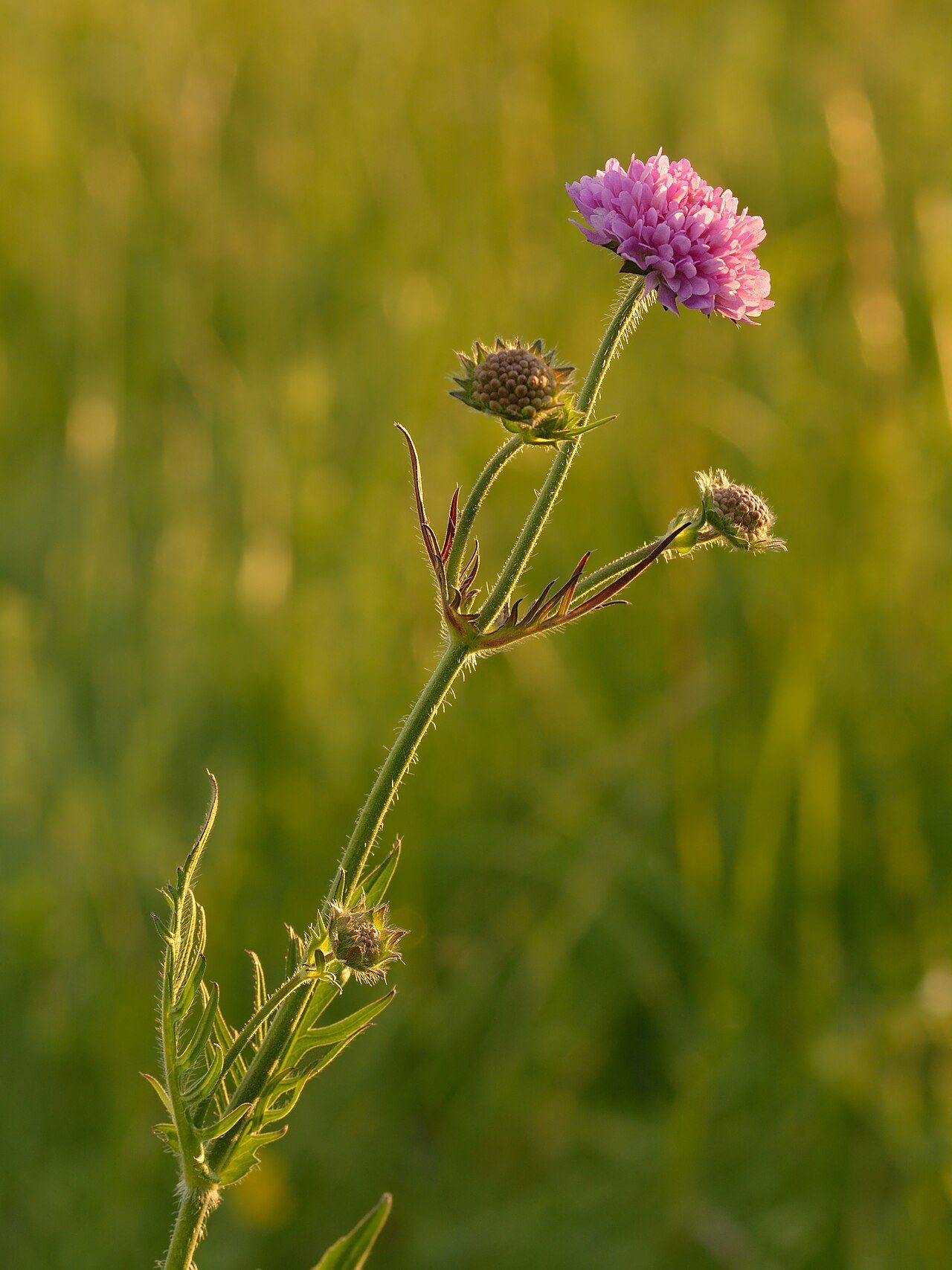
- Height
- 0,3-1 m
- Life cycle
- Perennial
🐝 Add to my apiary
Log in to add it to your apiary.Value for beekeeping
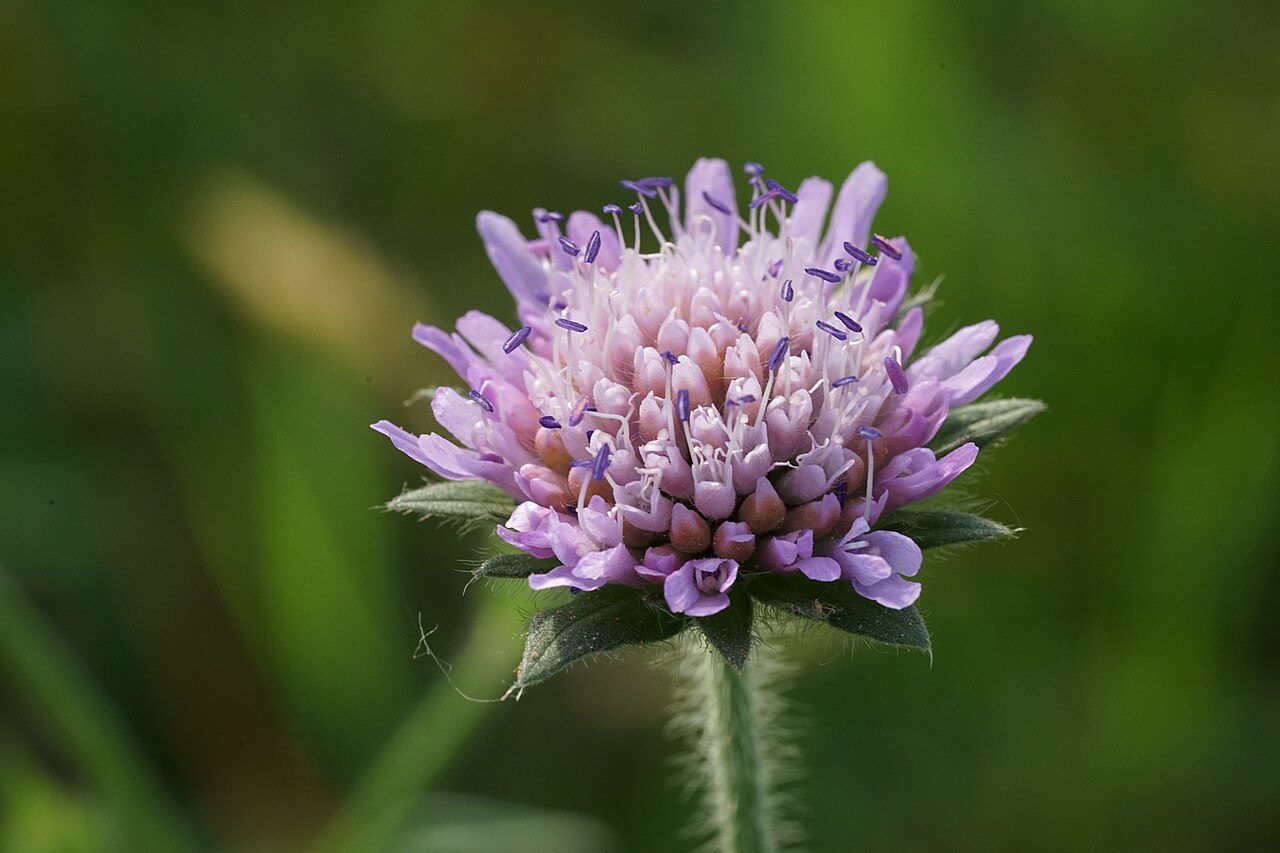
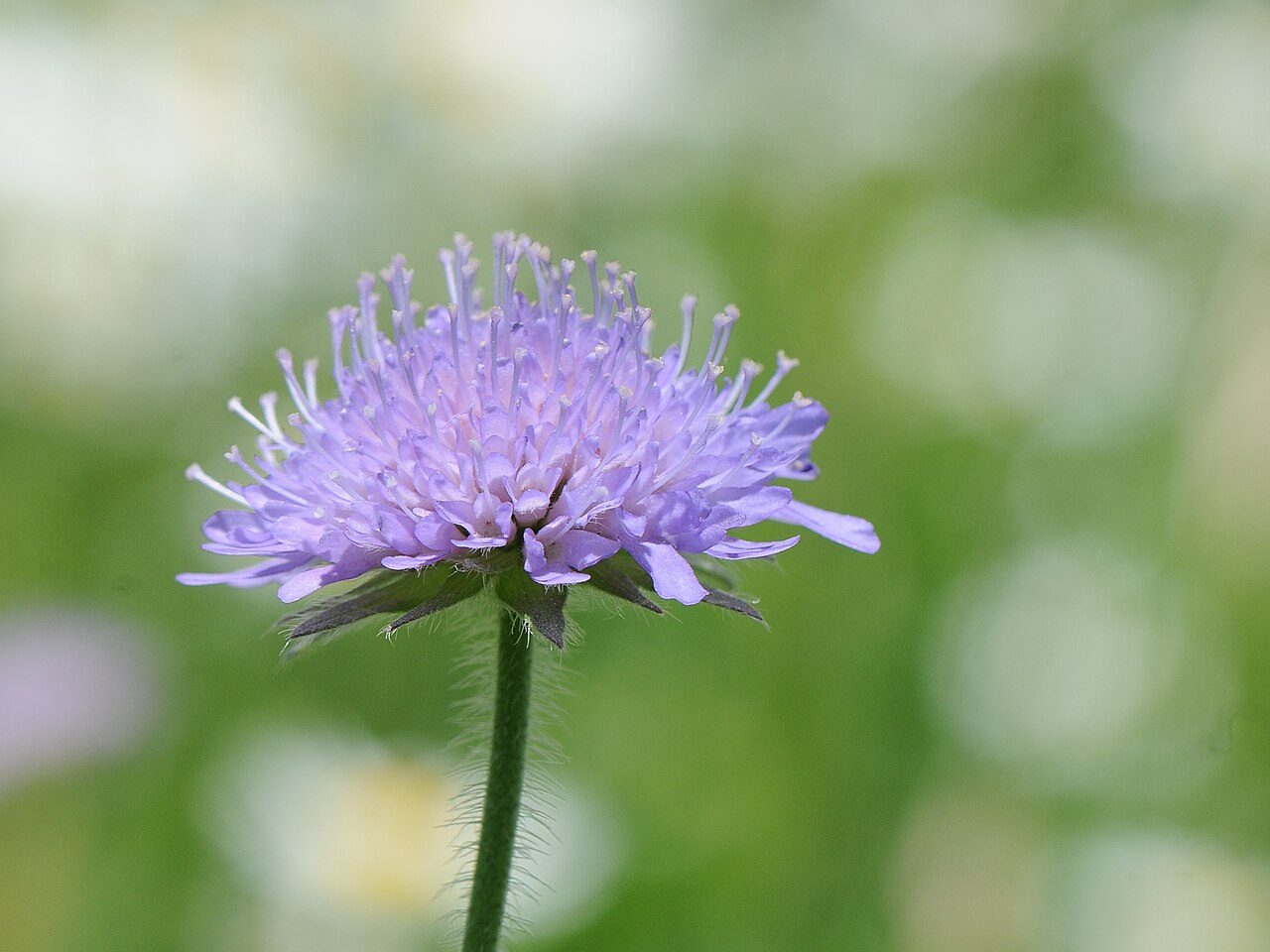
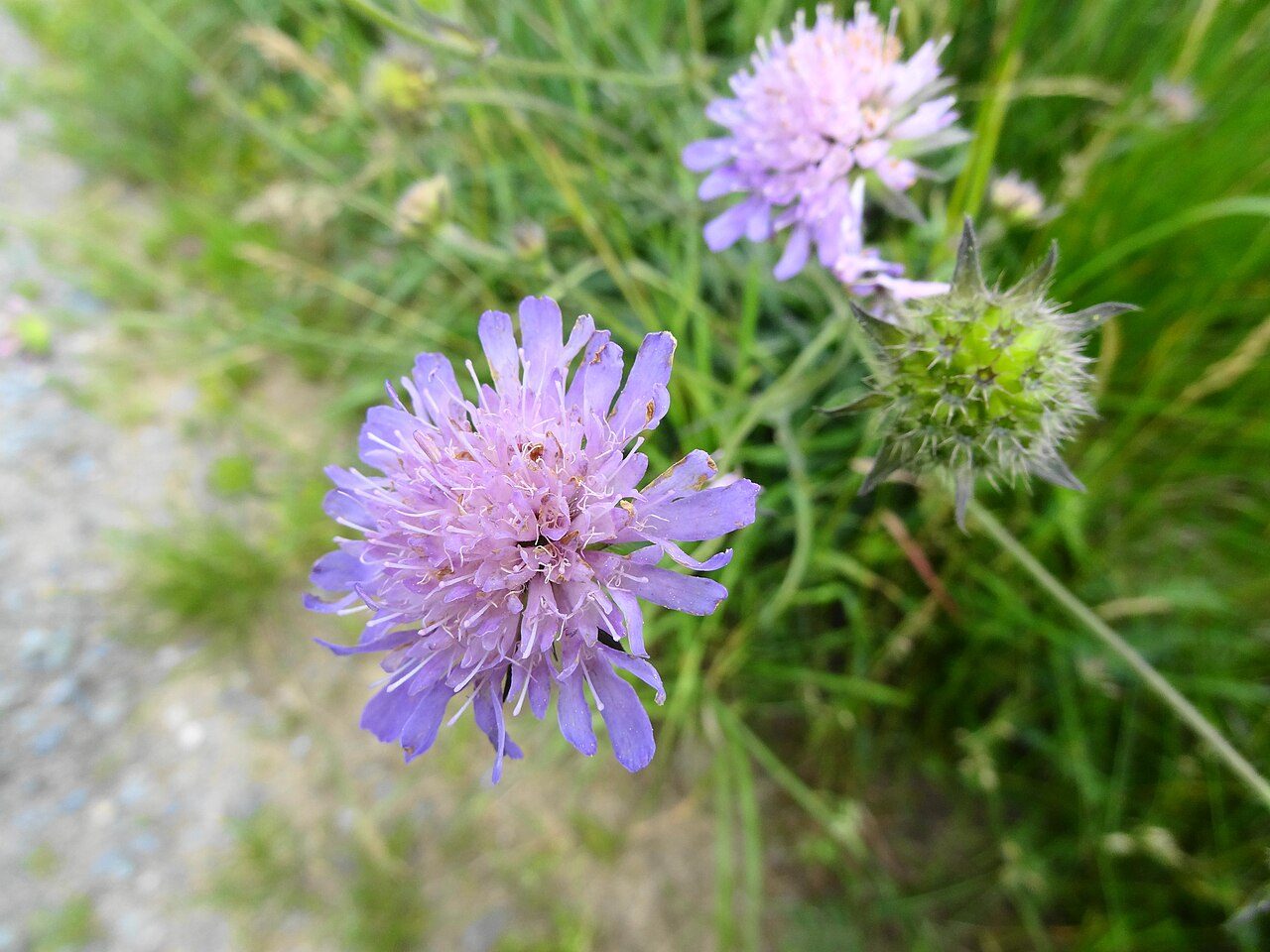
Field scabious is a typical plant of dry, calcareous meadows and roadside banks. Its flat, lilac-blue heads have open nectar and are visited by honey bees, bumblebees and butterflies. In Europe some wild bee species (e.g. Andrena hattorfiana) collect their pollen almost exclusively from this plant, which makes it important for nature conservation too.
Flowering
It starts in June and continues until September where it is not mown. Staying in flower in the second half of summer, after the spring flows are over, adds to its value.
Honey and pollen
The pollen loads are pinkish lilac and easy to recognise in bees that are mixing pollen. It gives no monofloral honey but contributes to summer meadow honey.
Note for the beekeeper
It disappears from meadows that are mown early and often. Leaving part of the meadow around the apiary uncut until the end of flowering benefits both honey bees and wild bees. It is easy to propagate from seed.