


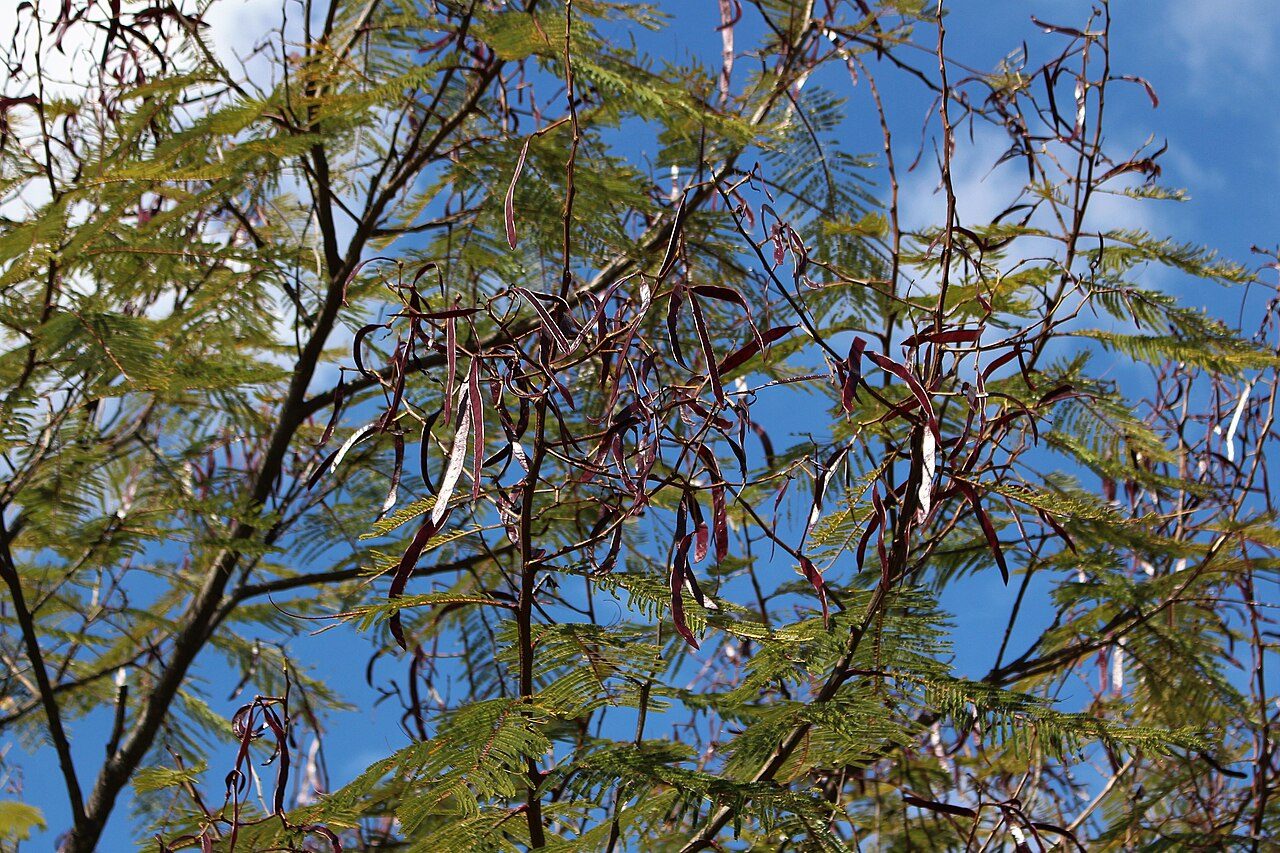
White leadtree
A fast-growing legume tree spread across the tropics; its white pompom flowers give bees plenty of pollen but little nectar, and it is widely invasive.
- Nectar
- Low
- Pollen
- Good
- Flowering
- Flowering time varies with region and rainfall.
- Height
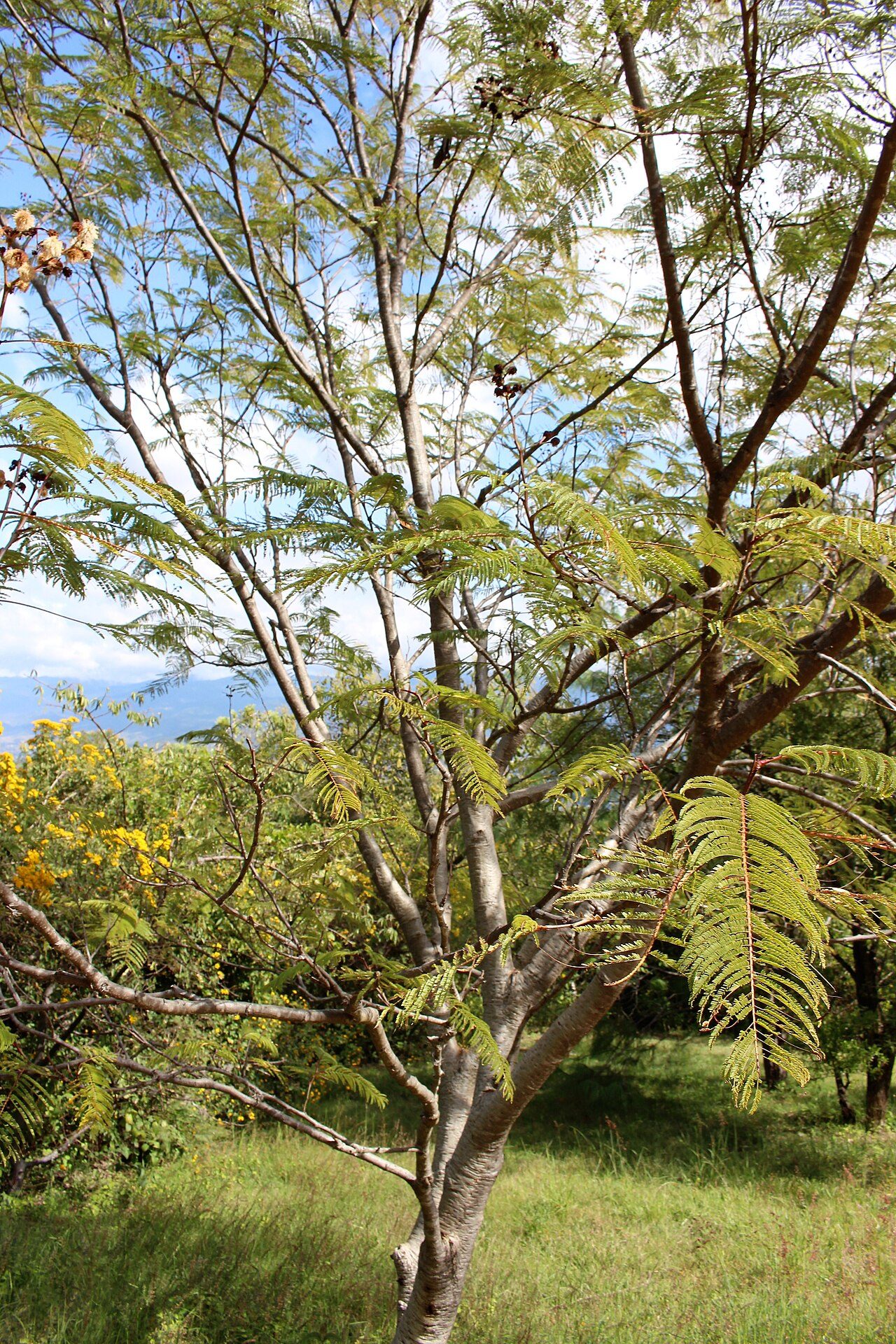
- 3-10 m
- Life cycle
- Perennial
🐝 Add to my apiary
Log in to add it to your apiary.Value for beekeeping
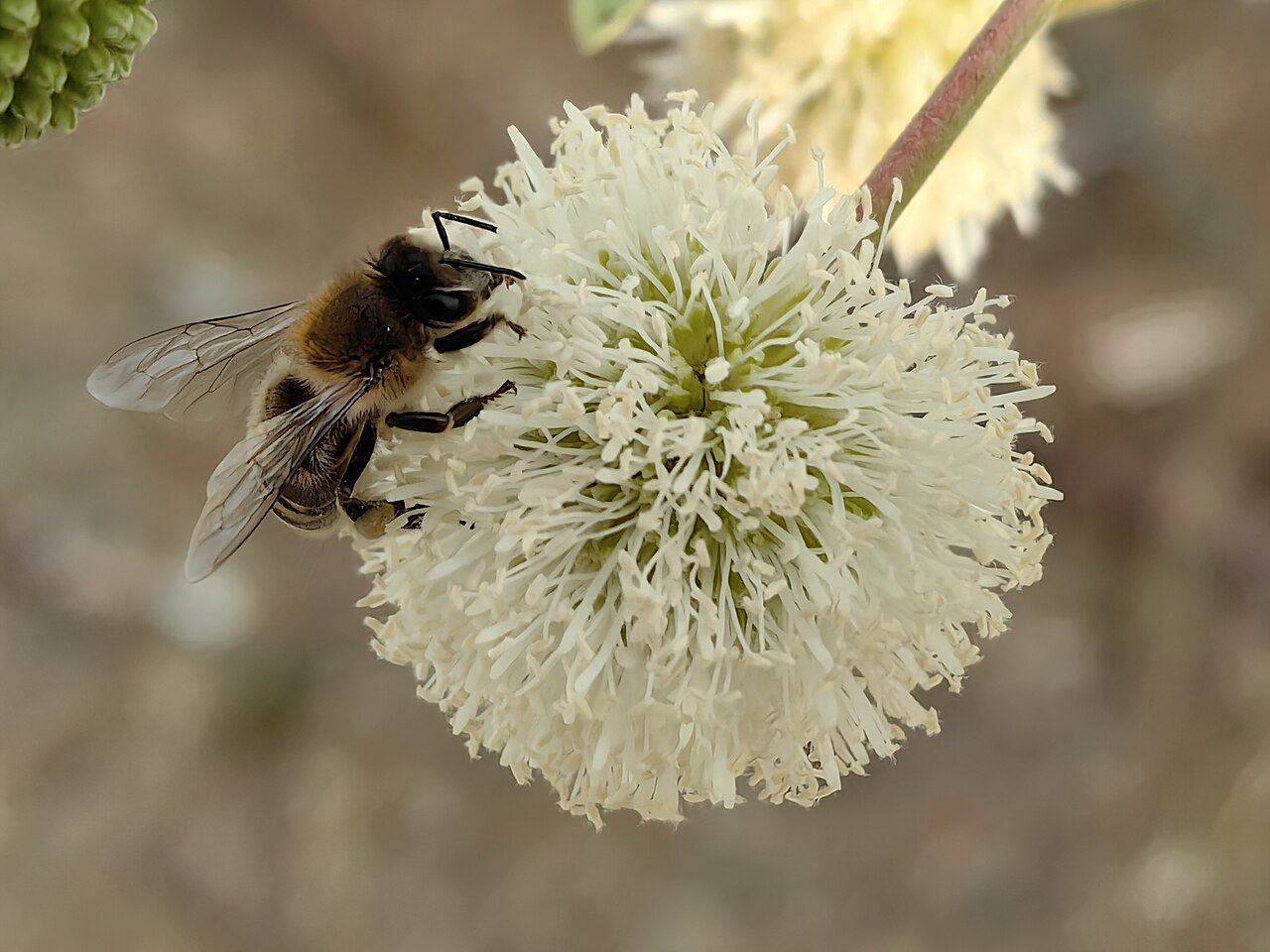
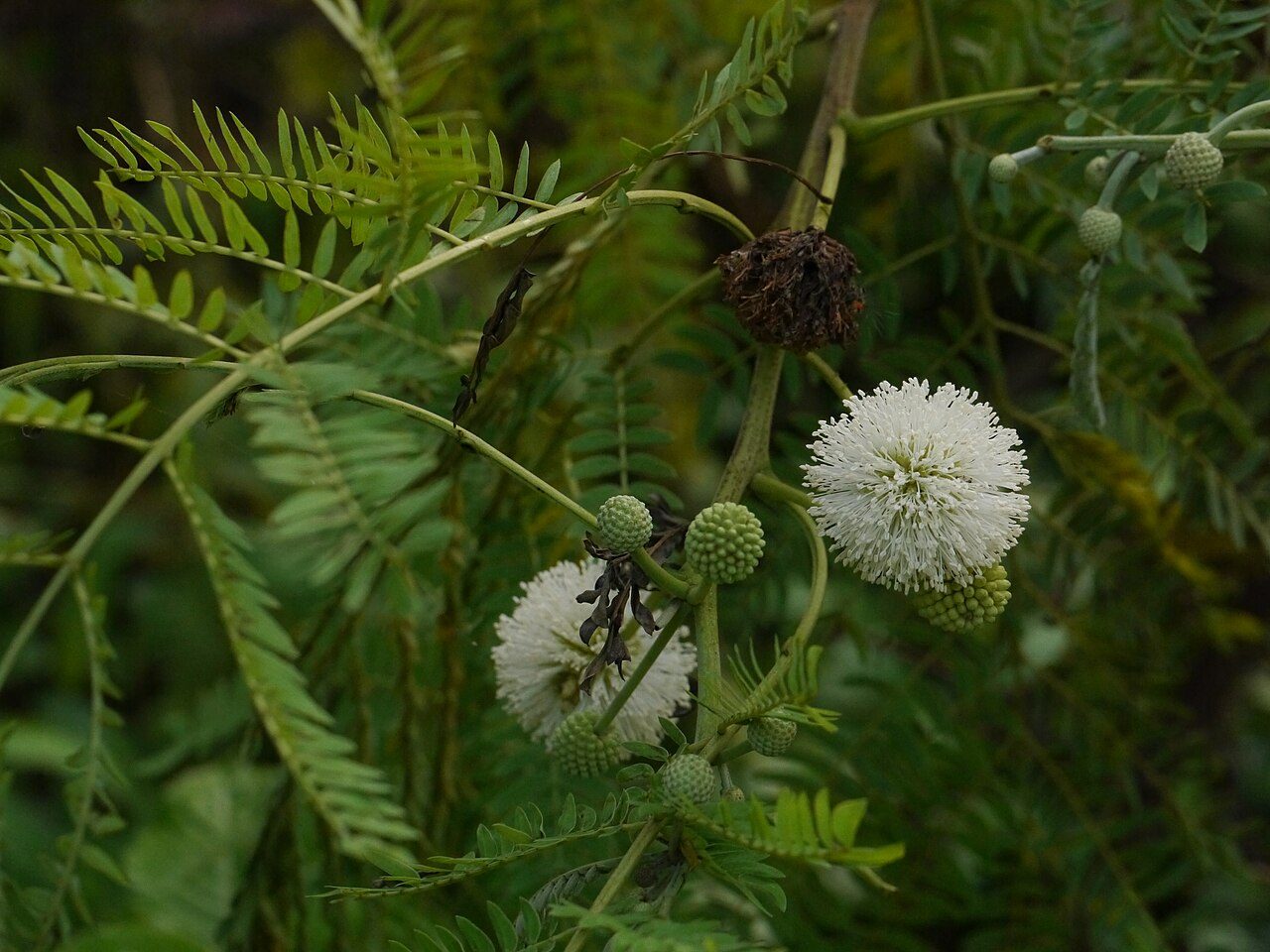
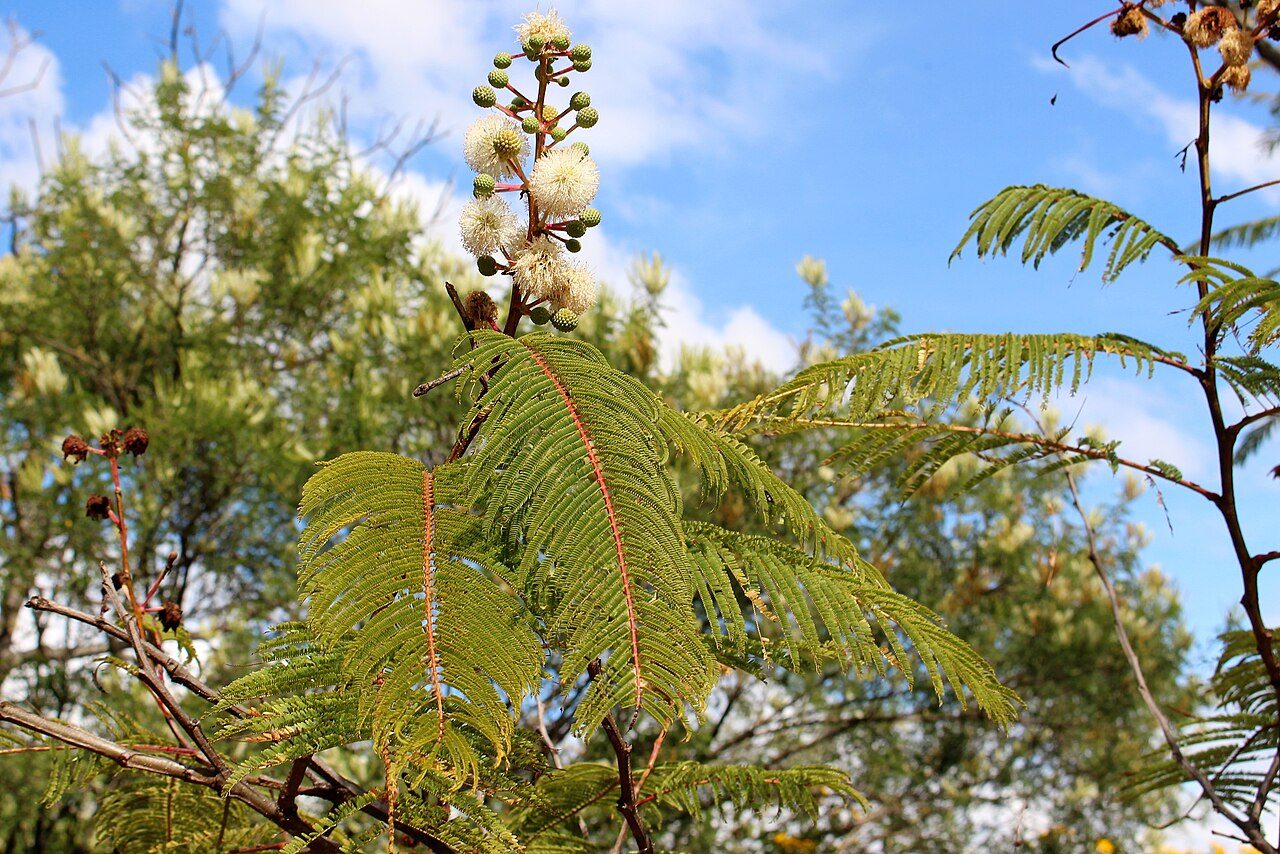
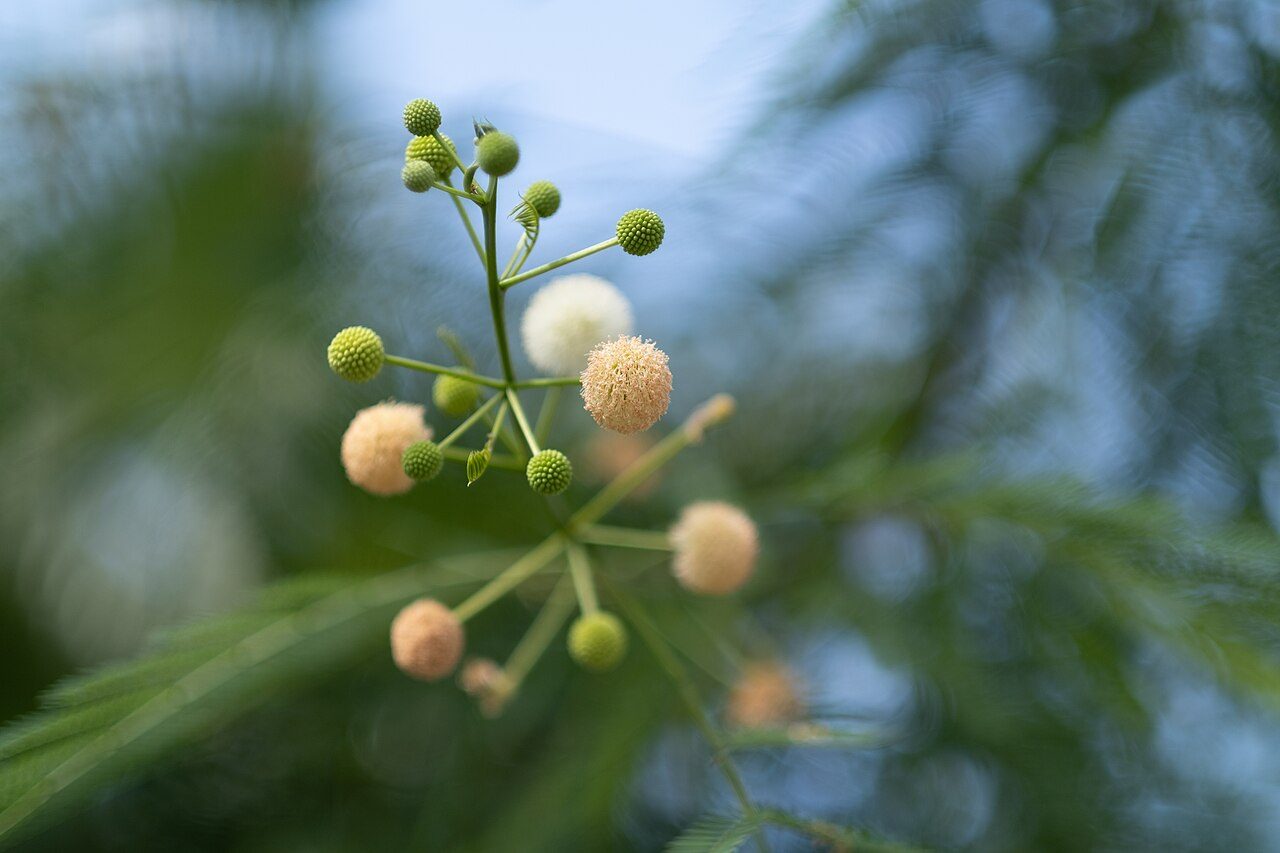
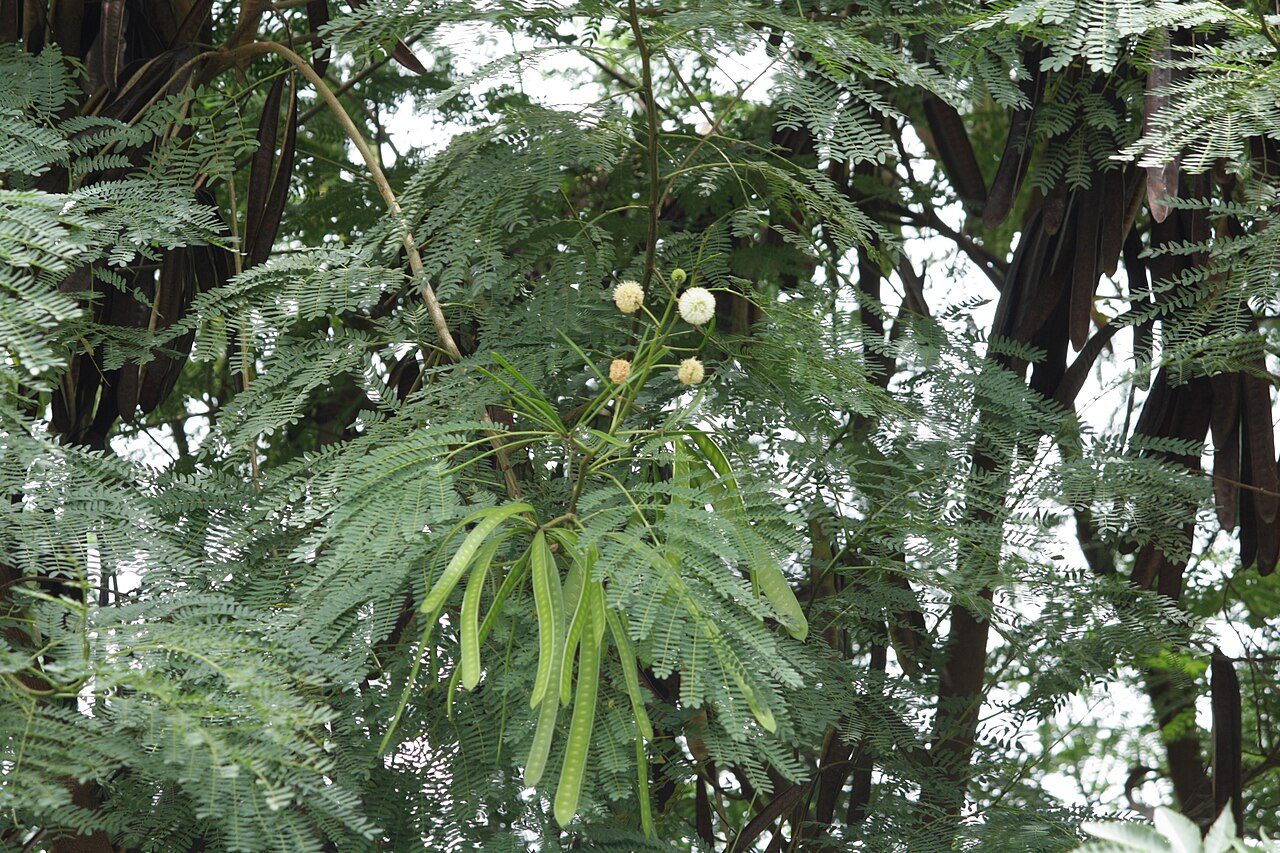
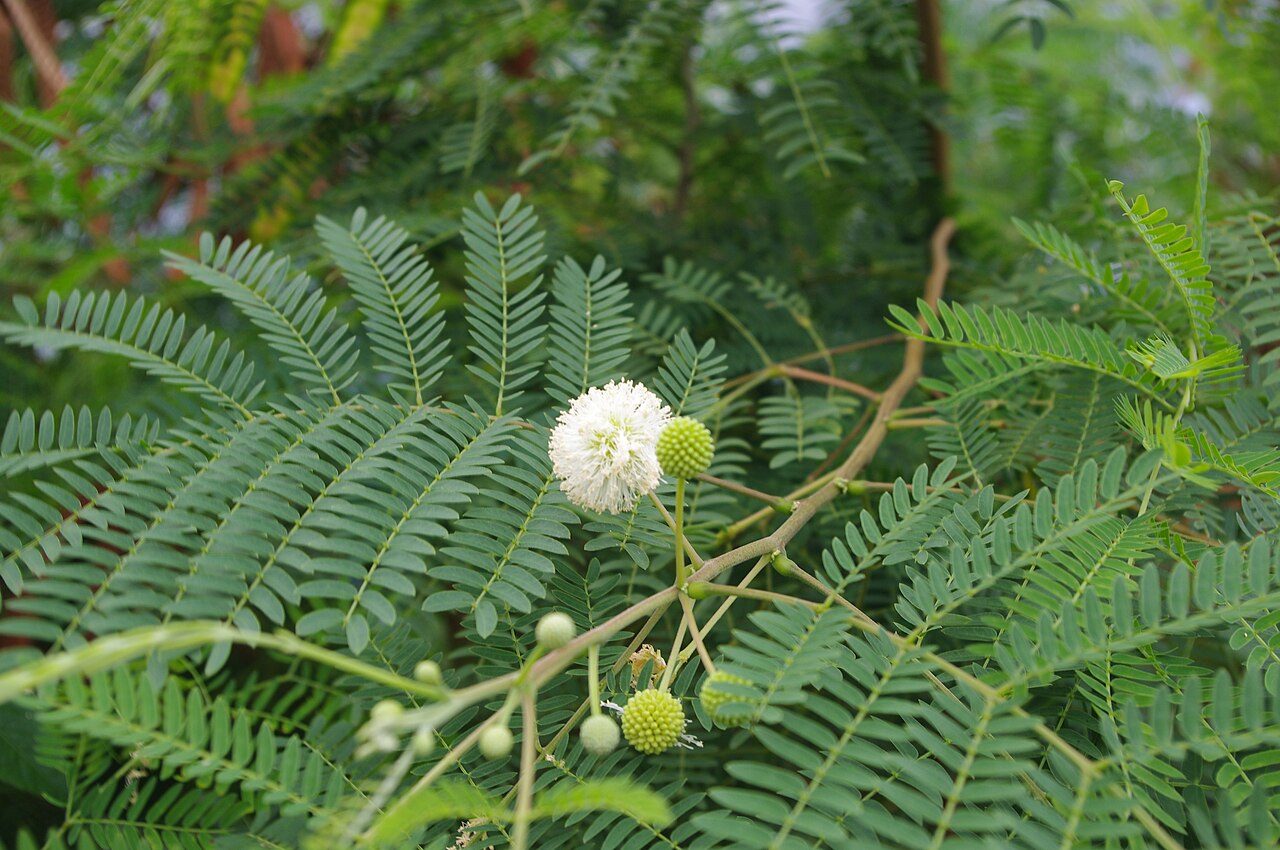
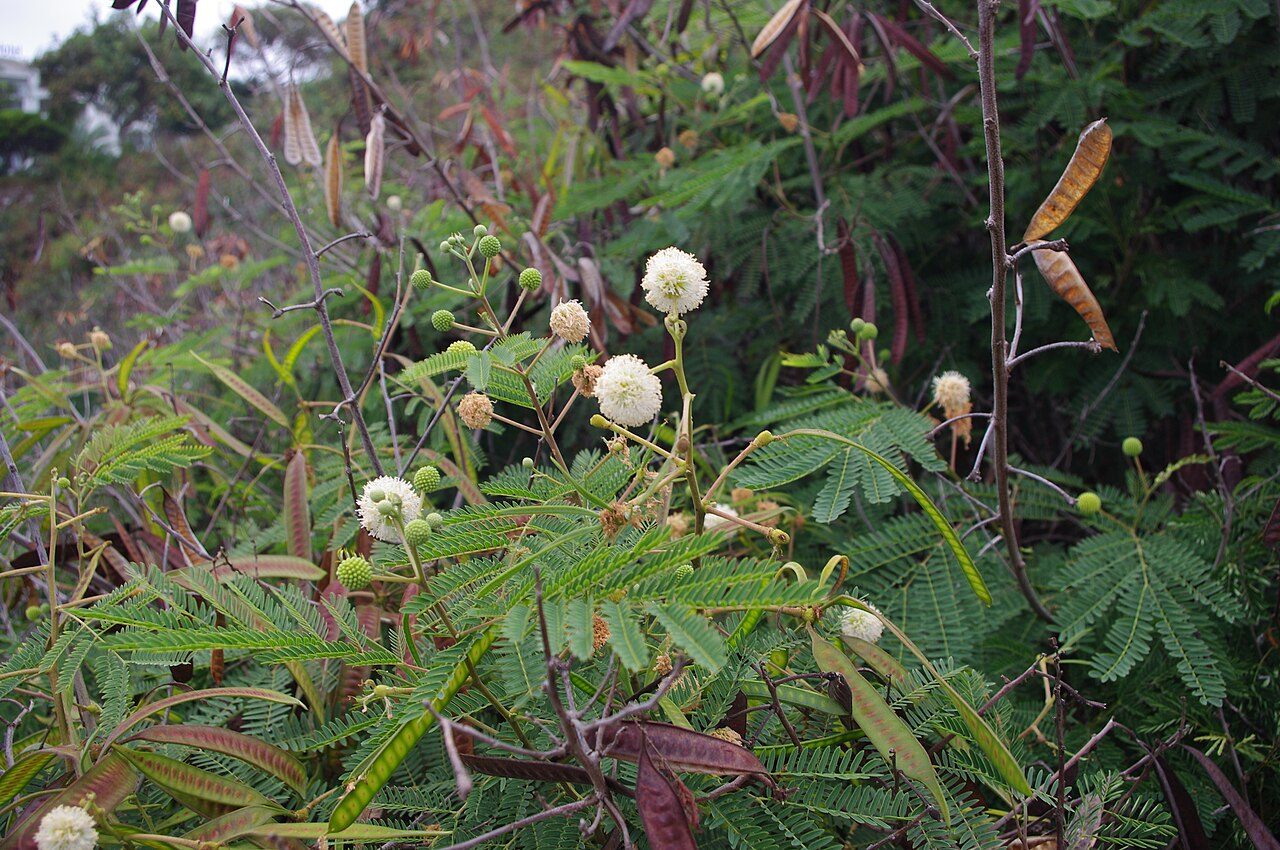
White leadtree is a fast-growing leguminous tree from Mexico and Central America that has spread through the tropics for fodder and firewood. Its white-cream, globe-shaped flower heads are especially rich in pollen, and honey bees visit them heavily. Its nectar contribution, however, is limited. In the tropics it can be an important pollen source during dry periods.
Flowering
With suitable humidity and temperature it flowers on and off all year; in most places flowering peaks at the beginning and end of the rainy season.
Honey and pollen
Honey under its name is not common; its contribution reaches the colony mainly as pollen.
Note for the beekeeper
The leaves contain an amino acid called mimosine, which can cause poisoning in animals that eat large amounts over a long time; no effect on honey or pollen has been reported. It spreads very easily by seed and is considered one of the most problematic invasive trees in many tropical regions of the world. In Europe and Turkey its spread is limited by the temperate climate.