


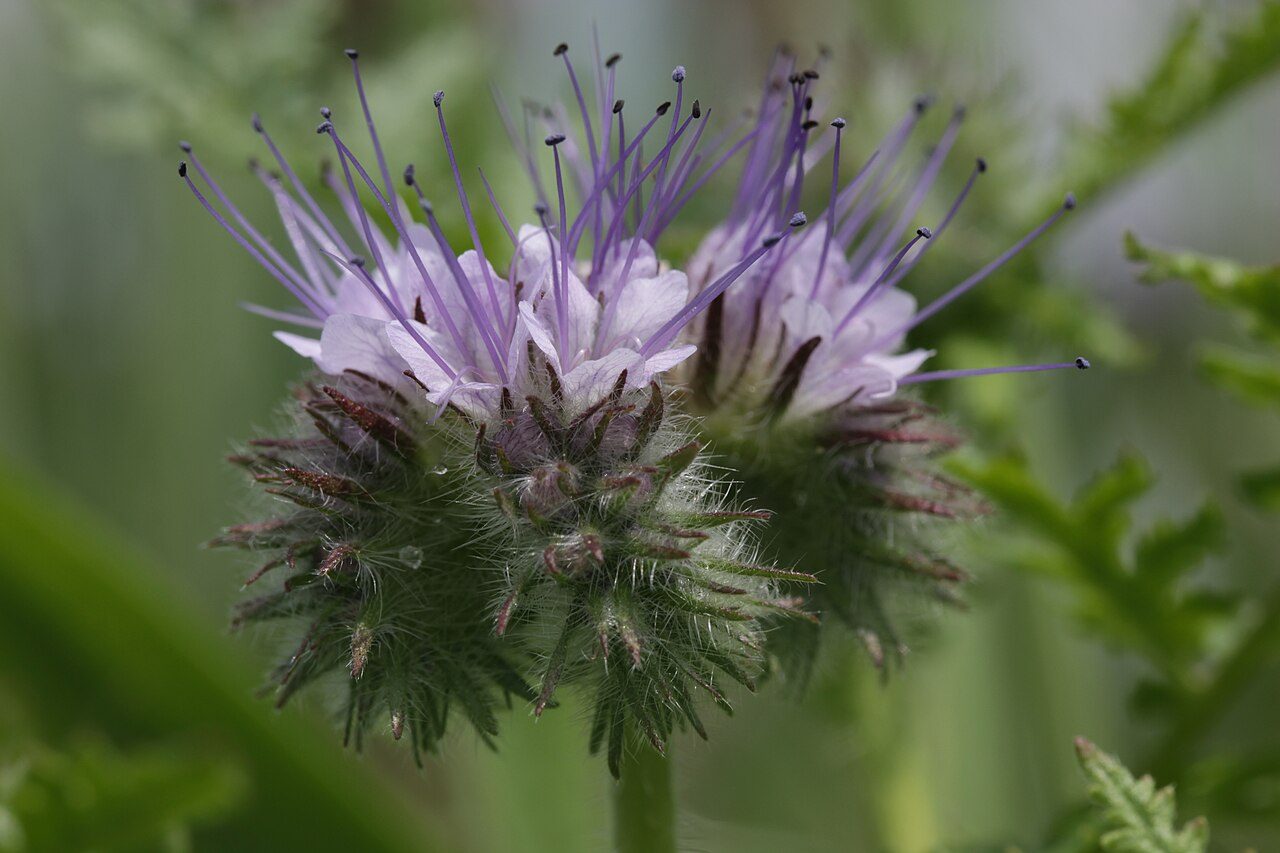
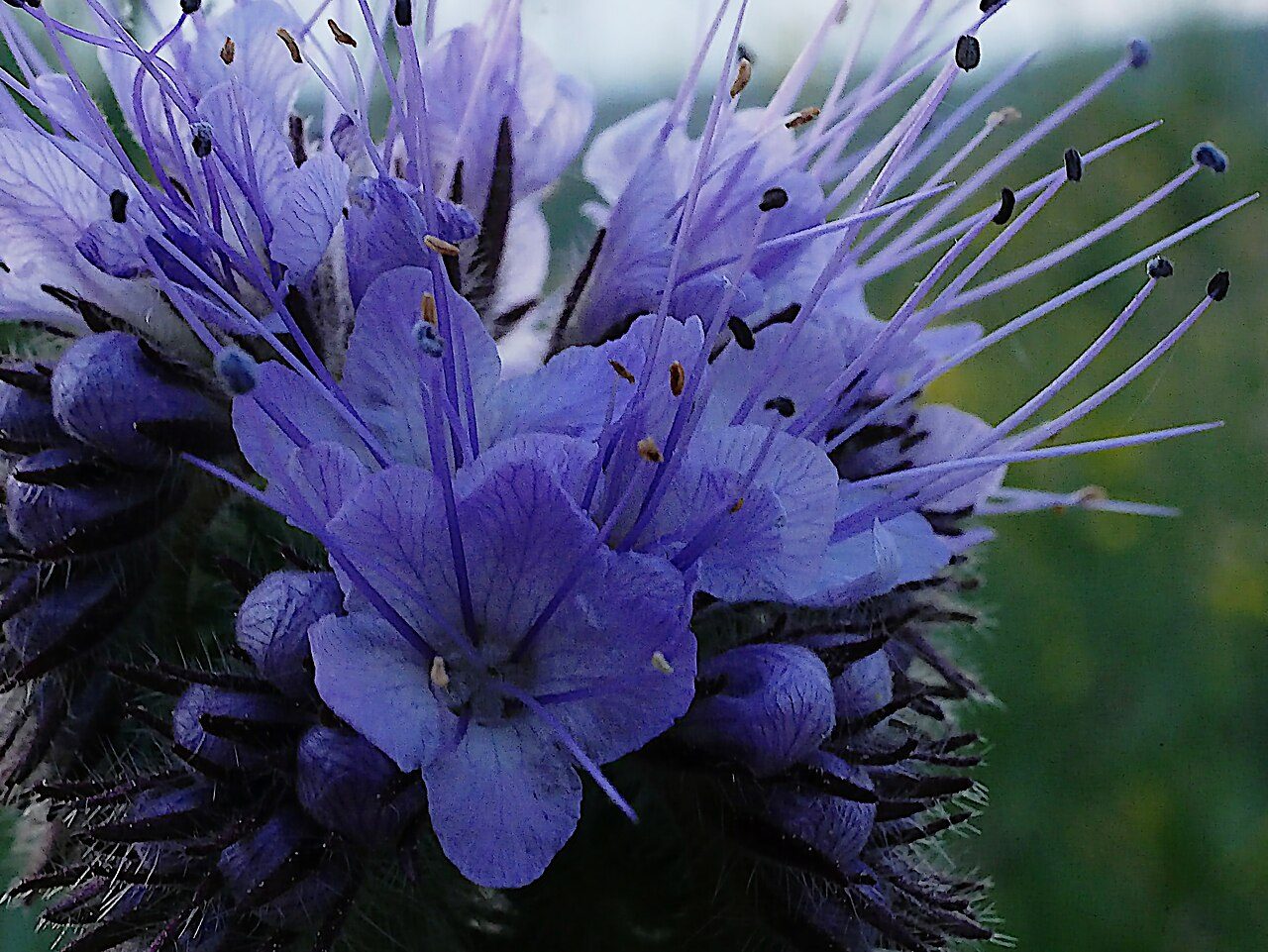
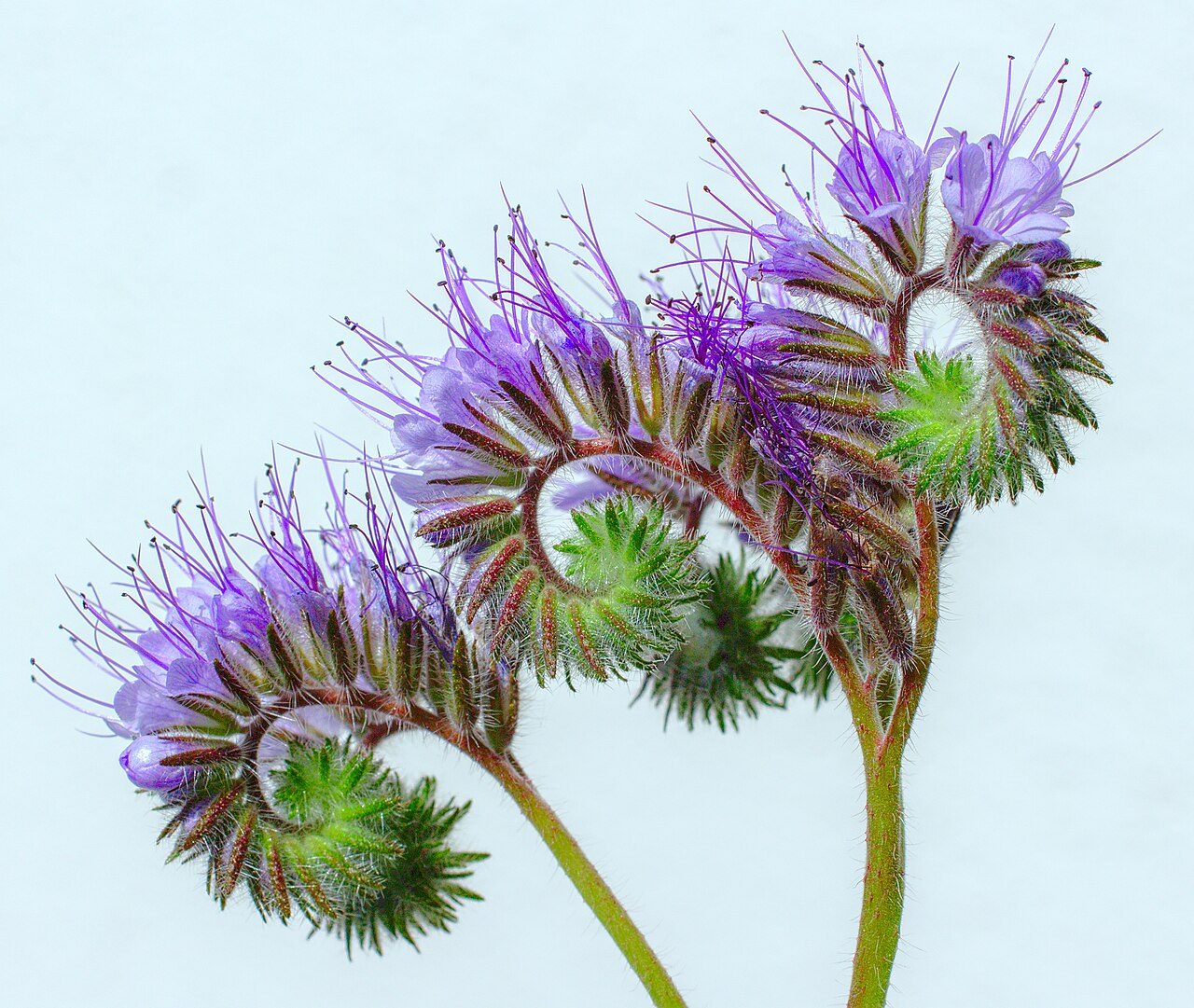
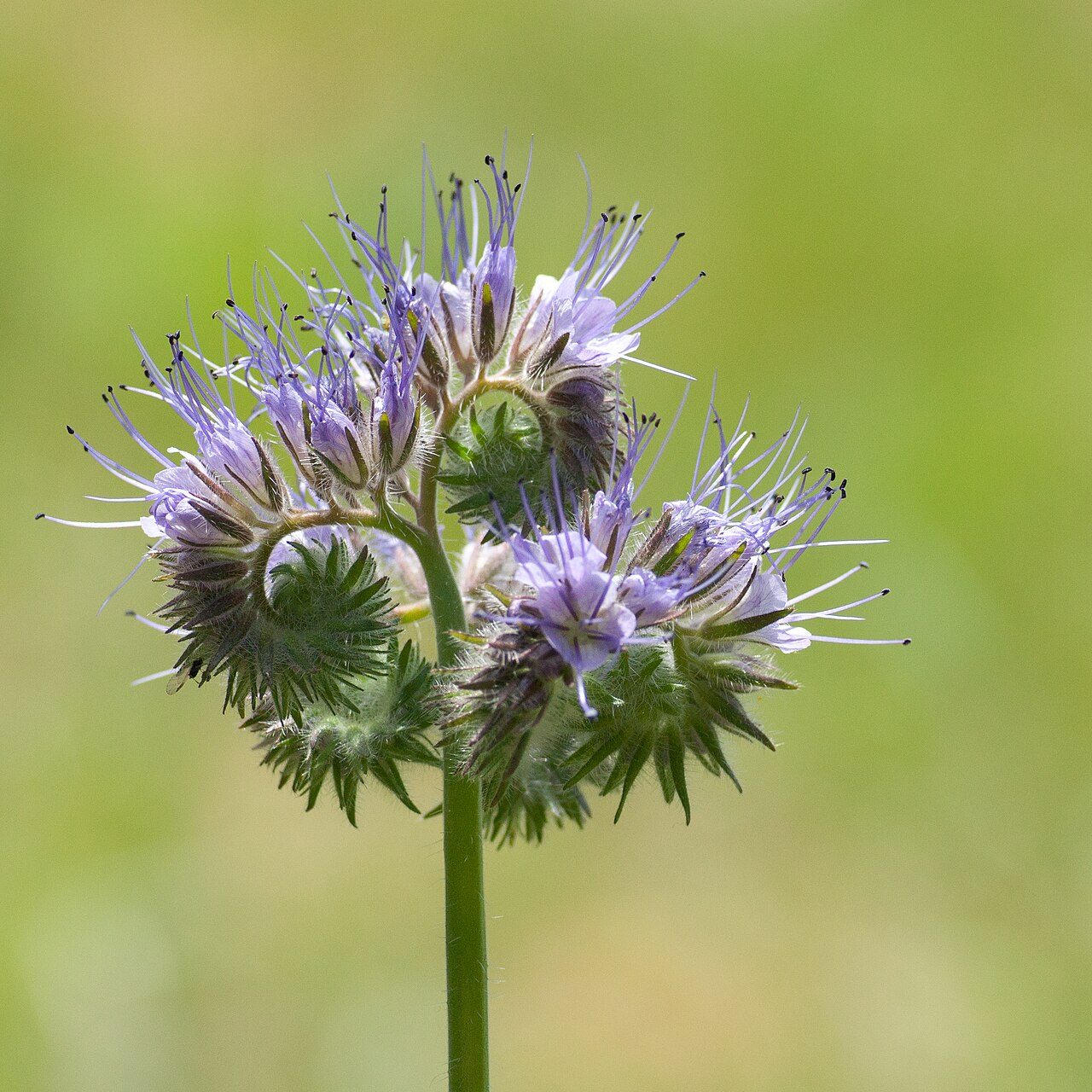
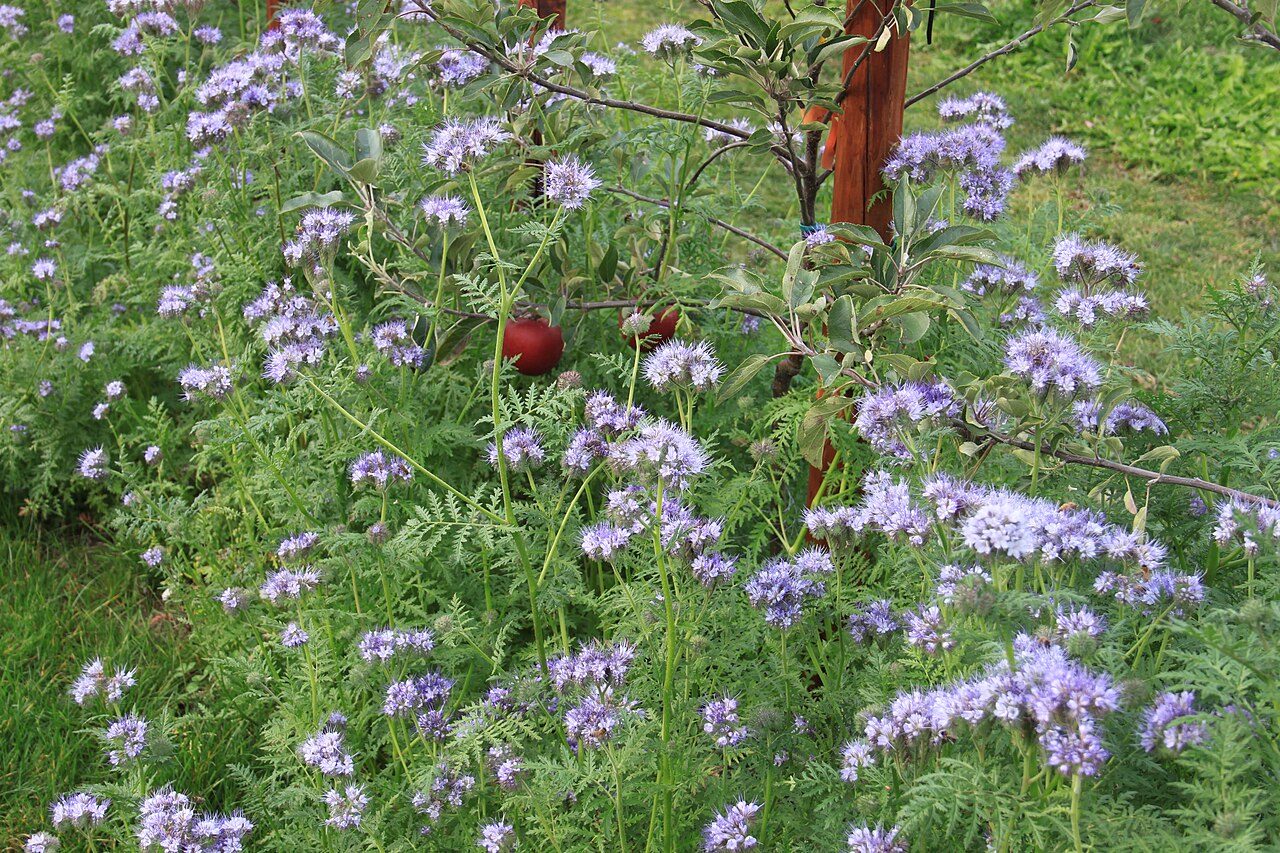
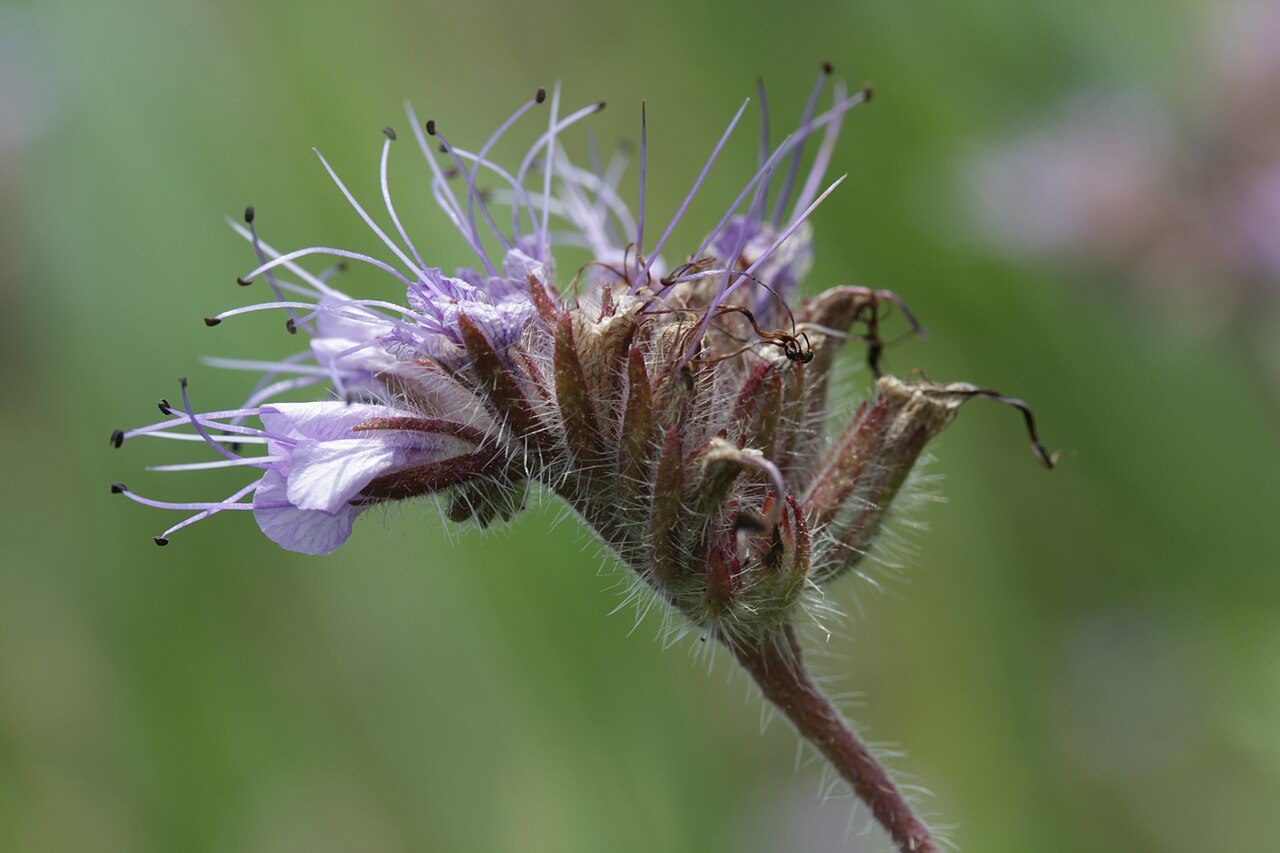
Lacy phacelia
One of the best plants to sow for bees; it flowers 6-8 weeks after sowing, gives abundant nectar and navy-blue pollen, and staggered sowing extends the flow.
- Nectar
- Very good
- Pollen
- Good
- Flowering
- JanFebMarAprMayJunJulAugSepOctNovDec
- Honey yield
- 300–1000 kg/ha
- Crystallisation
- Medium
- Pollen colour
- Height
- 0.5-1 m
- Life cycle
- Annual
🐝 Add to my apiary
Log in to add it to your apiary.Value for beekeeping
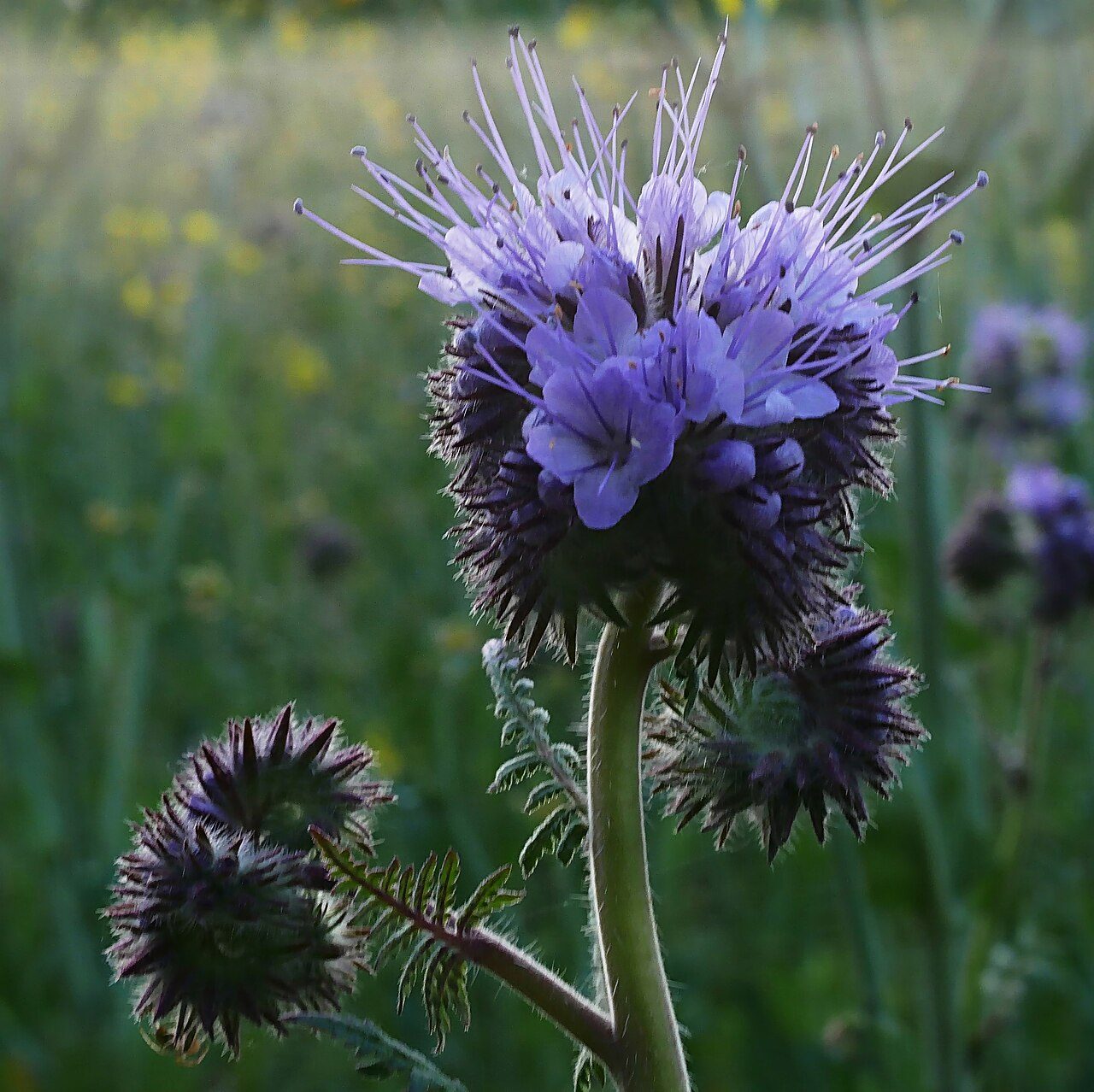
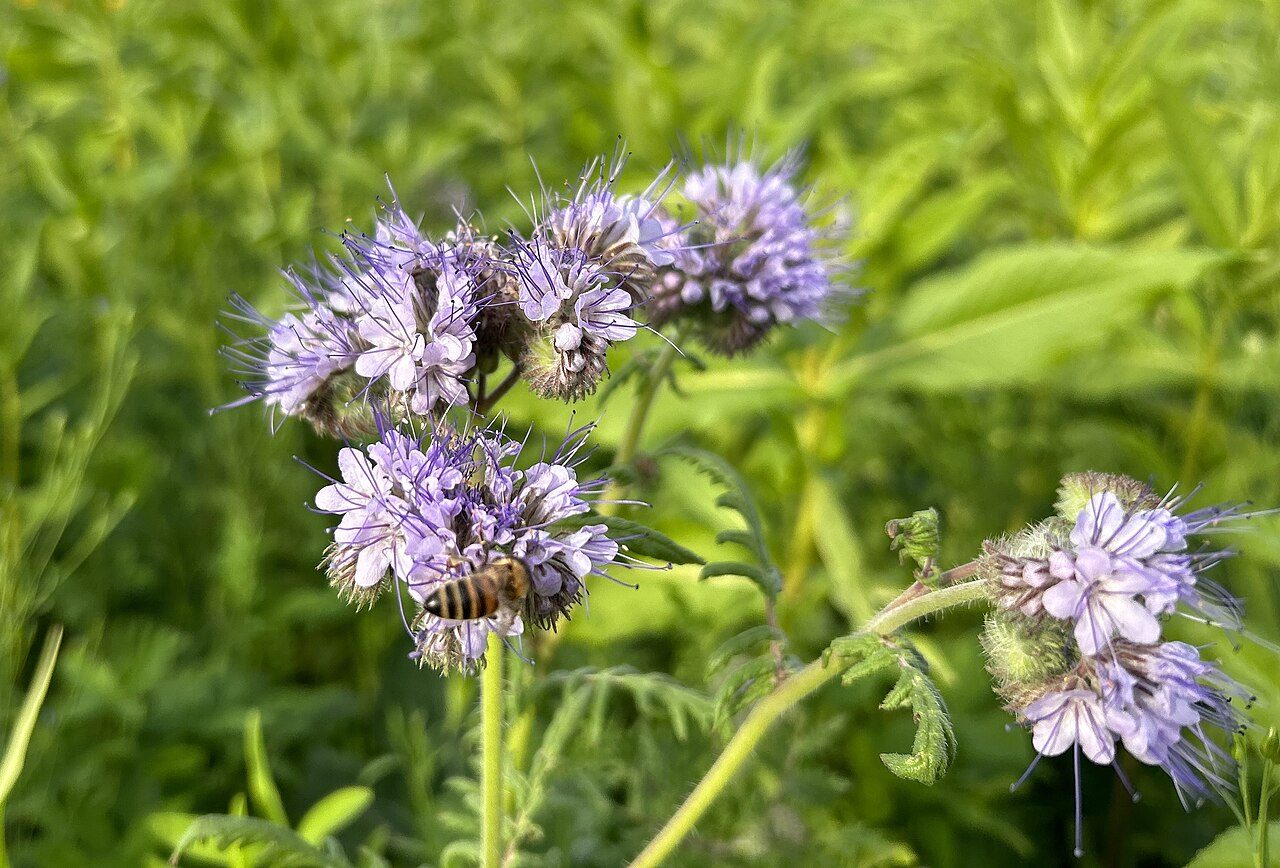
Lacy phacelia is one of the most valuable plants sown specifically for beekeeping. It gives plenty of nectar and pollen and is known for continuing to secrete even in cool, cloudy weather. It is native to North America; in Europe it is widely sown as green manure, a cover crop and bee forage.
Flowering
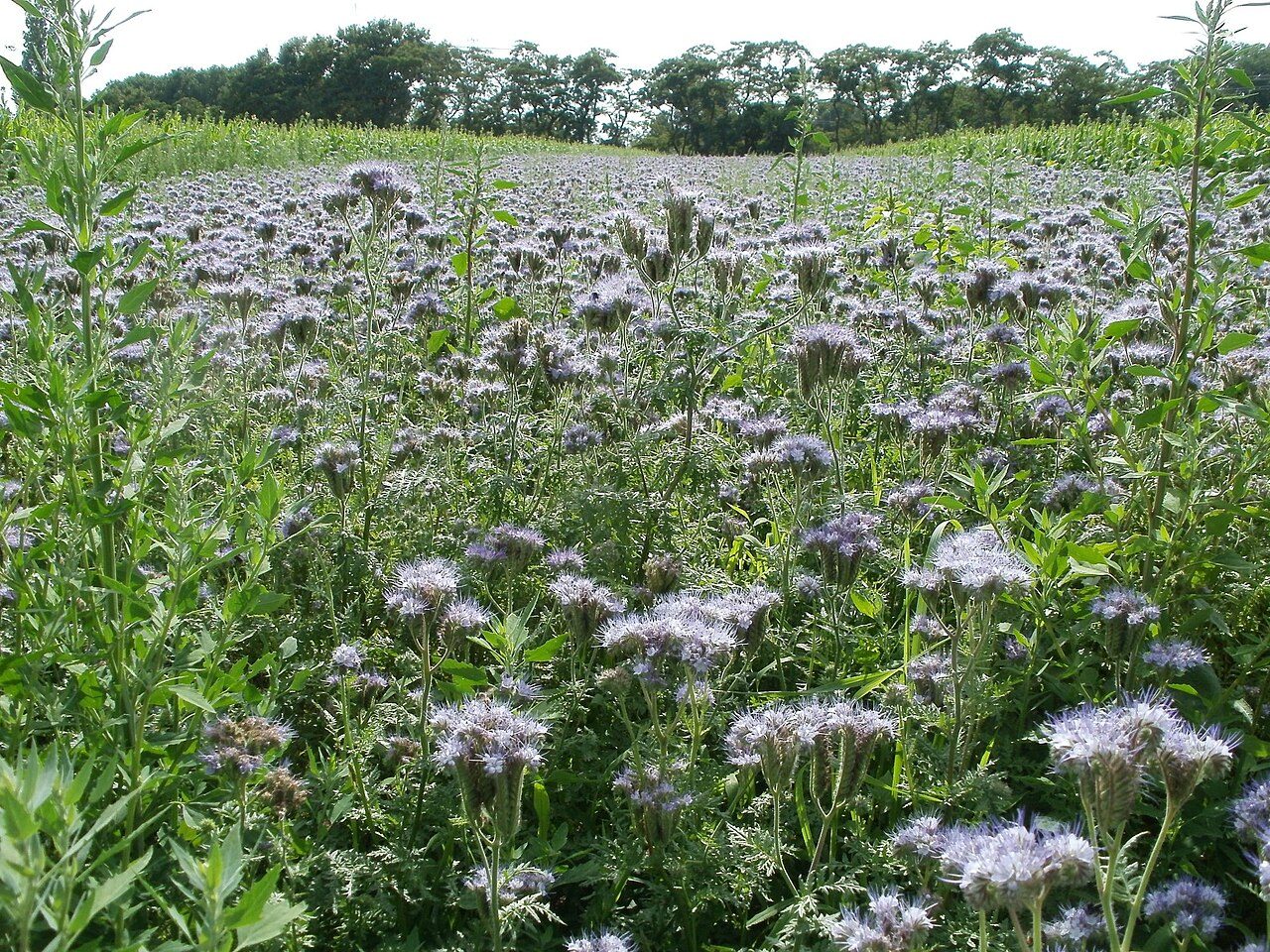
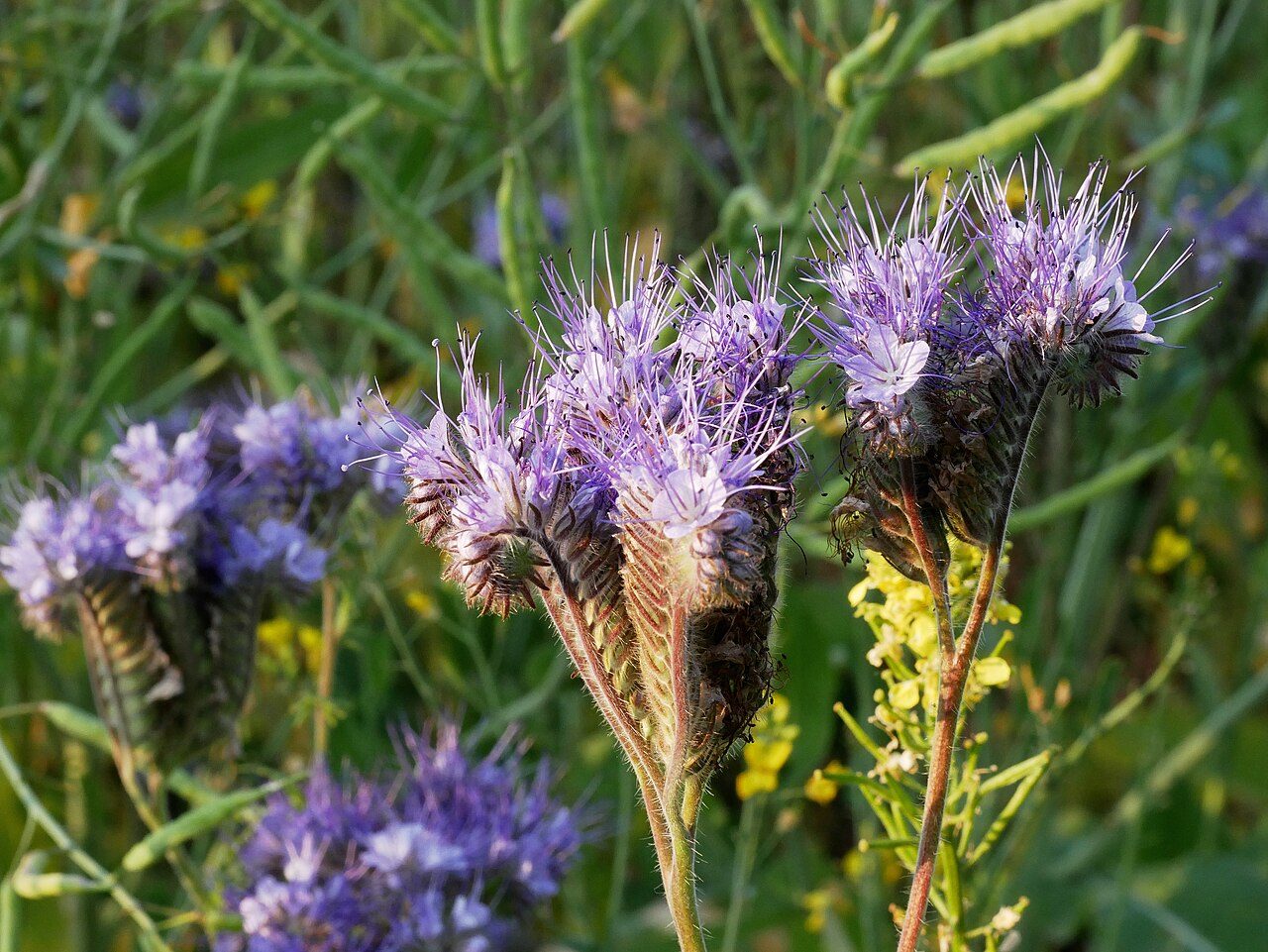
It starts flowering about 6-8 weeks after sowing and stays in flower for 5-6 weeks. If sown in batches from April to July, an uninterrupted flow is obtained from May to September. It also grows on poor, dry soils.
Honey and pollen
Phacelia honey ranges from very pale yellow to whitish, light and mildly sweet; it crystallises at a moderate rate with a fine grain. The pollen loads are dark blue to navy and instantly recognisable in the hive.
Note for the beekeeper
About 1-1.5 kg of seed per 1,000 m² is enough. A few thousand square metres of phacelia sown around the hives keep the colony going through the summer dearth. Worked into the soil after flowering, it also improves the soil.