

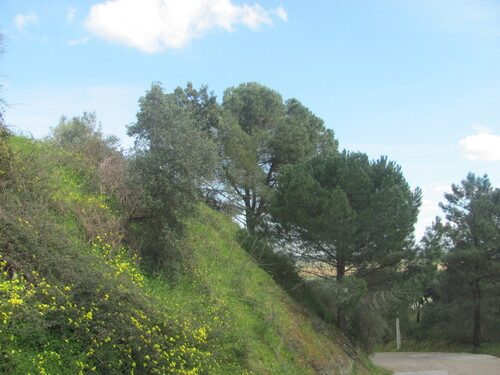
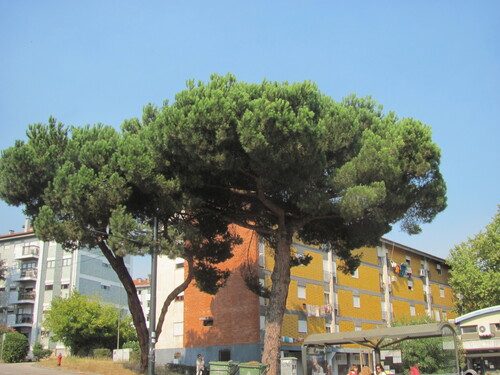
Stone pine
The umbrella-crowned Mediterranean pine that yields pine nuts; no nectar and little pollen. Its beekeeping value lies in resin for propolis and the scrub around it.
- Nectar
- None
- Pollen
- Low
- Flowering
- JanFebMarAprMayJunJulAugSepOctNovDec
- Height
- 12-25 m
- Life cycle
- Perennial
🐝 Add to my apiary
Log in to add it to your apiary.Value for beekeeping
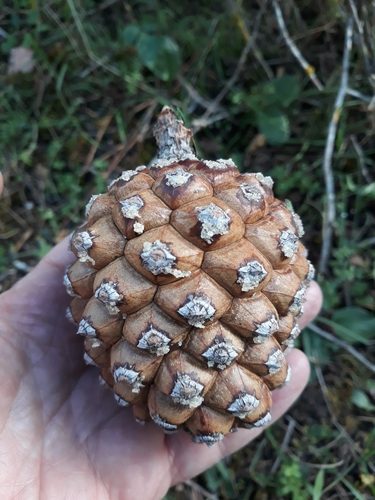
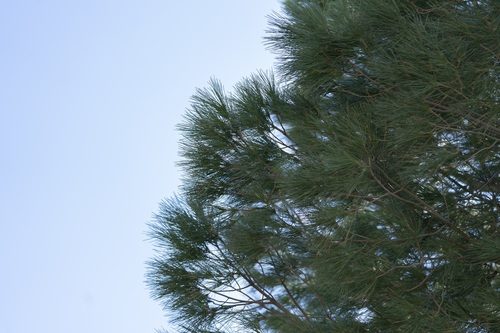
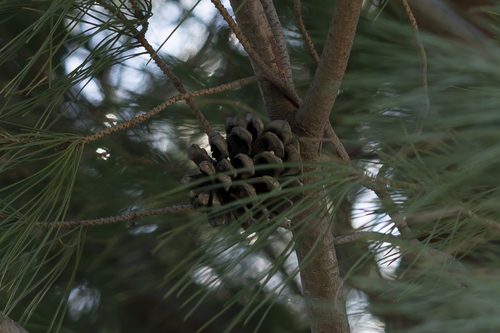
Stone pine is the umbrella-crowned pine of the Mediterranean basin; in Turkey there are natural and planted forests in the Bergama-Kozak area and along the Aegean and Marmara coasts, and its main product is pine nuts. It is wind-pollinated and gives no nectar.
Flowering
In April-May the male cones release yellow pollen. As many flowering plants are around at this time, bees hardly turn to pine pollen.
Honey and pollen
Stone pine is not a known important honeydew source; pine honey in Turkey comes from Turkish red pine. The honey bees collect in stone pine forests comes from the rockrose, thyme, Christ's thorn and other maquis plants under the trees.
Note for the beekeeper
Being rich in resin, it can be used by bees for propolis. On the Kozak plateau there are mixed forests of stone pine and Turkish red pine; here the real target for pine honey in autumn is the red pine. Work done on the trees during the pine nut harvest does not directly affect the apiary.