


Cherry laurel
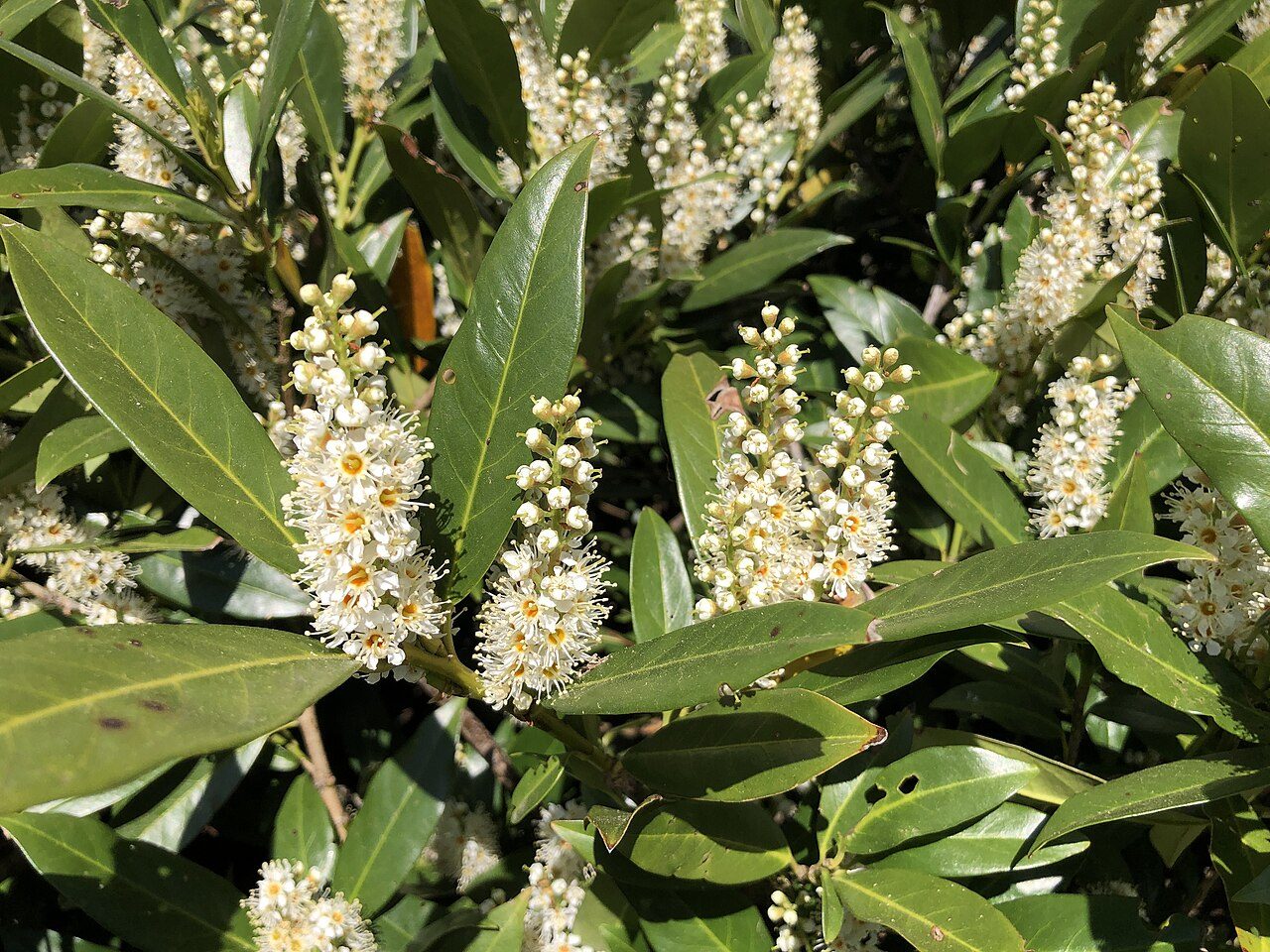
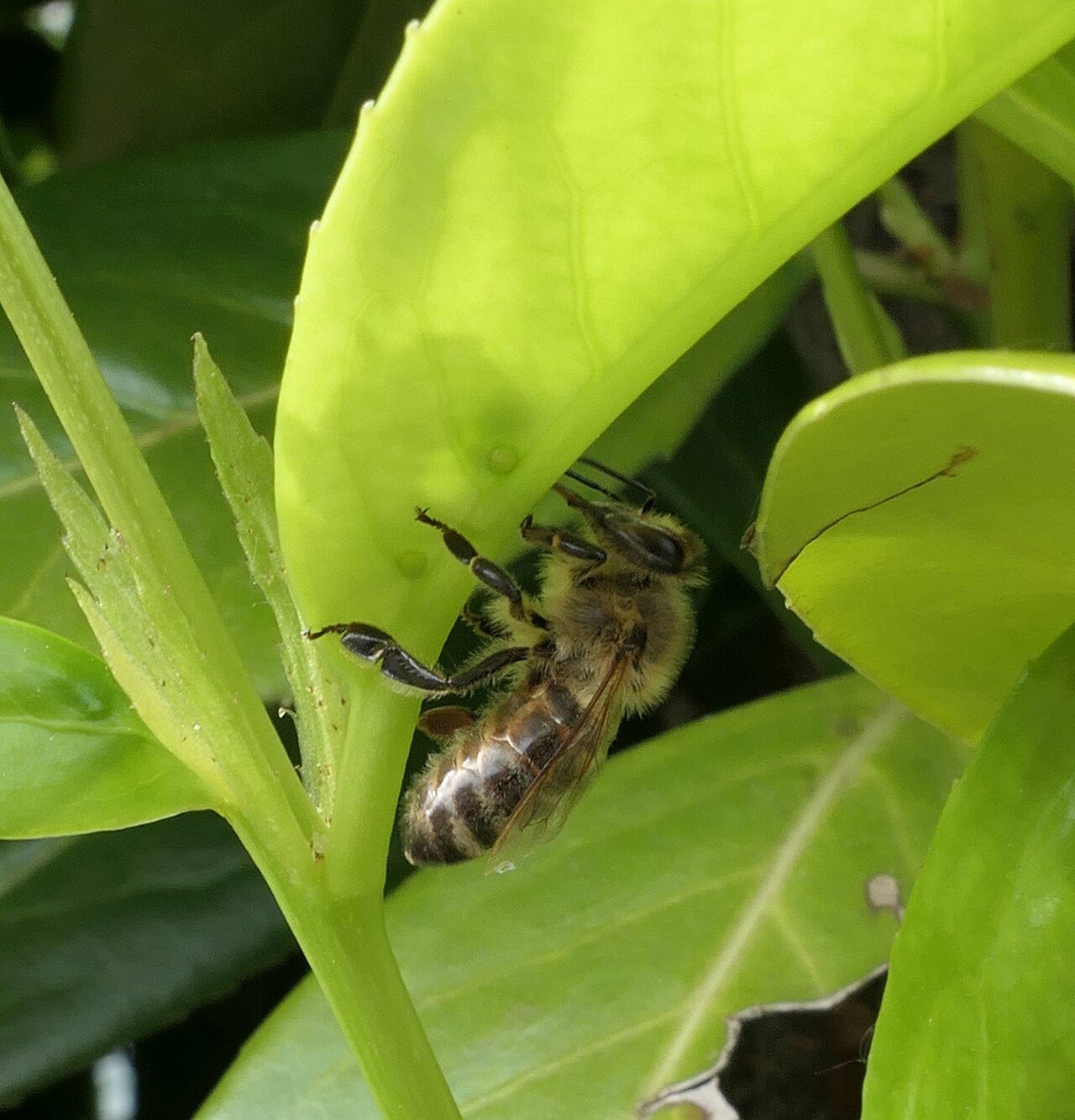
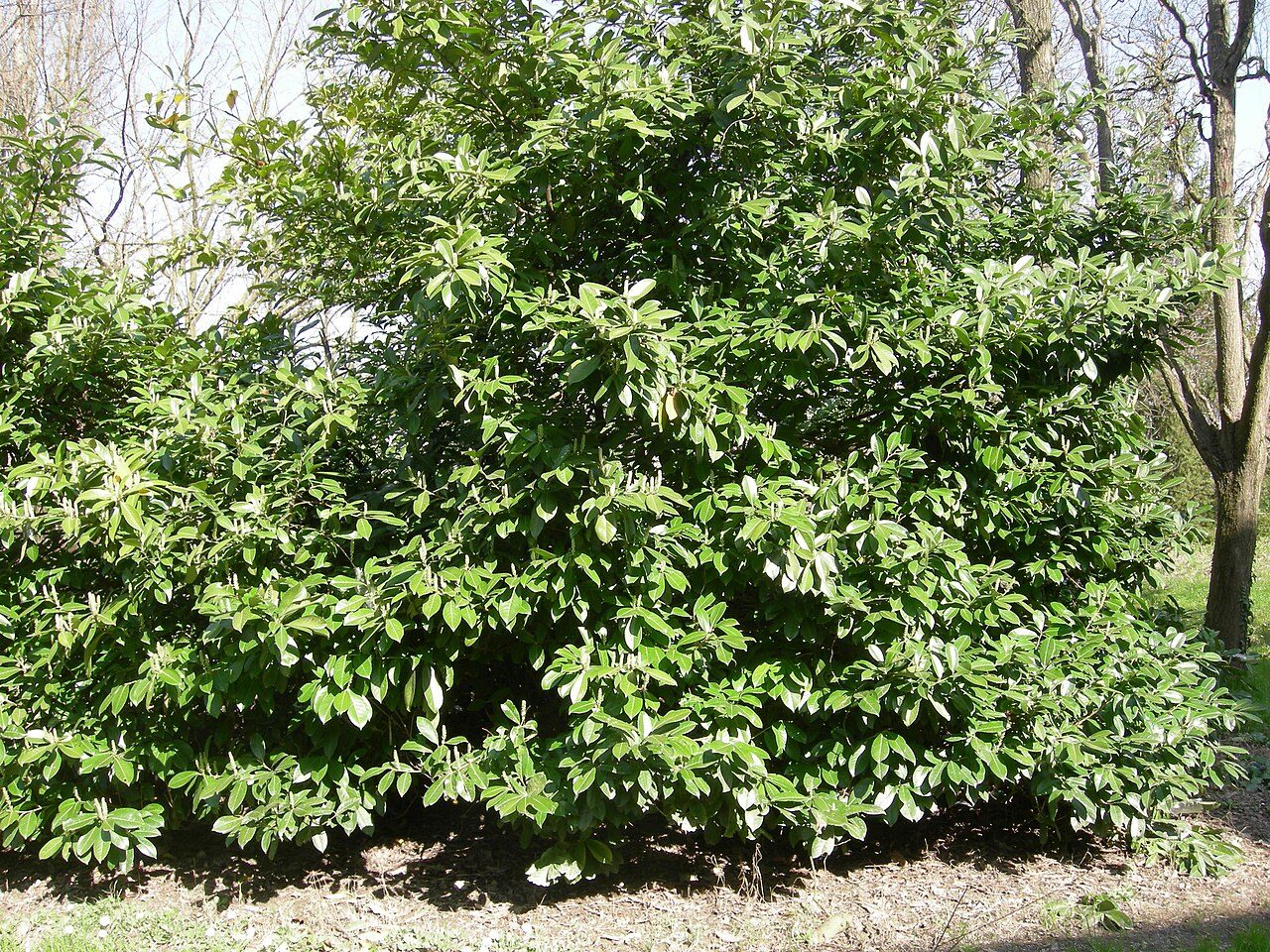
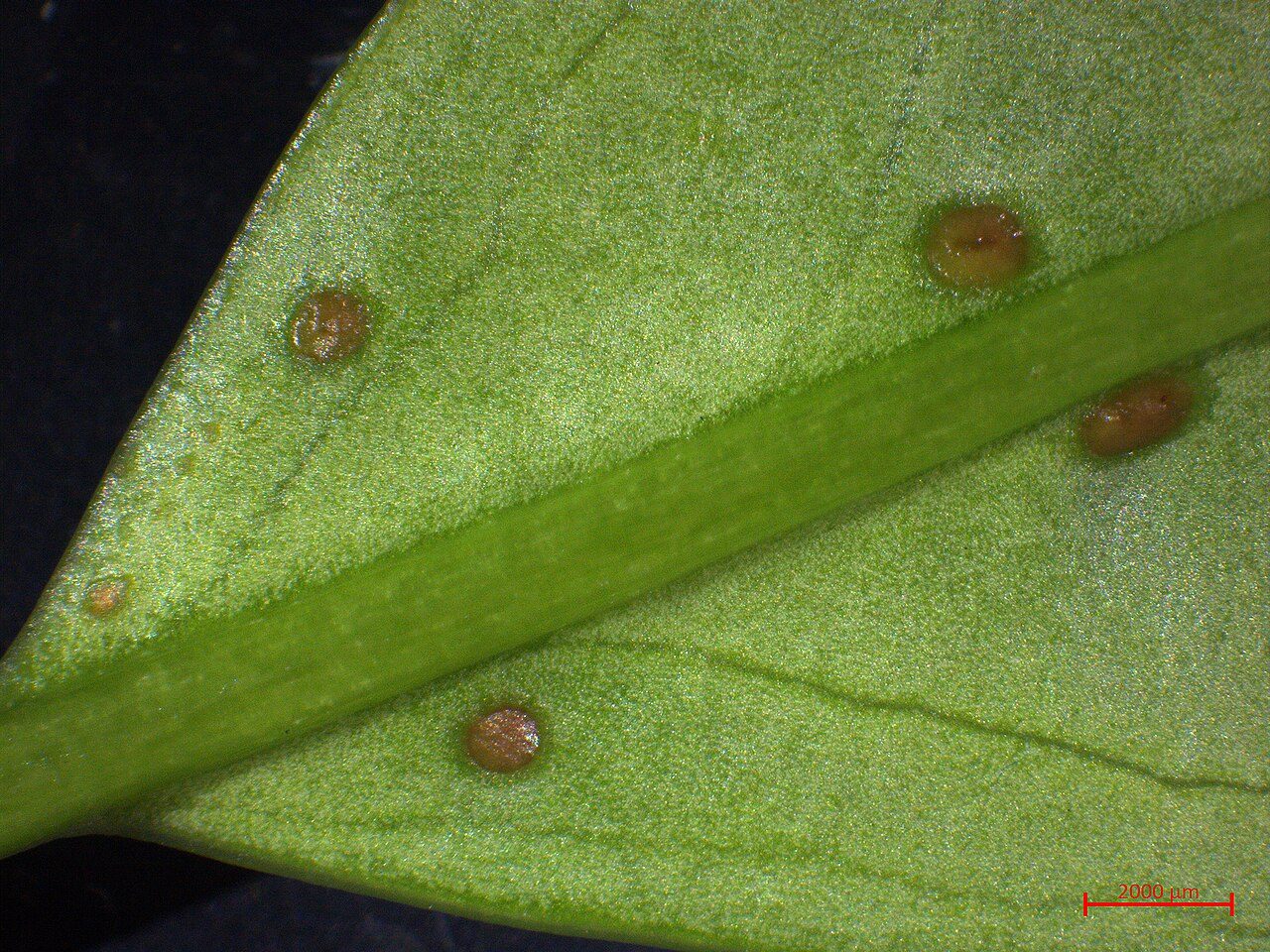
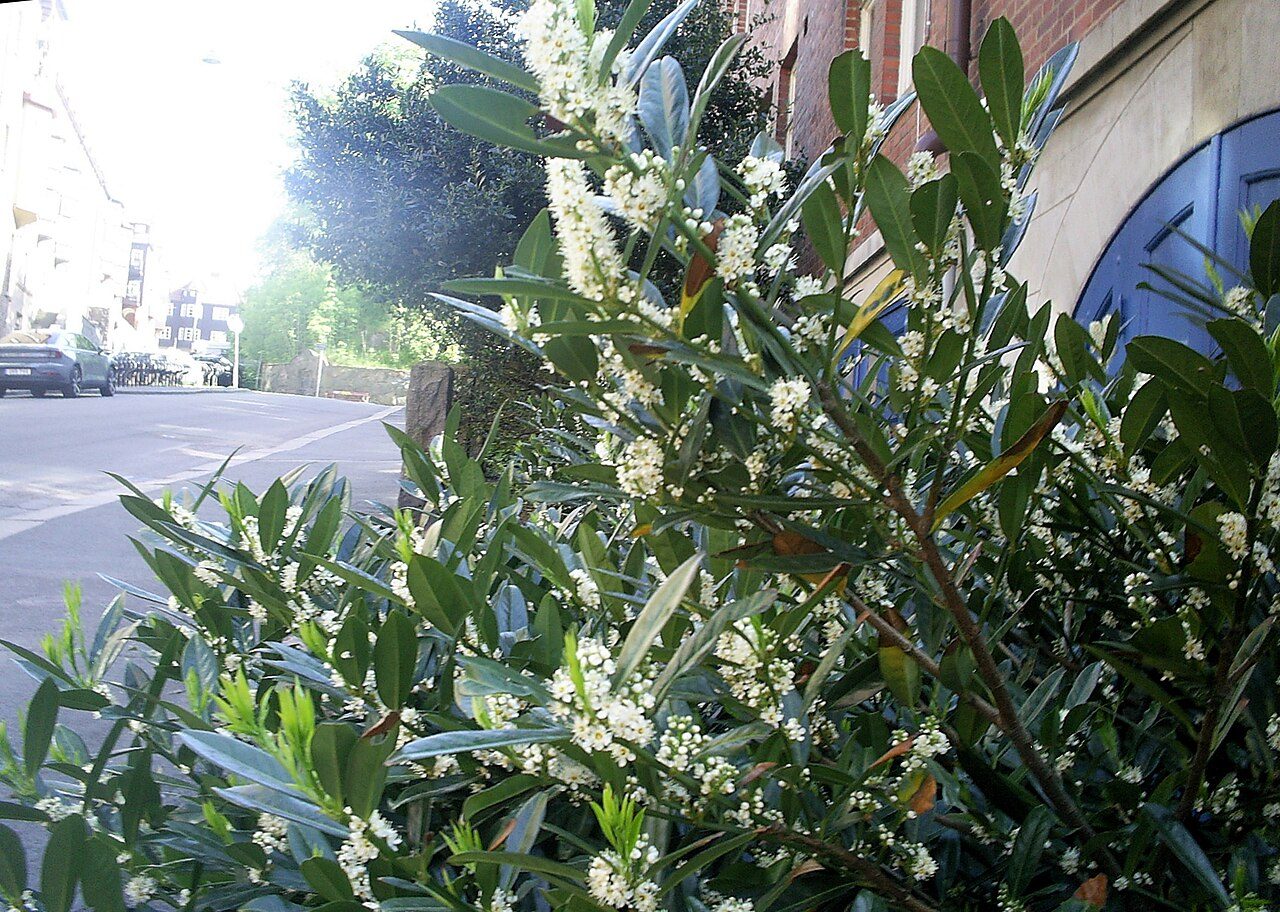
Evergreen shrub of Black Sea forests; it gives plenty of nectar and pollen in April-May, and extrafloral nectaries on the leaves also attract bees.
- Nectar
- Good
- Pollen
- Medium
- Flowering
- JanFebMarAprMayJunJulAugSepOctNovDec
- Height
- 2-6 m
- Life cycle
- Perennial
🐝 Add to my apiary
Log in to add it to your apiary.Value for beekeeping
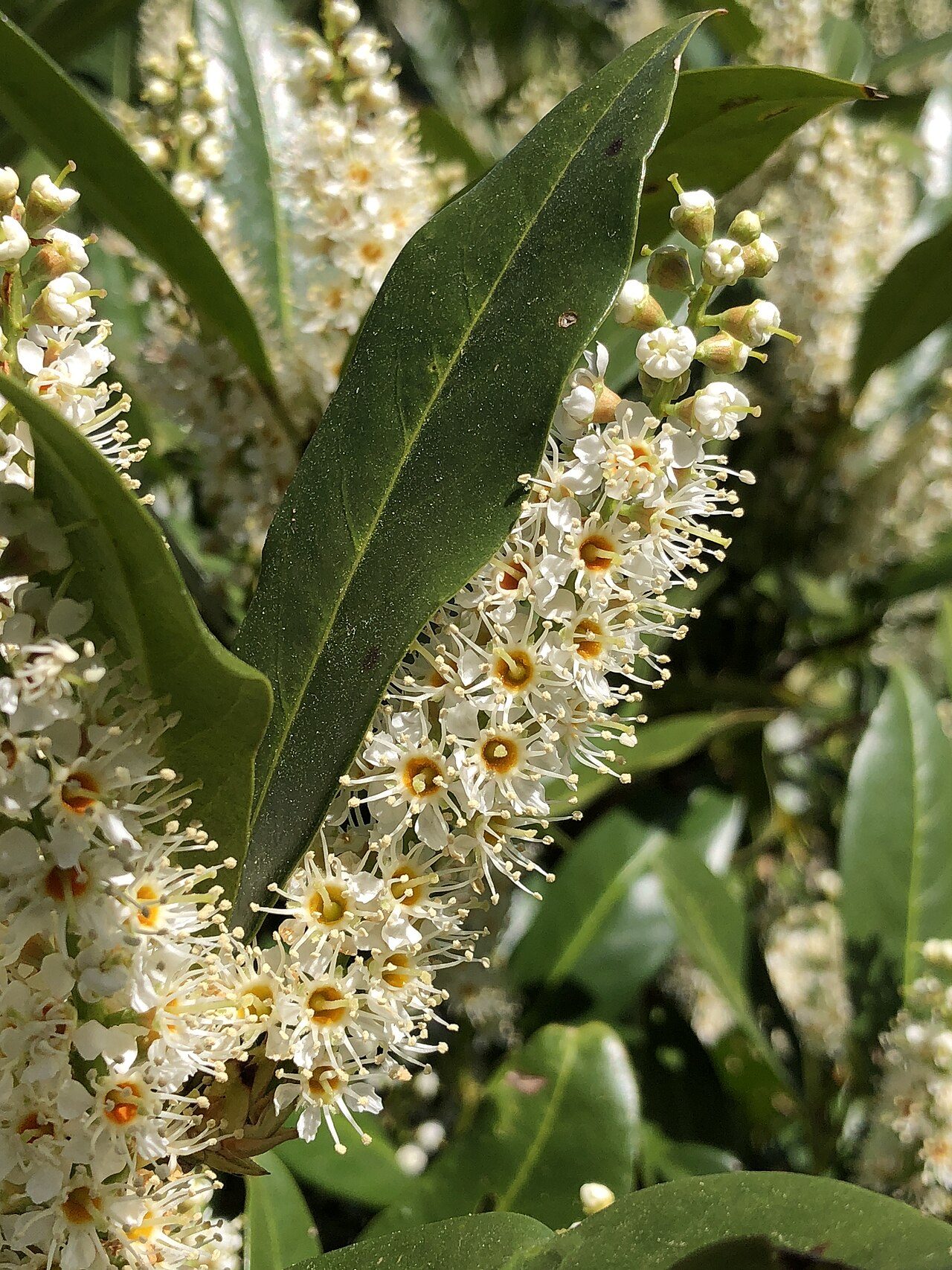
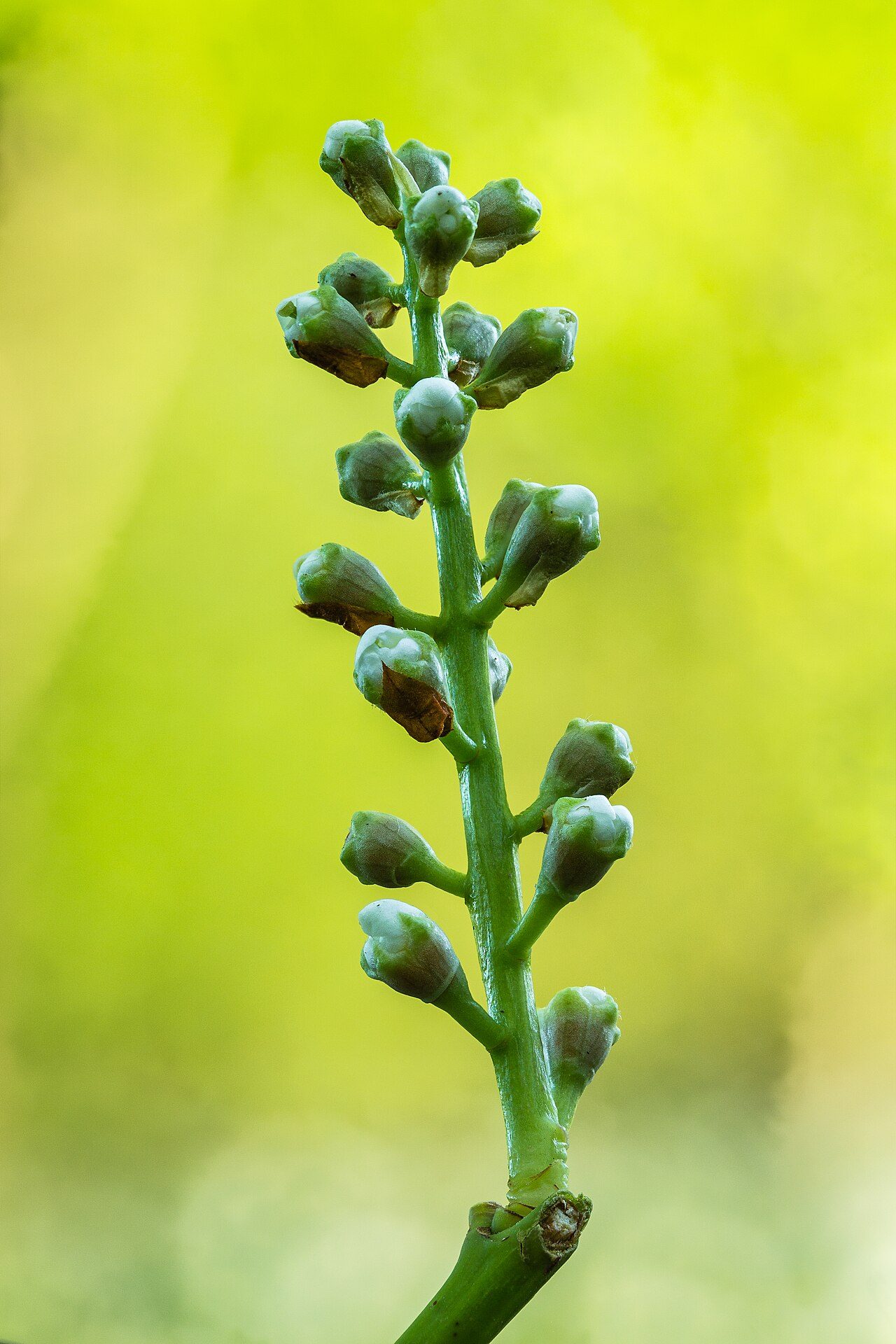
Cherry laurel is an evergreen shrub or small tree common in the understorey of the Black Sea coastal forests. Its upright, white flower spikes give plenty of nectar and pollen. In addition, the sweet liquid secreted by glands at the base of the leaf blade (extrafloral nectaries) is also collected by bees.
Flowering
It flowers for about 2-3 weeks in April-May; in the Black Sea region it is one of the important sources for spring build-up.
Honey and pollen
It is not commonly produced as a separate honey; the nectar goes into spring honeys. Pollen is collected in moderate amounts.
Warning
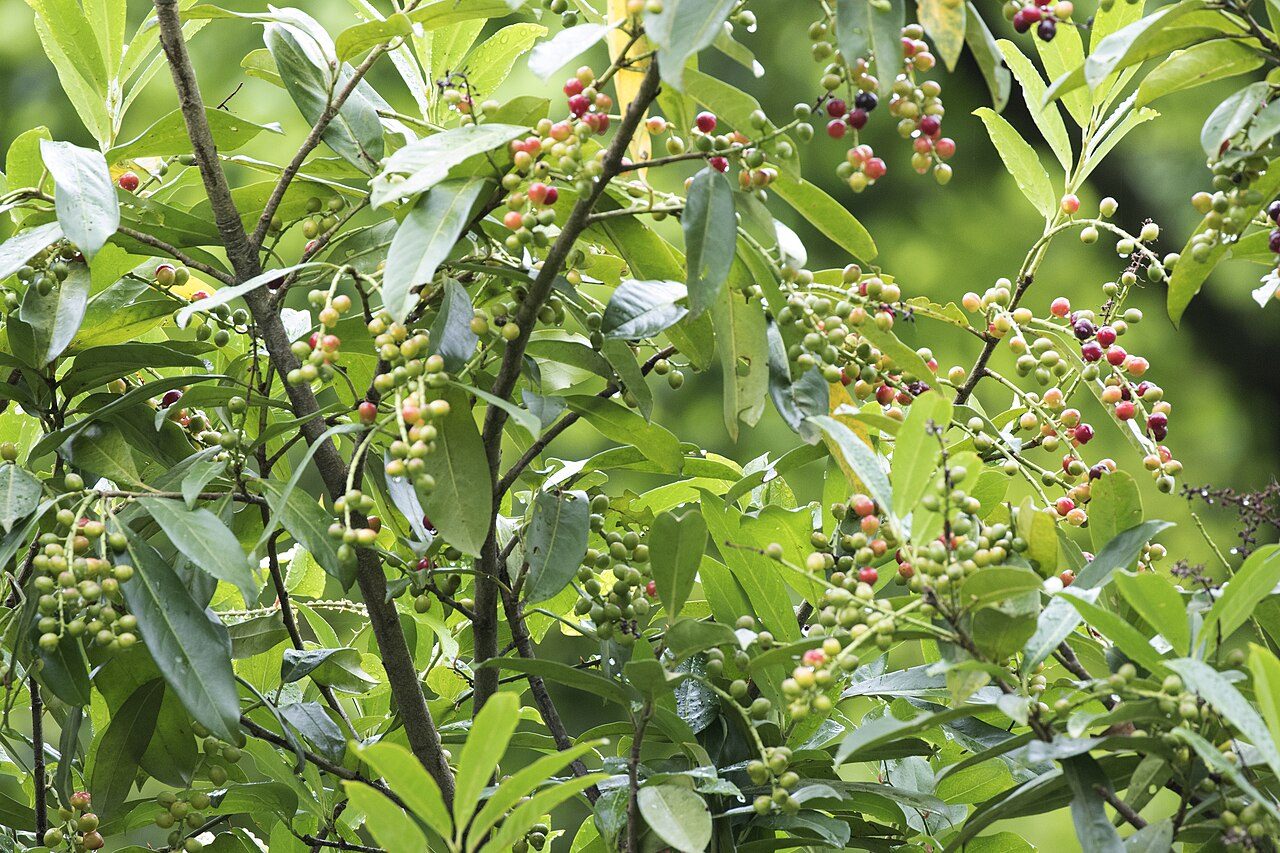
The leaves and seeds contain compounds that release cyanide and are poisonous; the flesh of the ripe fruit, however, is edible. No problem of this kind is known in honey.
Note for the beekeeper
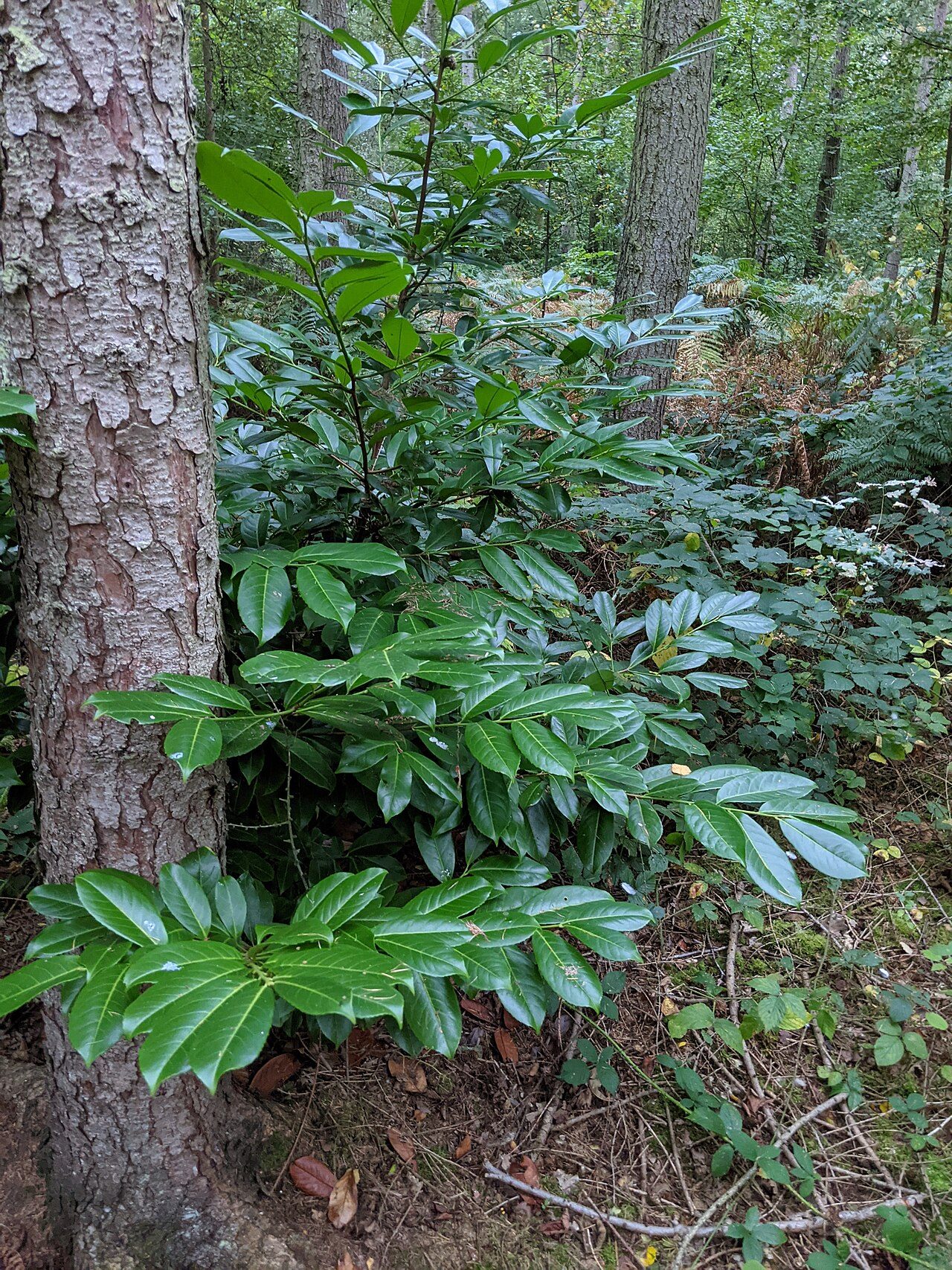
In Western and Central Europe (the Netherlands, Germany, Belgium, Britain) it was planted as an ornamental, escaped into woodland and became invasive; new planting is not recommended there.