

Oleaster-leaved pear
Drought-hardy wild pear of steppes and field margins; it provides early pollen and a little nectar in April.
- Nectar
- Low
- Pollen
- Medium
- Flowering
- JanFebMarAprMayJunJulAugSepOctNovDec
- Height
- 3-10 m
- Life cycle
- Perennial
🐝 Add to my apiary
Log in to add it to your apiary.Value for beekeeping
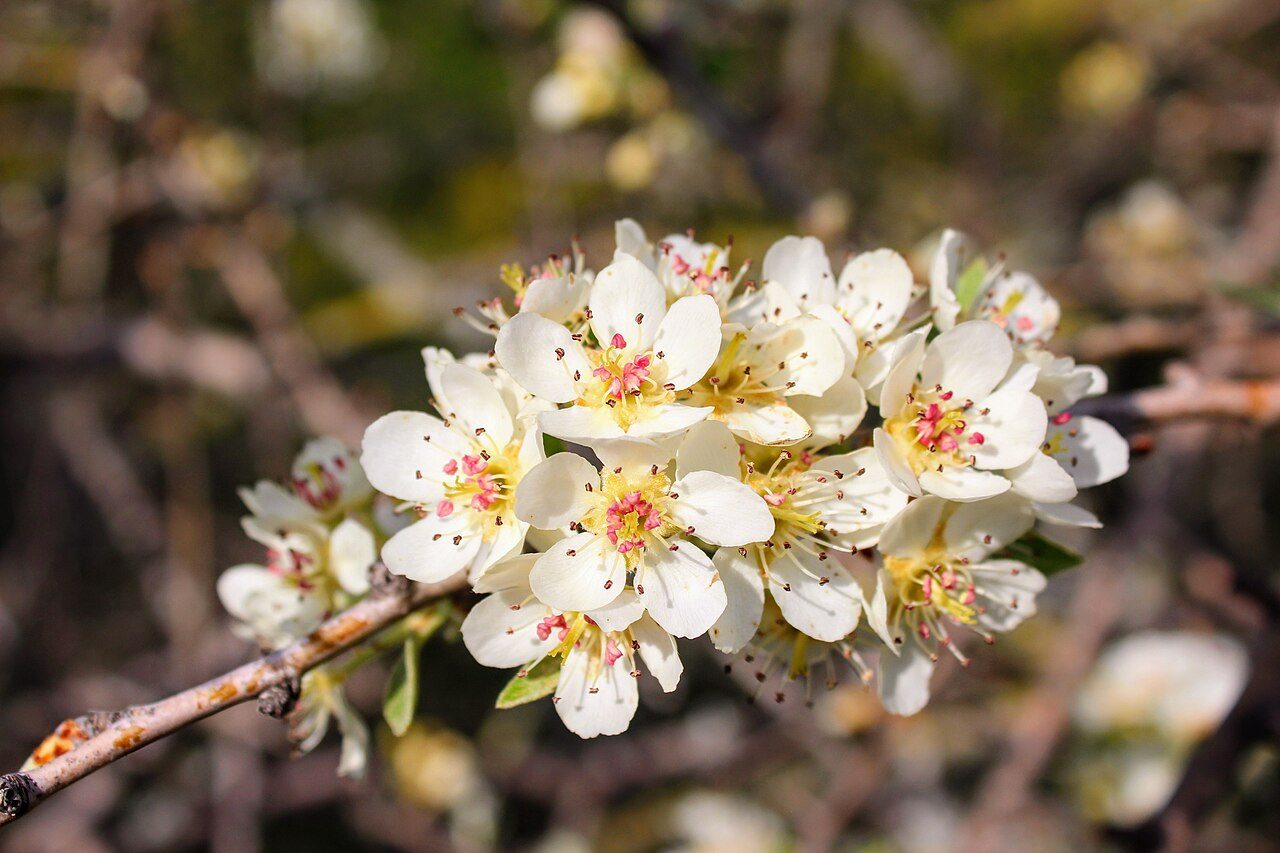
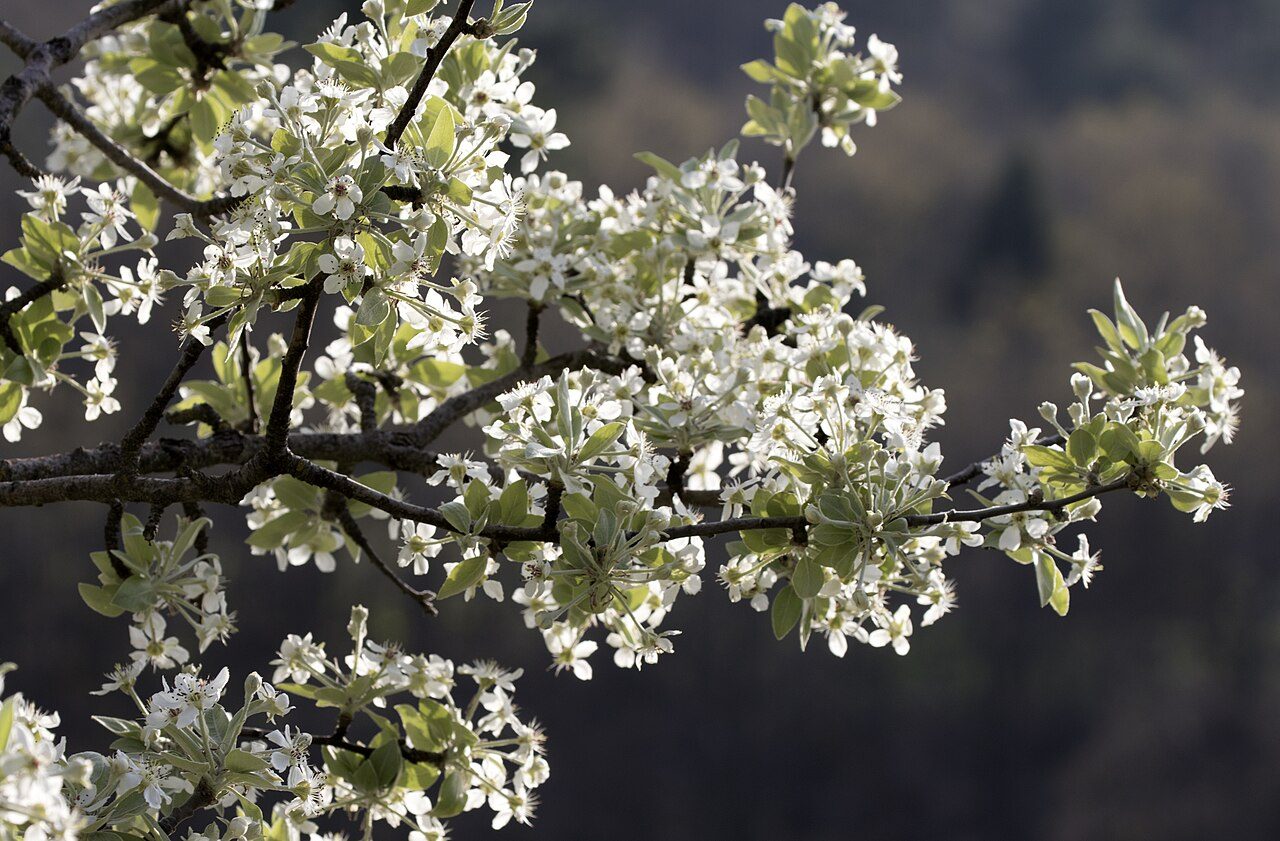
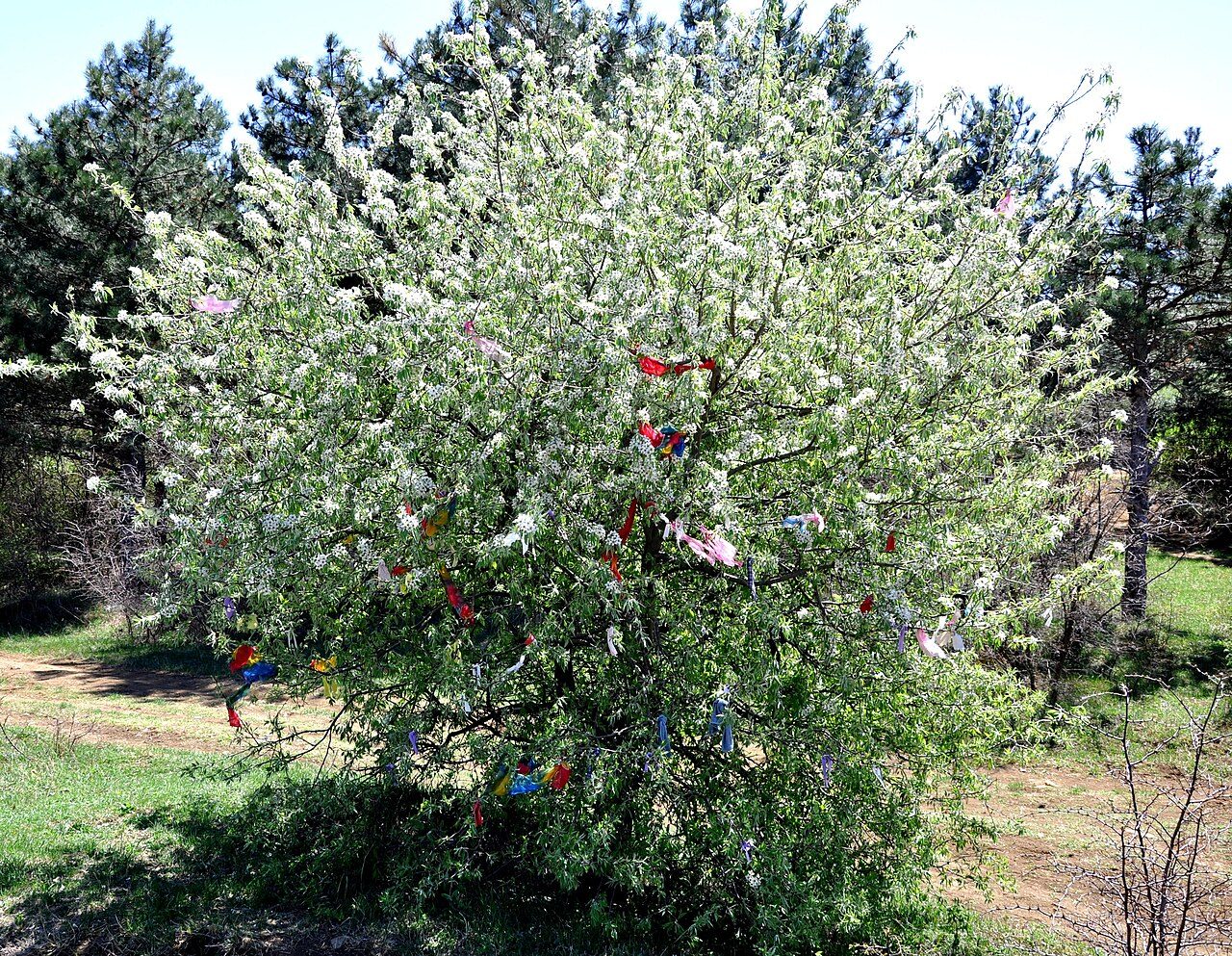
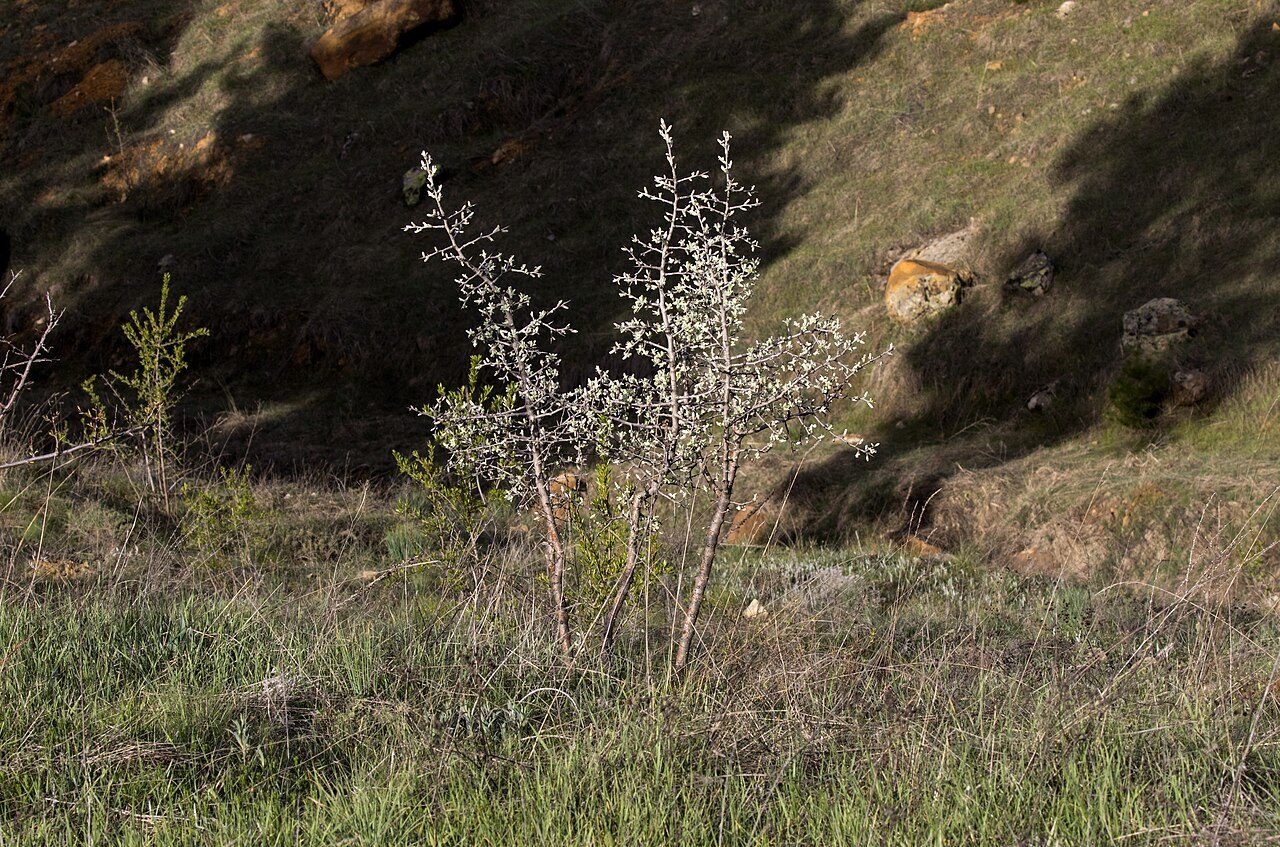
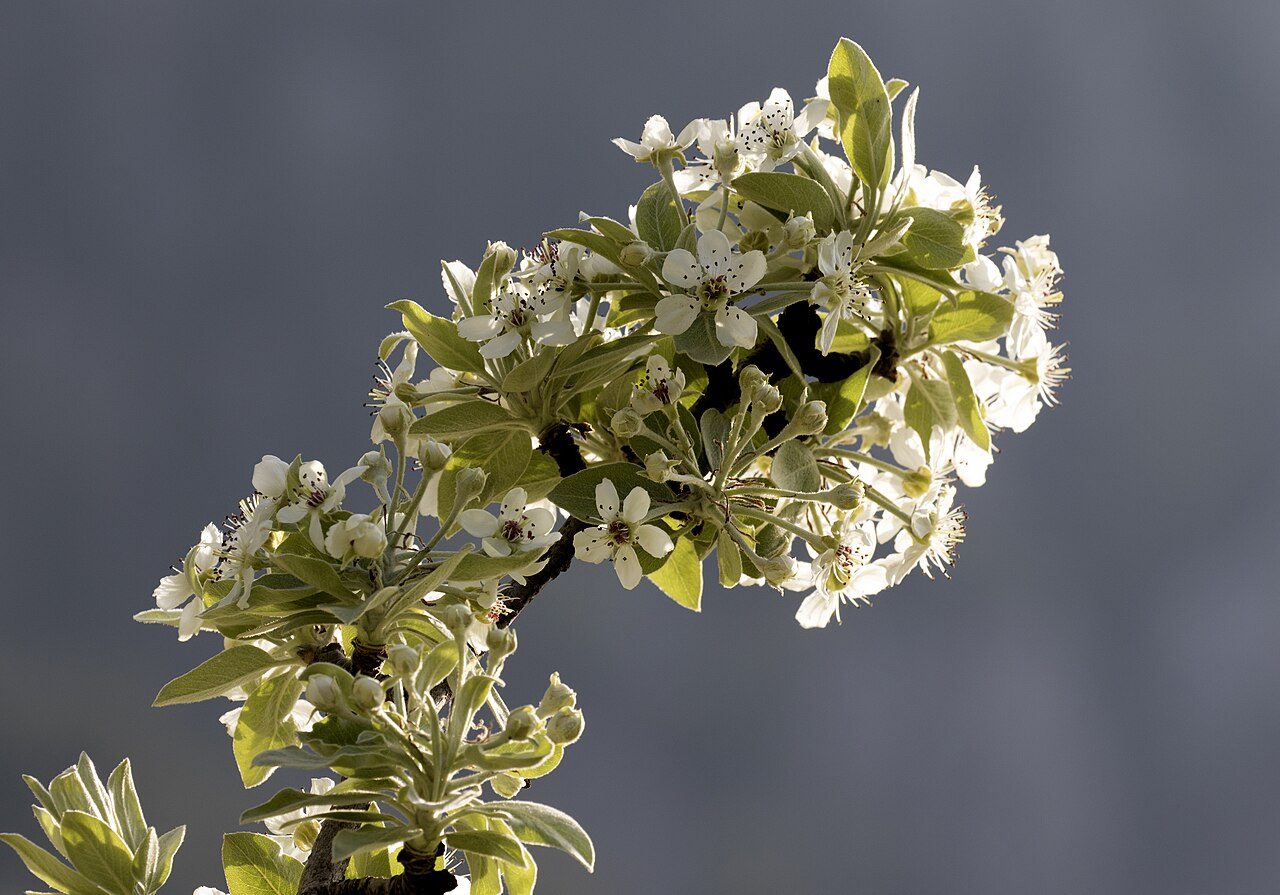
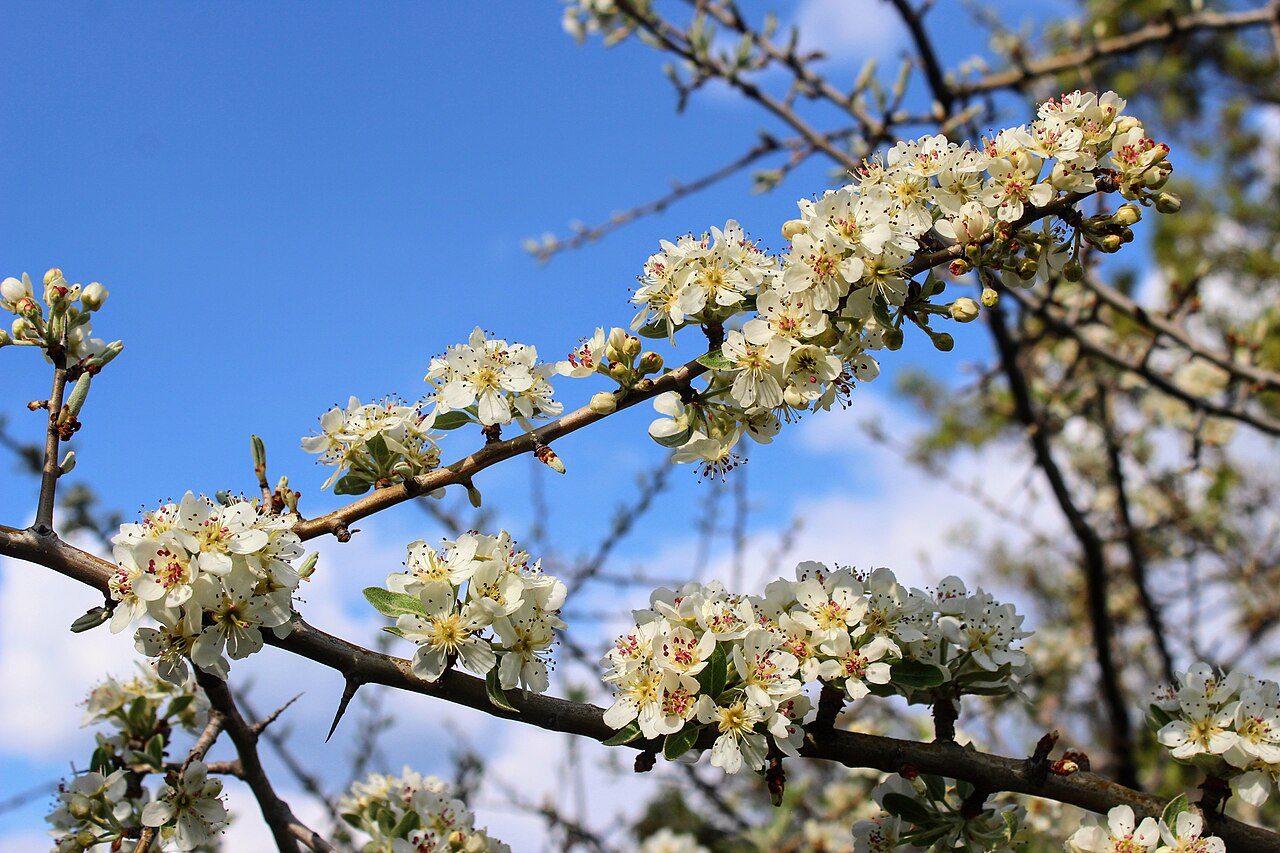
Oleaster-leaved pear is a wild pear found along field margins, on the steppe and in oak scrub in Central Anatolia, Thrace and the transitional regions; it is very tolerant of drought and poor soil. Its white flowers give pollen and some nectar in spring.
Flowering
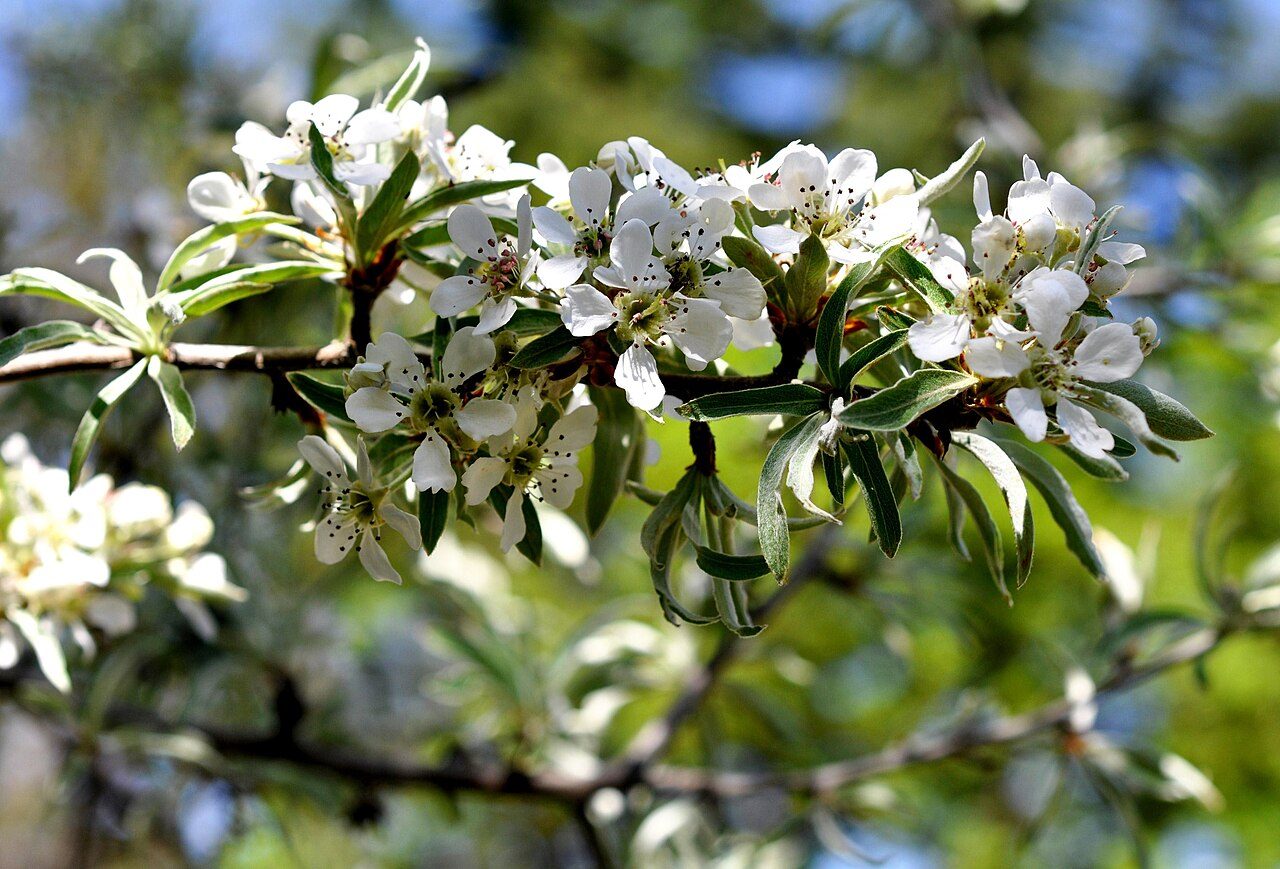
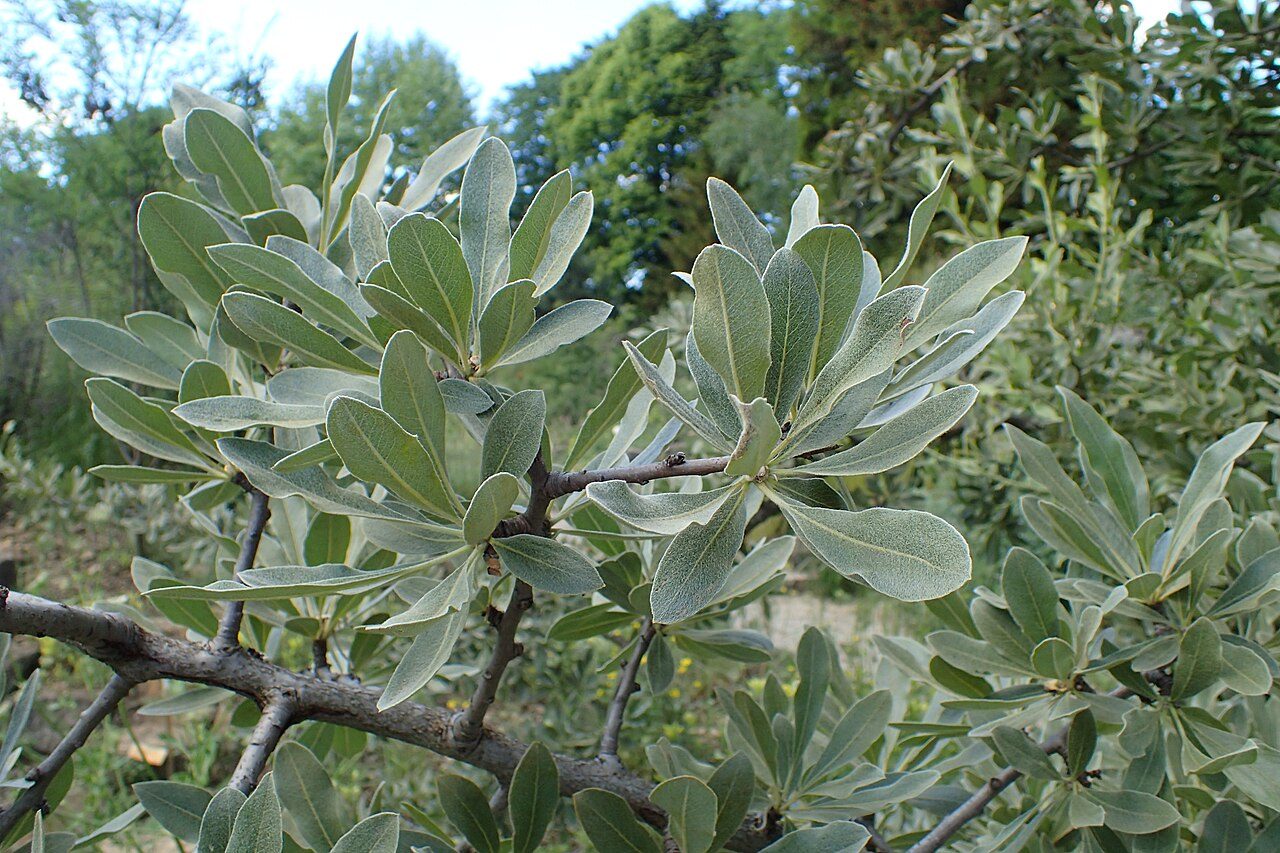
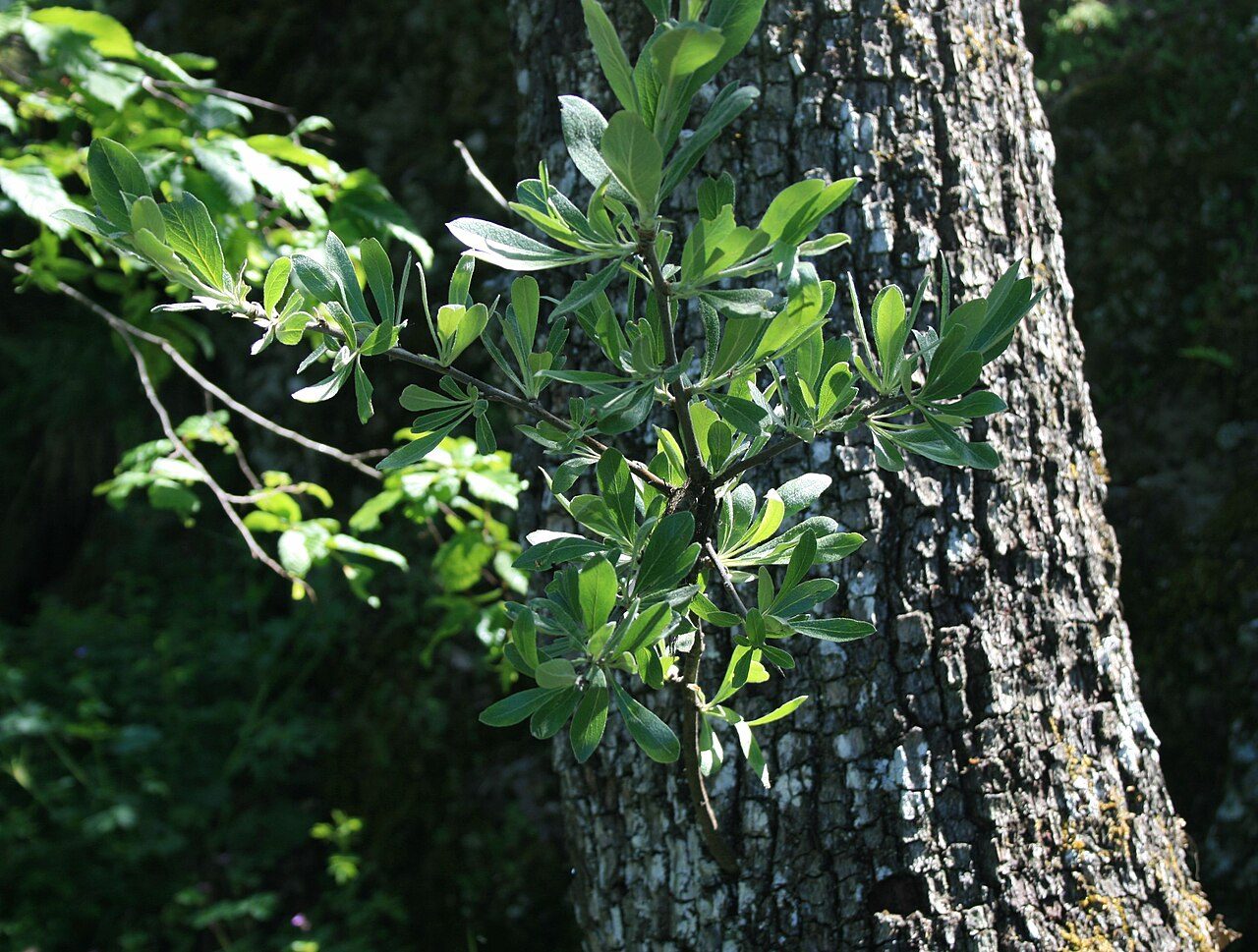
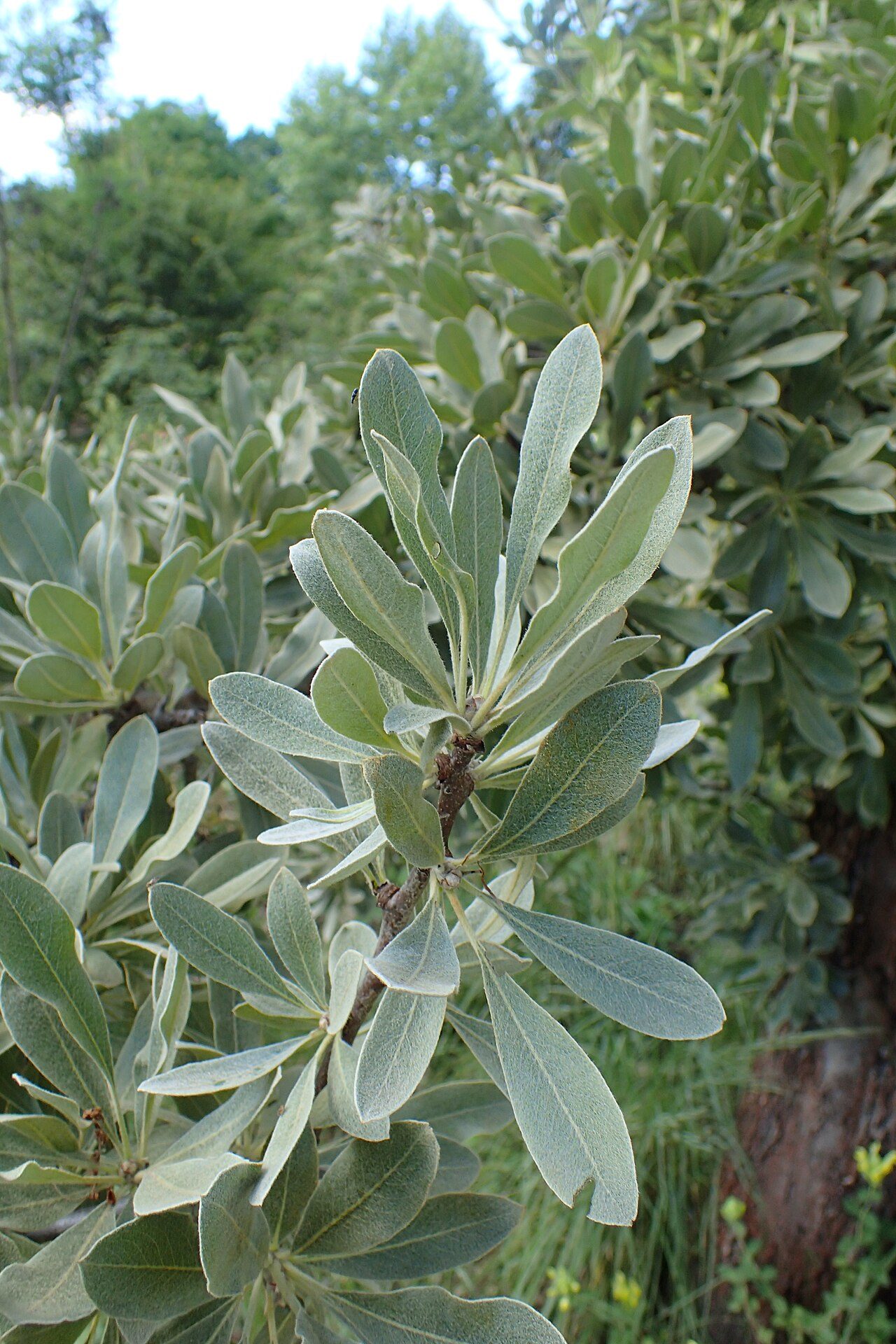
It flowers for about 2 weeks from late March to late April. Its narrow, silvery-hairy leaves make it easy to tell apart from cultivated pears.
Honey and pollen
Because pear nectar has a low sugar content, bees may abandon pear blossom when they find a richer source. The value of this pear therefore lies more in its early spring pollen; its contribution to honey is small.
Note for the beekeeper
It is also used as a rootstock for cultivated pears. As it is one of the few trees flowering in spring in steppe areas, protecting it along field margins helps the spring build-up of colonies.