


Black locust
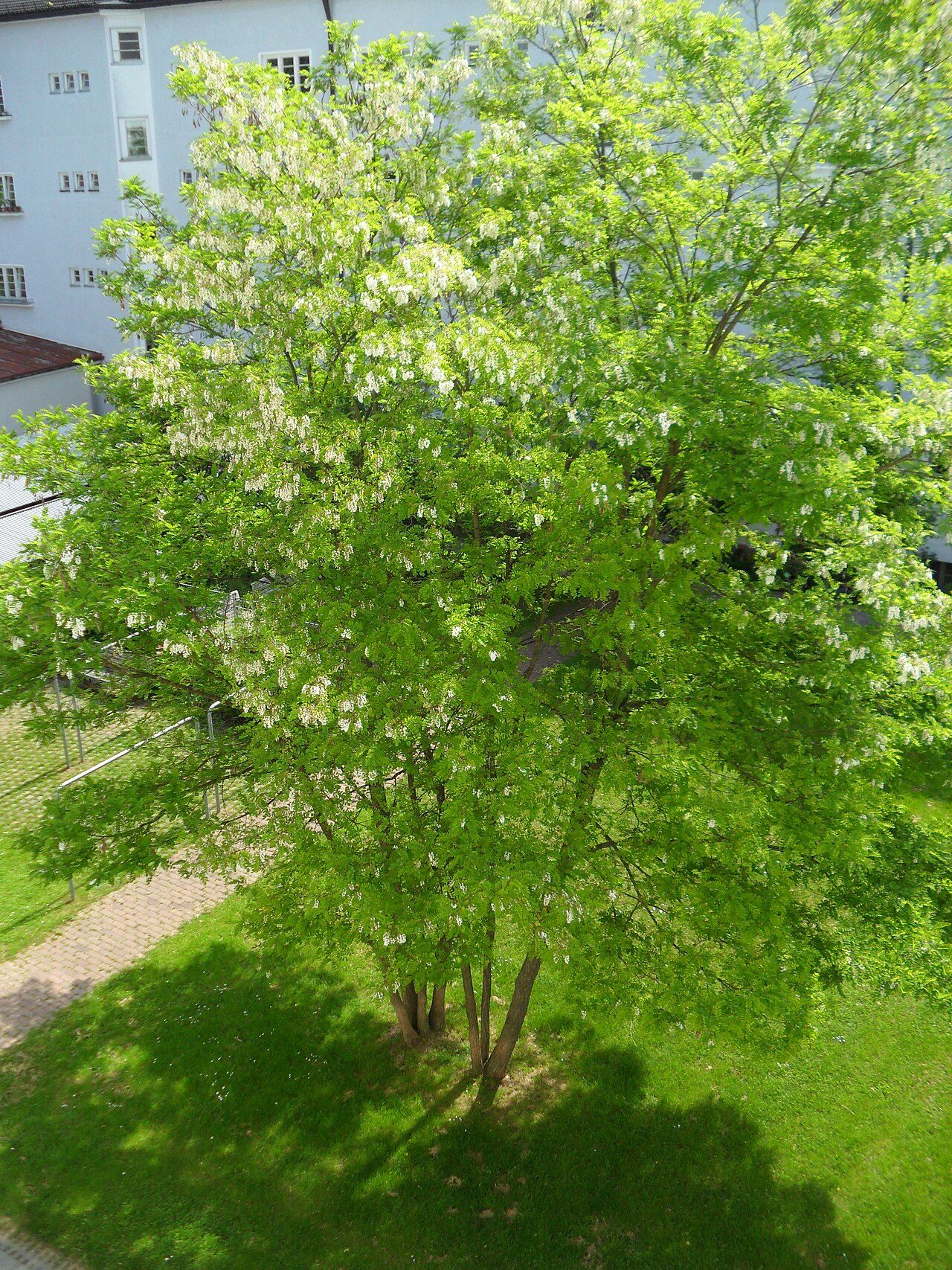
One of the most productive nectar trees in Europe and Turkey; in warm, calm weather it gives a huge flow of very pale acacia honey that stays liquid for long.
- Nectar
- Very good
- Pollen
- Low
- Flowering
- JanFebMarAprMayJunJulAugSepOctNovDec
- Honey yield
- 400–1200 kg/ha
- Crystallisation
- Slow
- Height
- 15-25 m
- Life cycle
- Perennial
🐝 Add to my apiary
Log in to add it to your apiary.Value for beekeeping
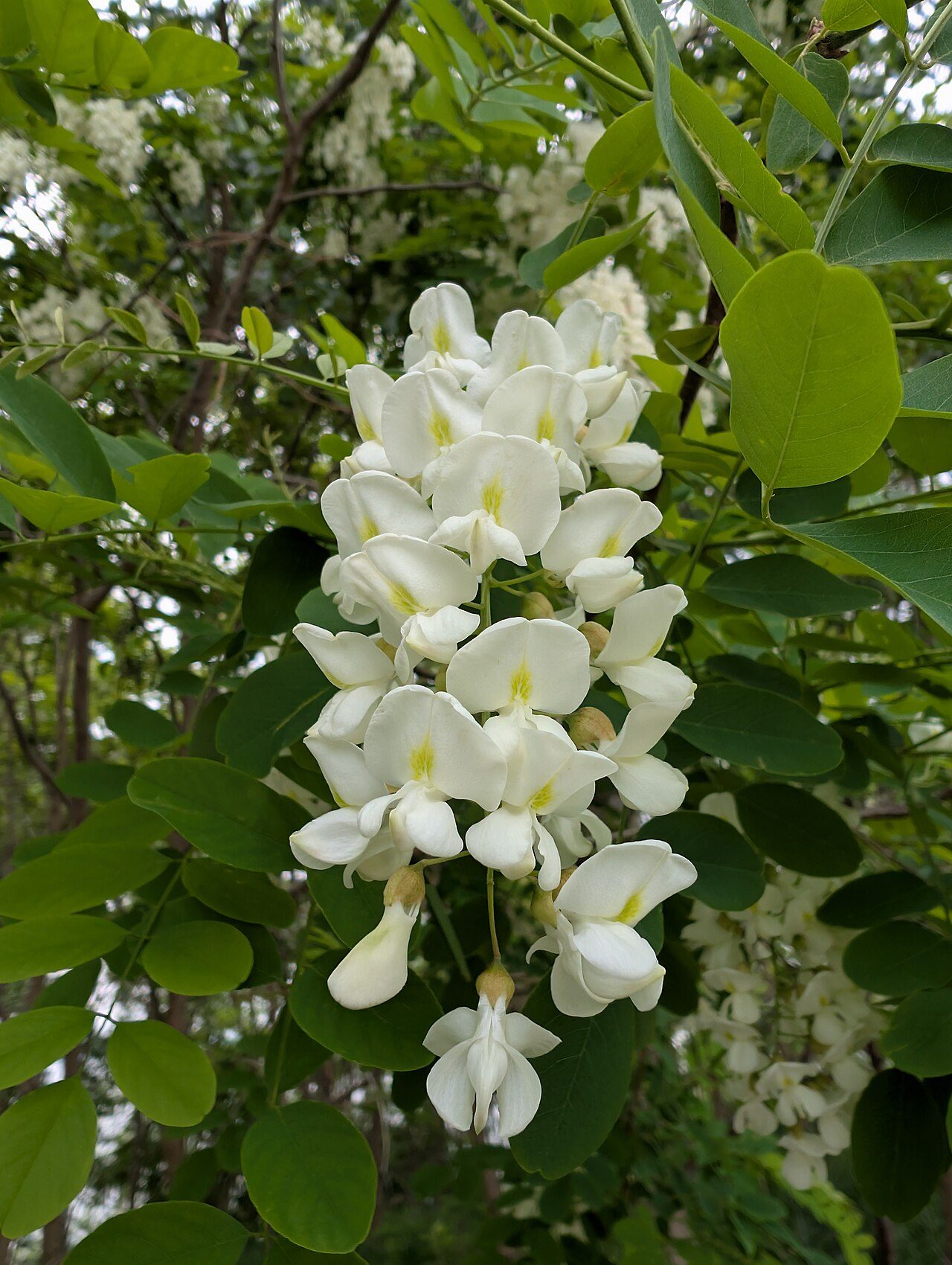
Black locust is one of the most productive nectar trees in Europe and Turkey. Its flower clusters give plenty of sugar-rich nectar; in warm (above about 20 °C), calm and humid weather the flow is very strong. During flowering, cold, rain or dry wind can wipe out the whole flow within a few days, so yields vary a lot from year to year.
Flowering
It flowers for about 10-14 days, in late April-early May on the coasts and in May-June inland. Moving hives to take advantage of differences in altitude can extend the flow.
Honey and pollen
Acacia honey ranges from water-white to pale yellow, with a light scent and a very sweet taste; its high fructose content makes it crystallise very slowly. Its pollen value is low.
Note for the beekeeper
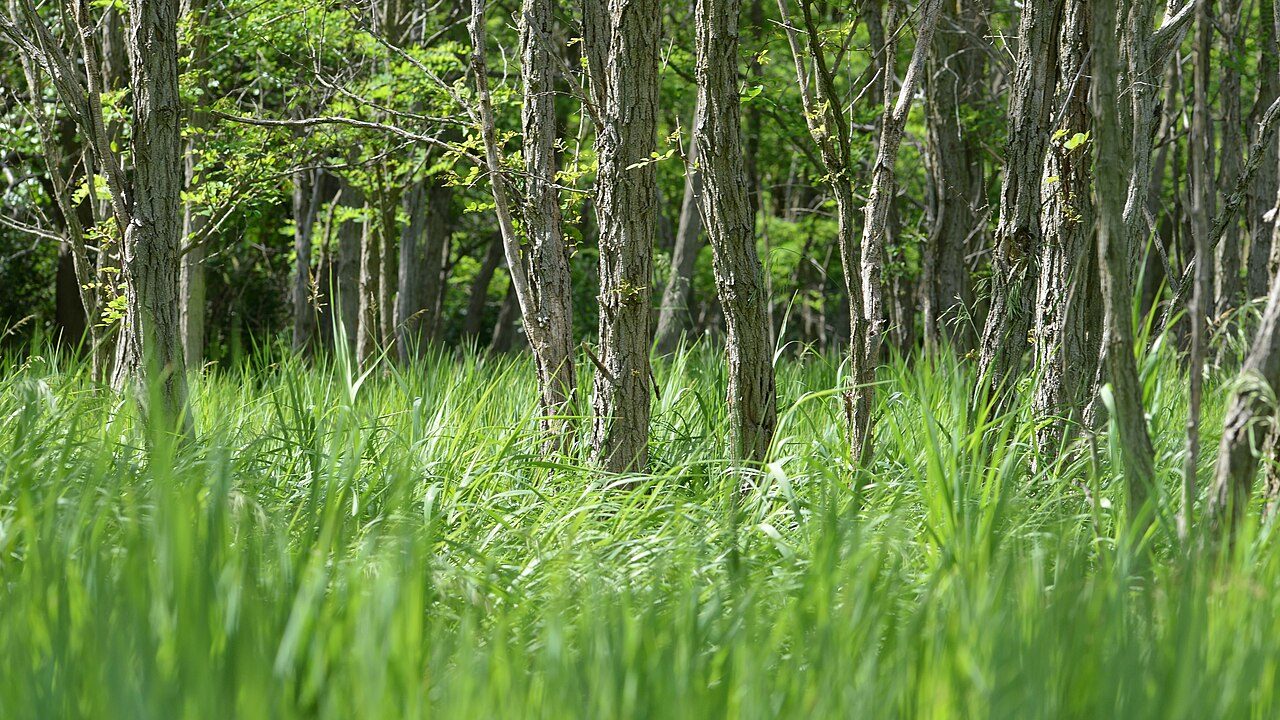
The acacia flow must be met with strong colonies; hives should be full of brood before flowering. In many parts of Europe it is considered invasive, and planting it in natural areas may be restricted.