

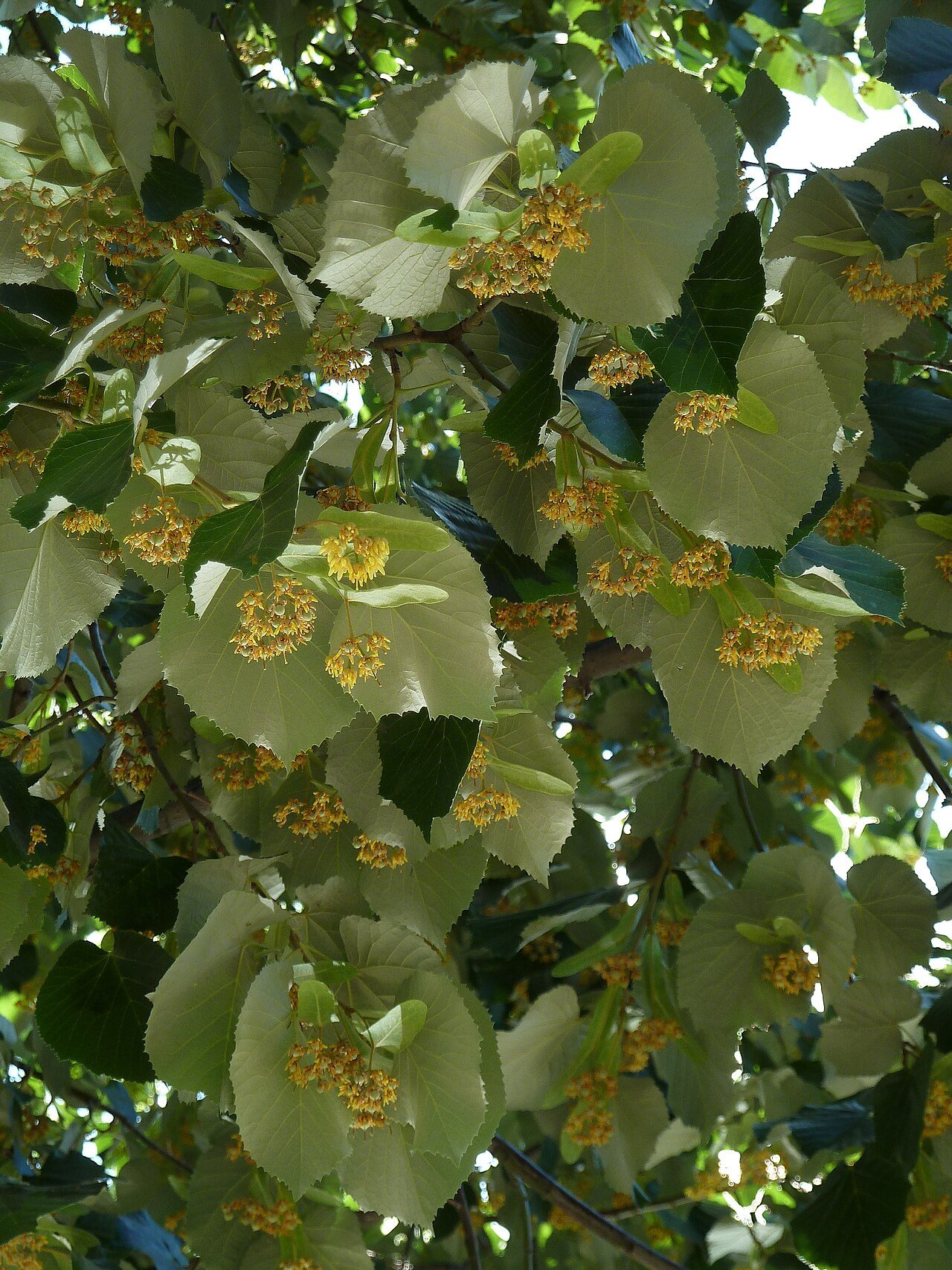
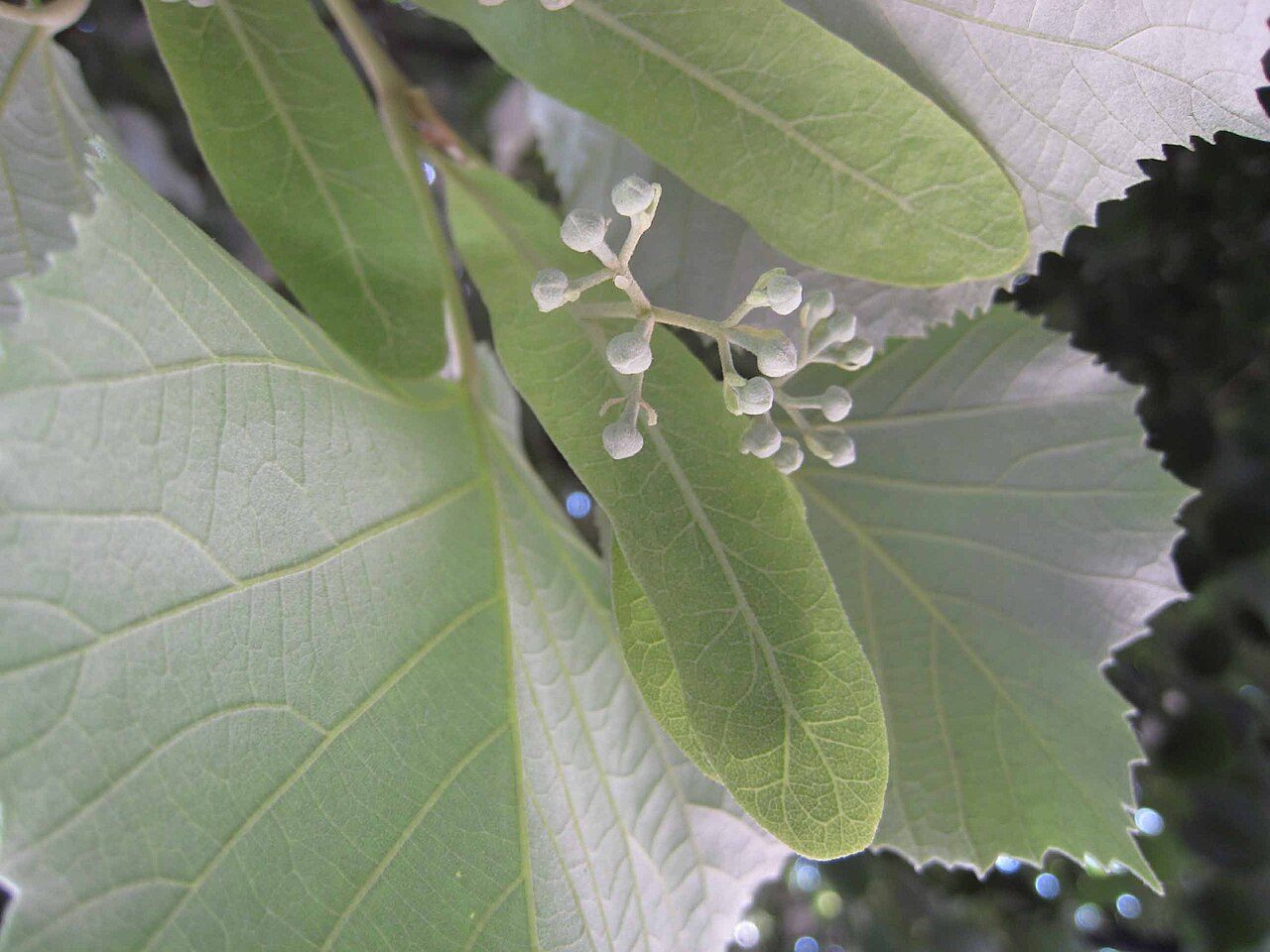
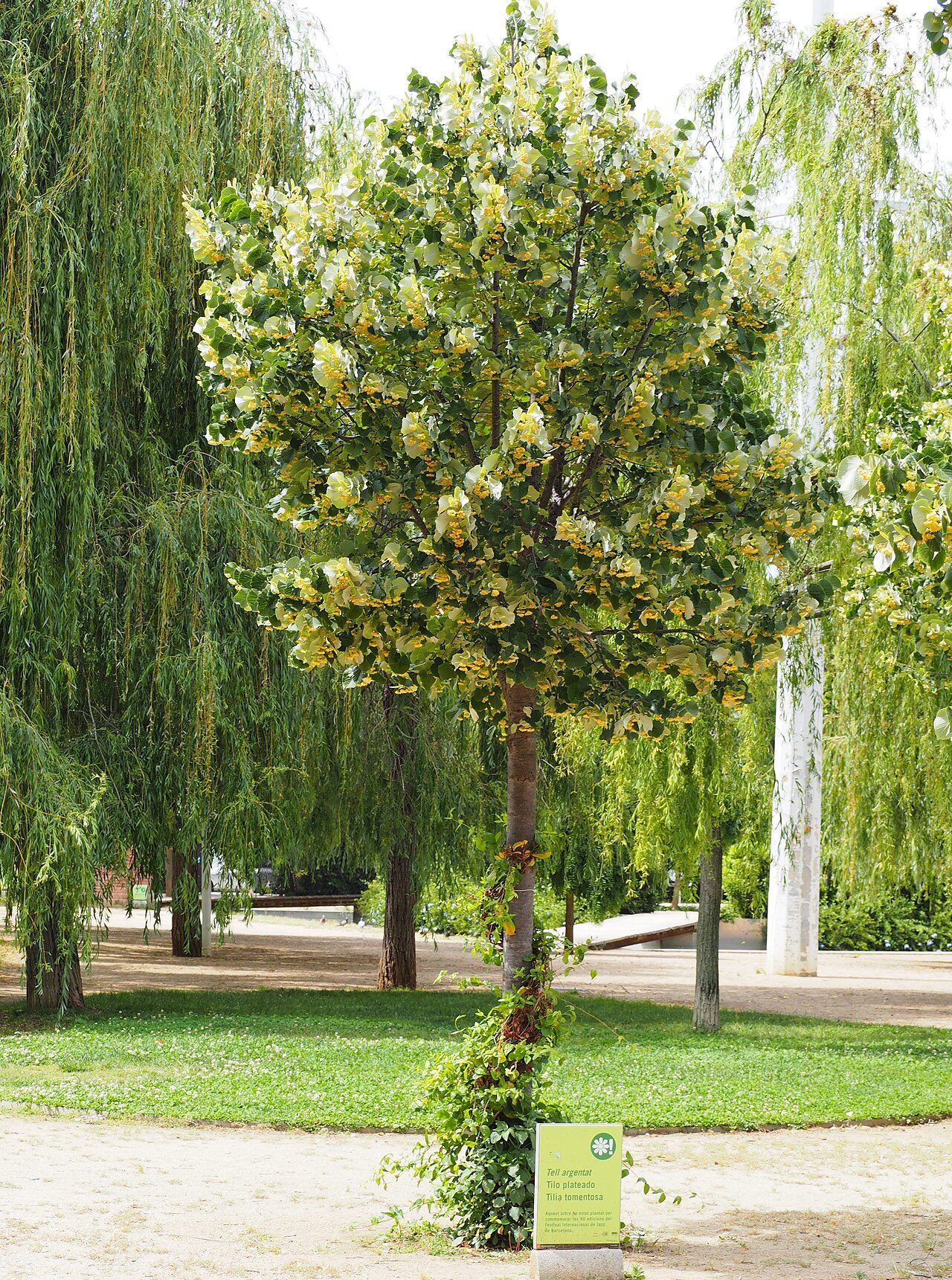
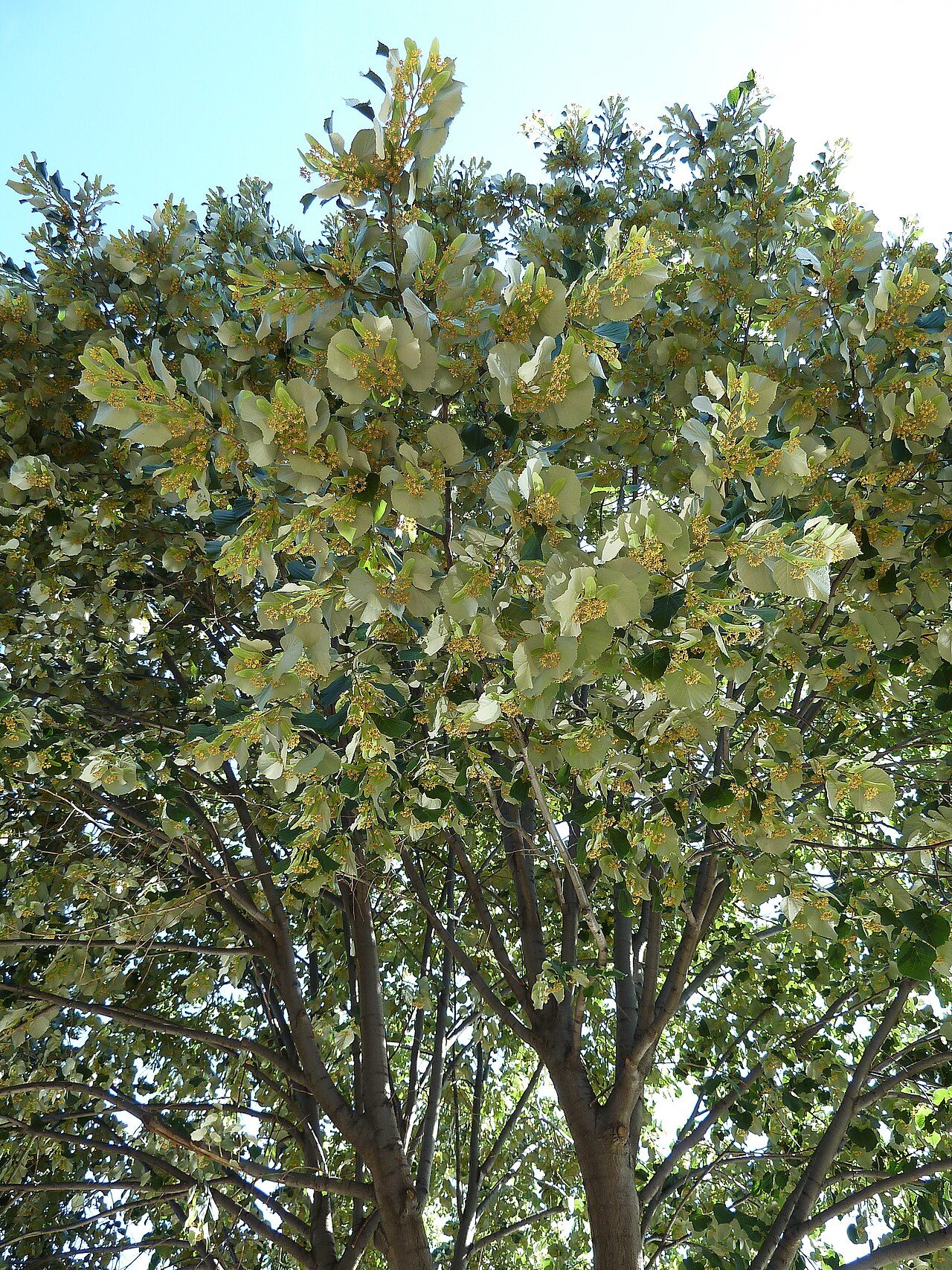
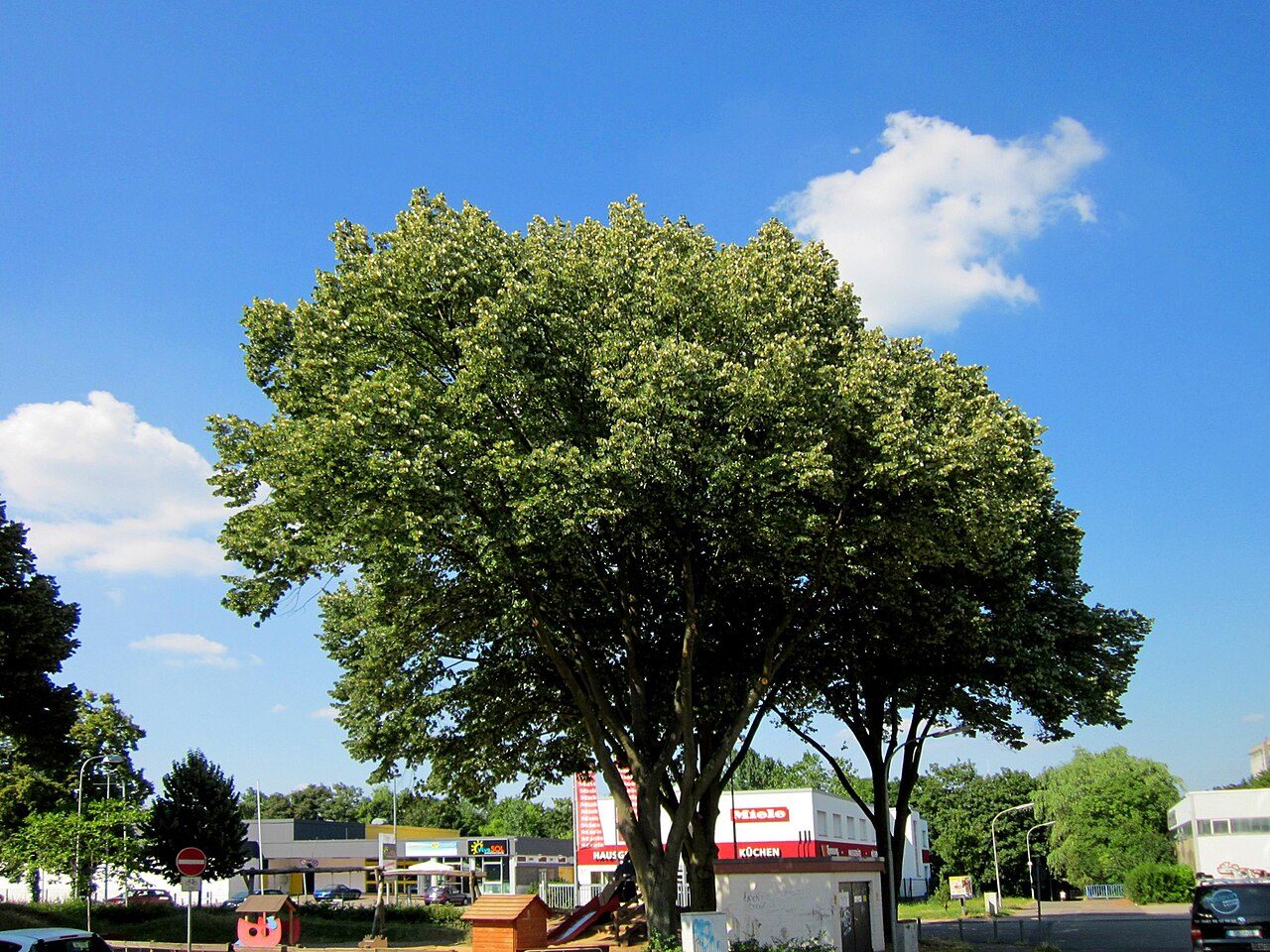
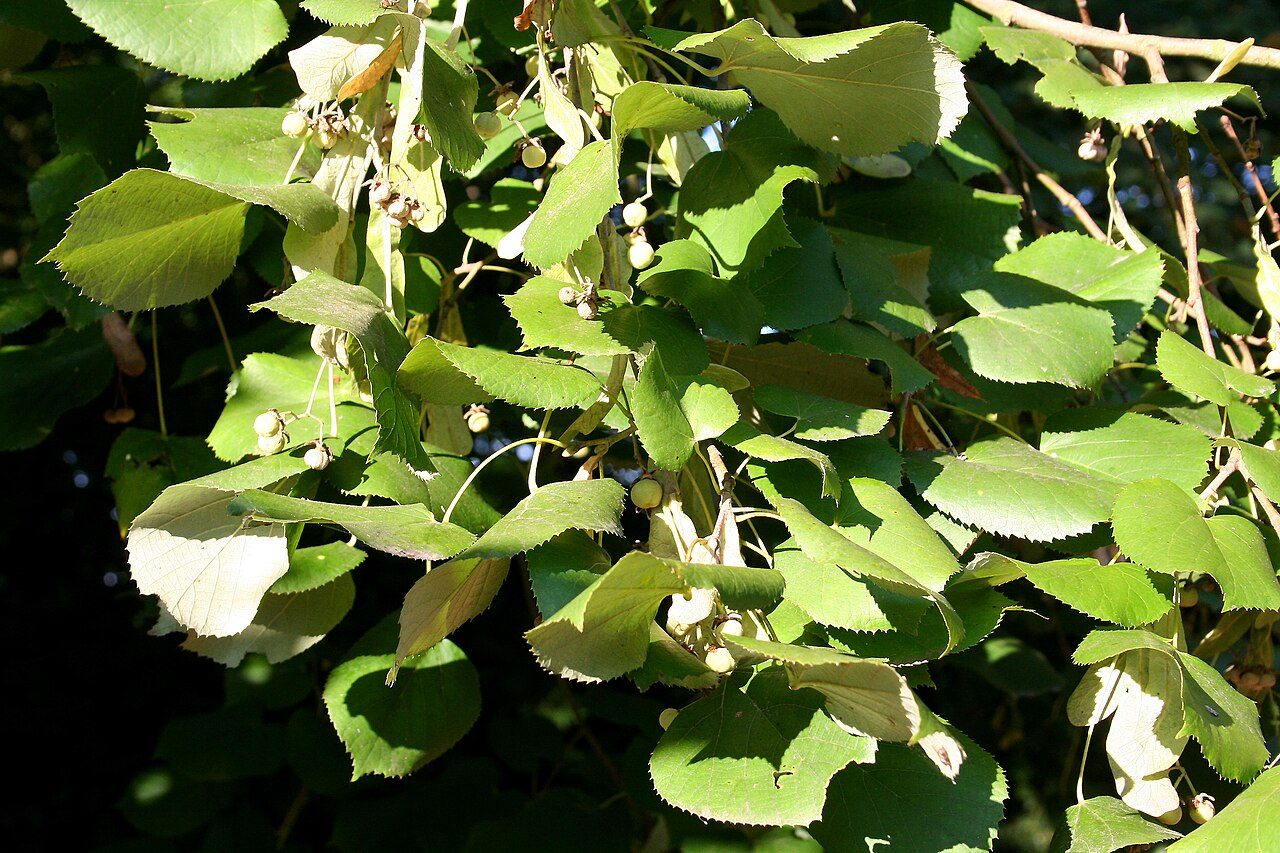
Silver lime
The latest-flowering lime, giving abundant nectar in humid July weather and bridging the mid-summer gap. Bumblebee deaths beneath it are explained by starvation rather than toxins.
- Nectar
- Good
- Pollen
- Medium
- Flowering
- JanFebMarAprMayJunJulAugSepOctNovDec
- Crystallisation
- Medium
- Pollen colour
- Height
- 20-30 m
- Life cycle
- Perennial
🐝 Add to my apiary
Log in to add it to your apiary.Value for beekeeping
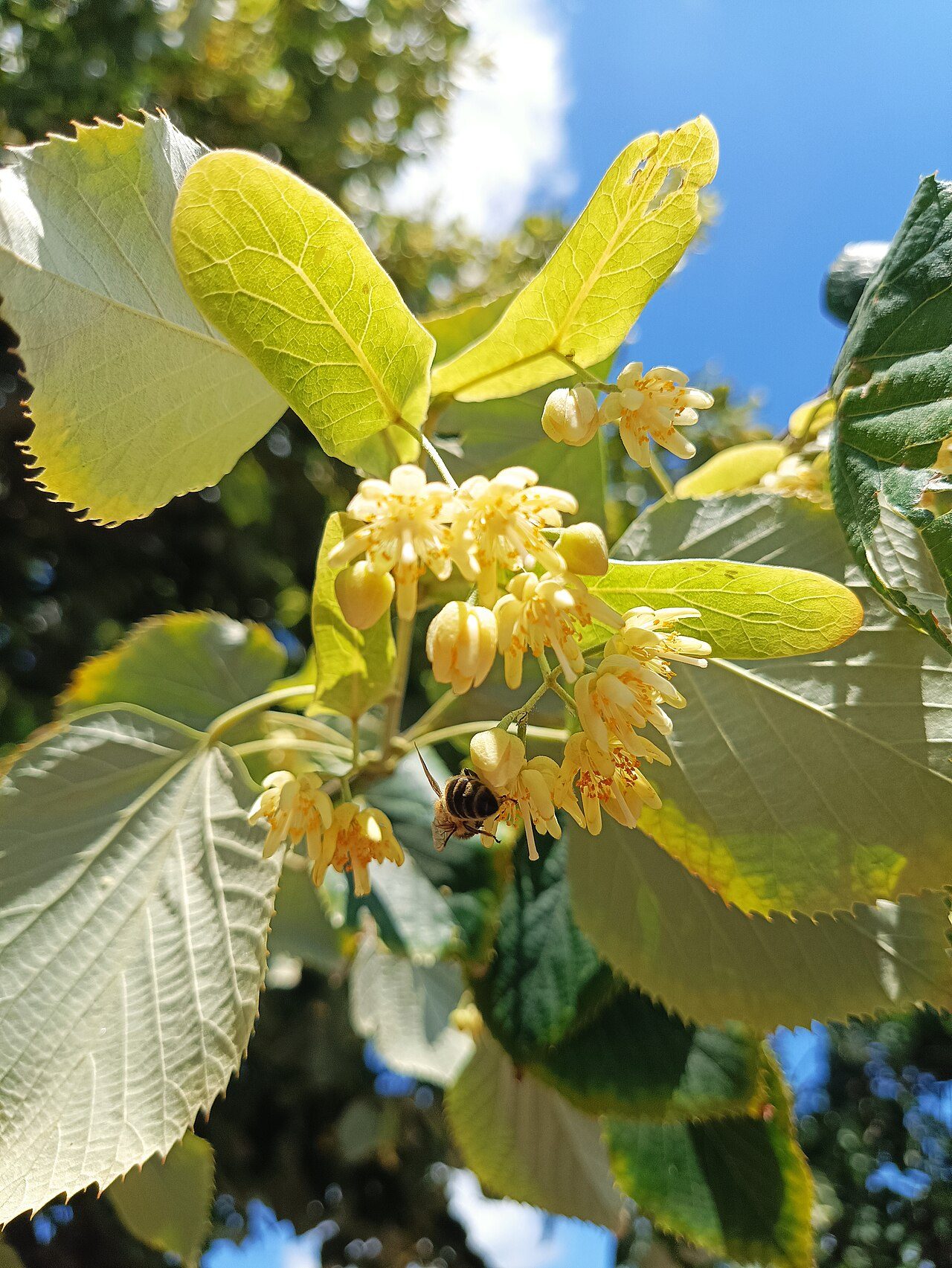
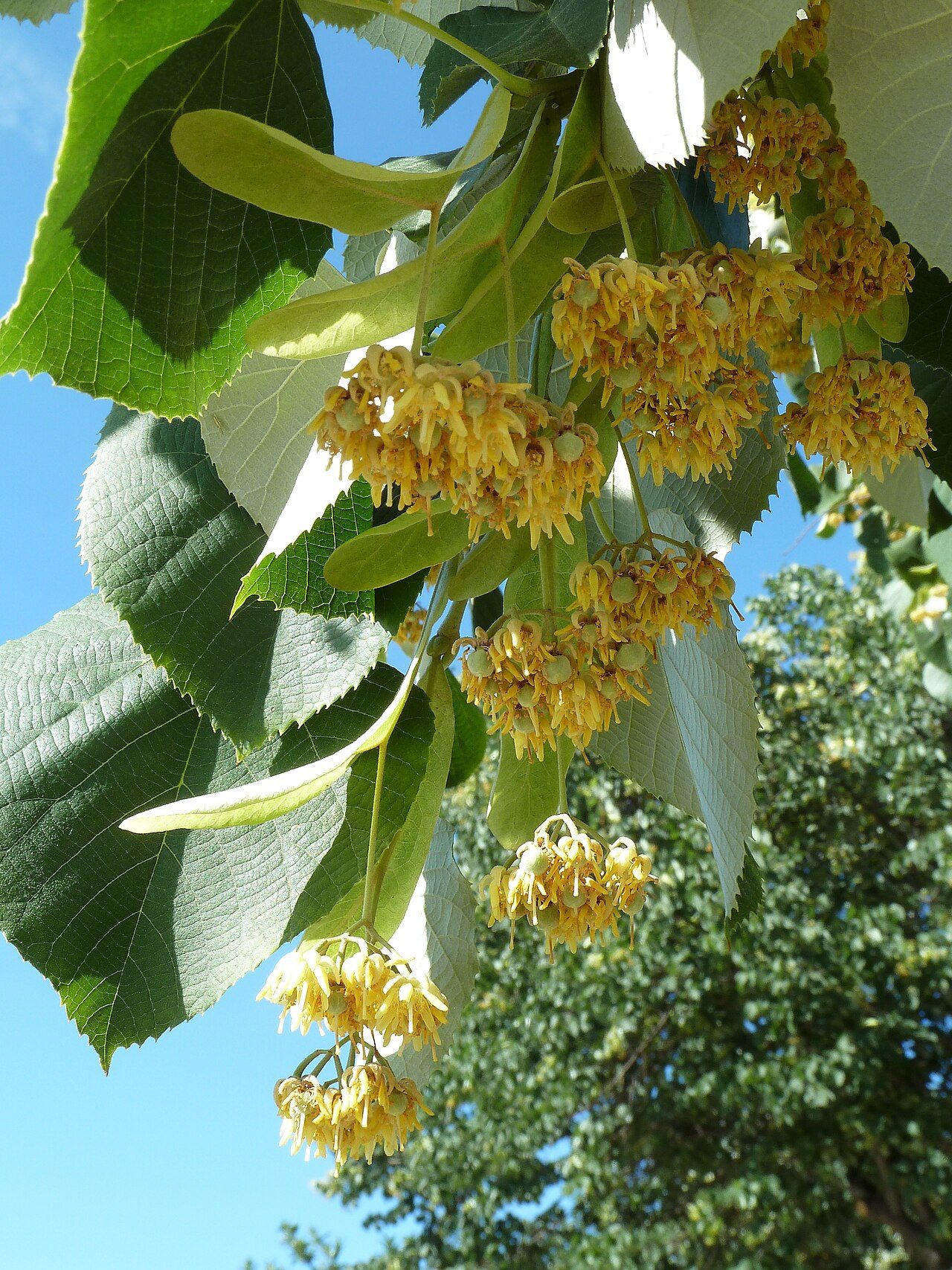
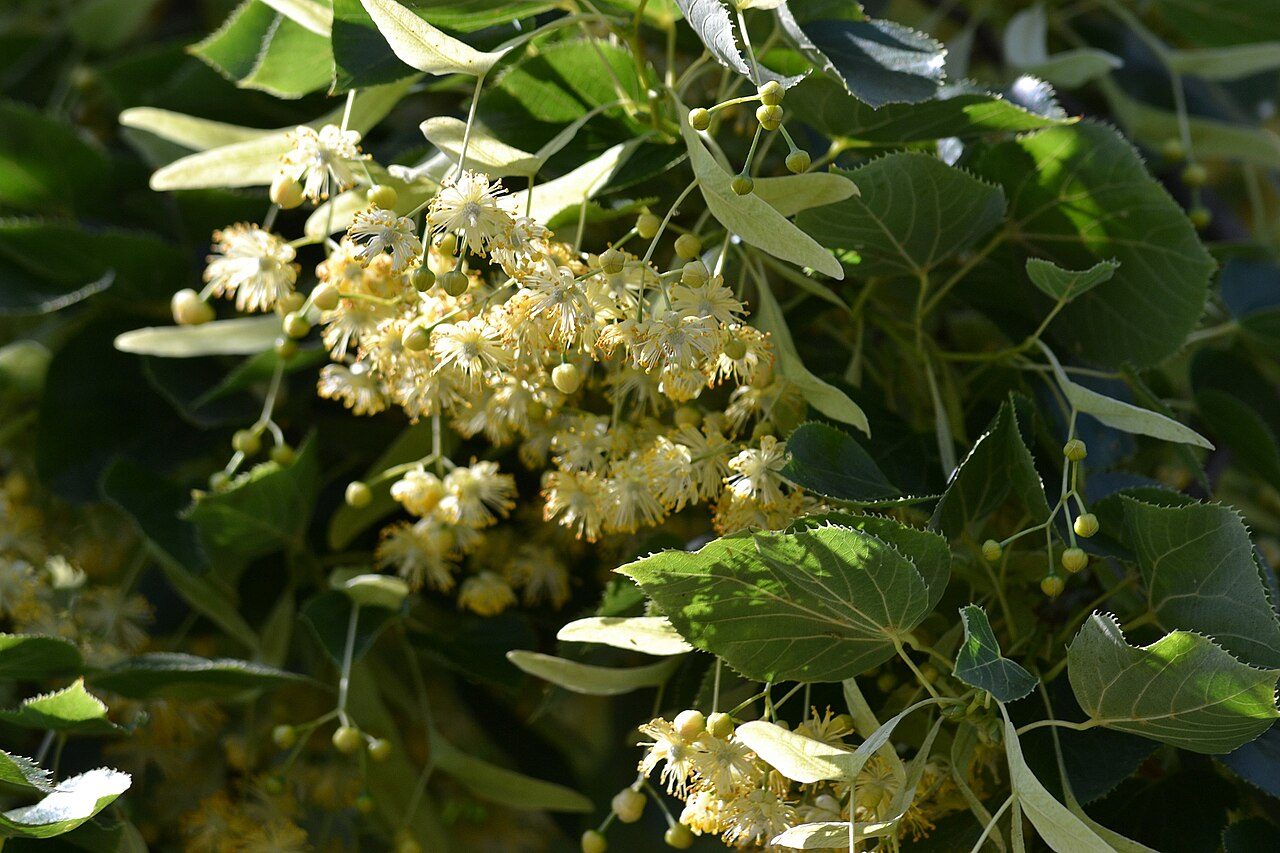
The silver lime is a honey tree native to the Balkans and north-western Anatolia and widely planted in towns. Its nectar is plentiful and rich in sugar; secretion increases on mild, humid days and after rain, and stops quickly in dry, hot wind. In some years honeydew left by aphids adds an extra source.
Flowering
It is the latest of the limes to flower: from late June to mid-July it stays in bloom for about 2-3 weeks, following the large-leaved and small-leaved limes.
Honey and pollen
Lime honey is pale yellow, slightly greenish, with a fresh aroma with hints of mint and menthol, and crystallises at a moderate rate. The pollen loads are pale yellow-green.
Note for the beekeeper
Dead bumblebees under the tree used to be blamed on mannose sugar in the nectar; later studies showed that the deaths are caused by starvation when nectar runs short at the end of flowering. There is no strong evidence that it harms honeybees. Urban limes are a good target for migratory beekeeping in July.