

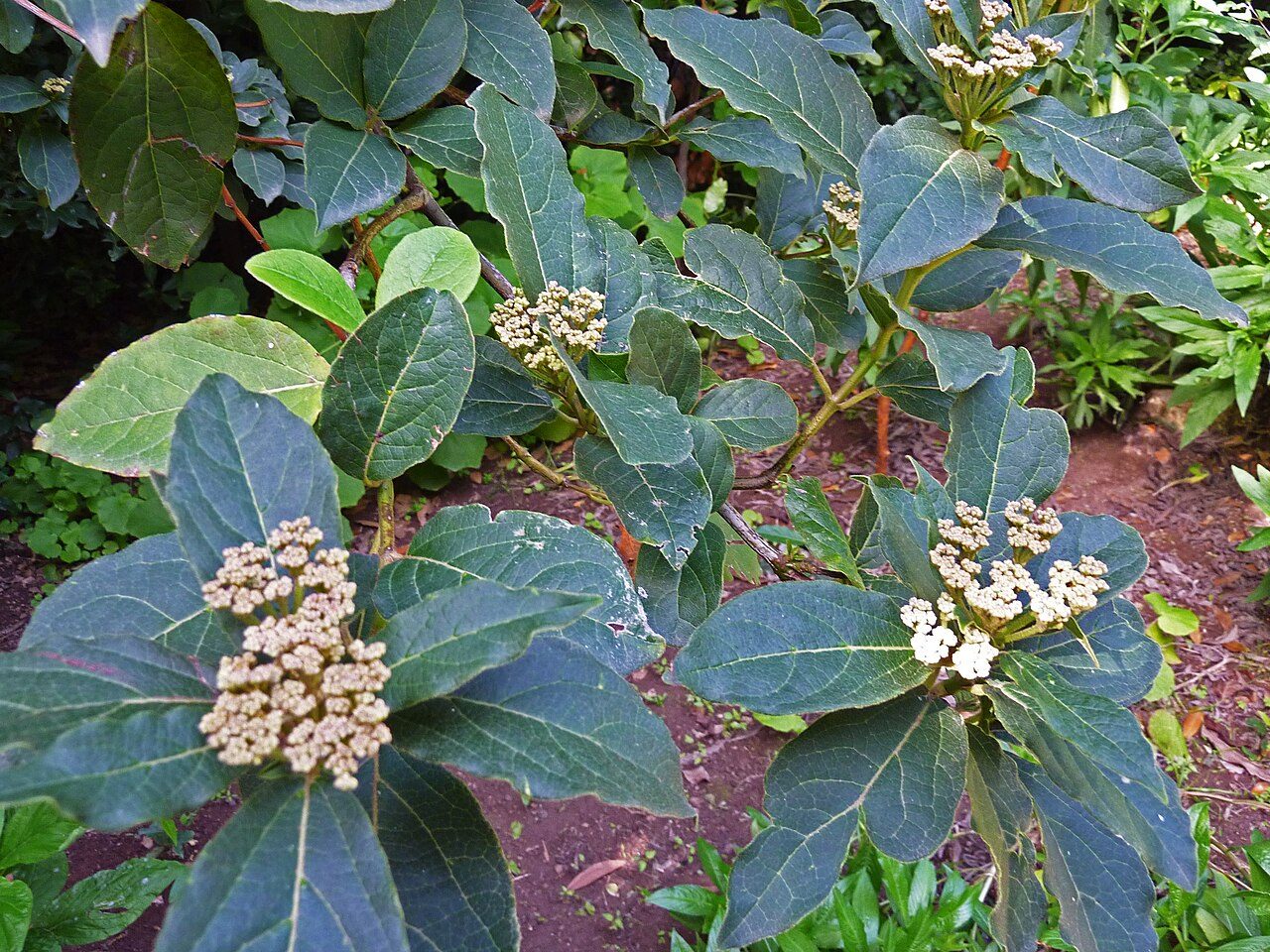
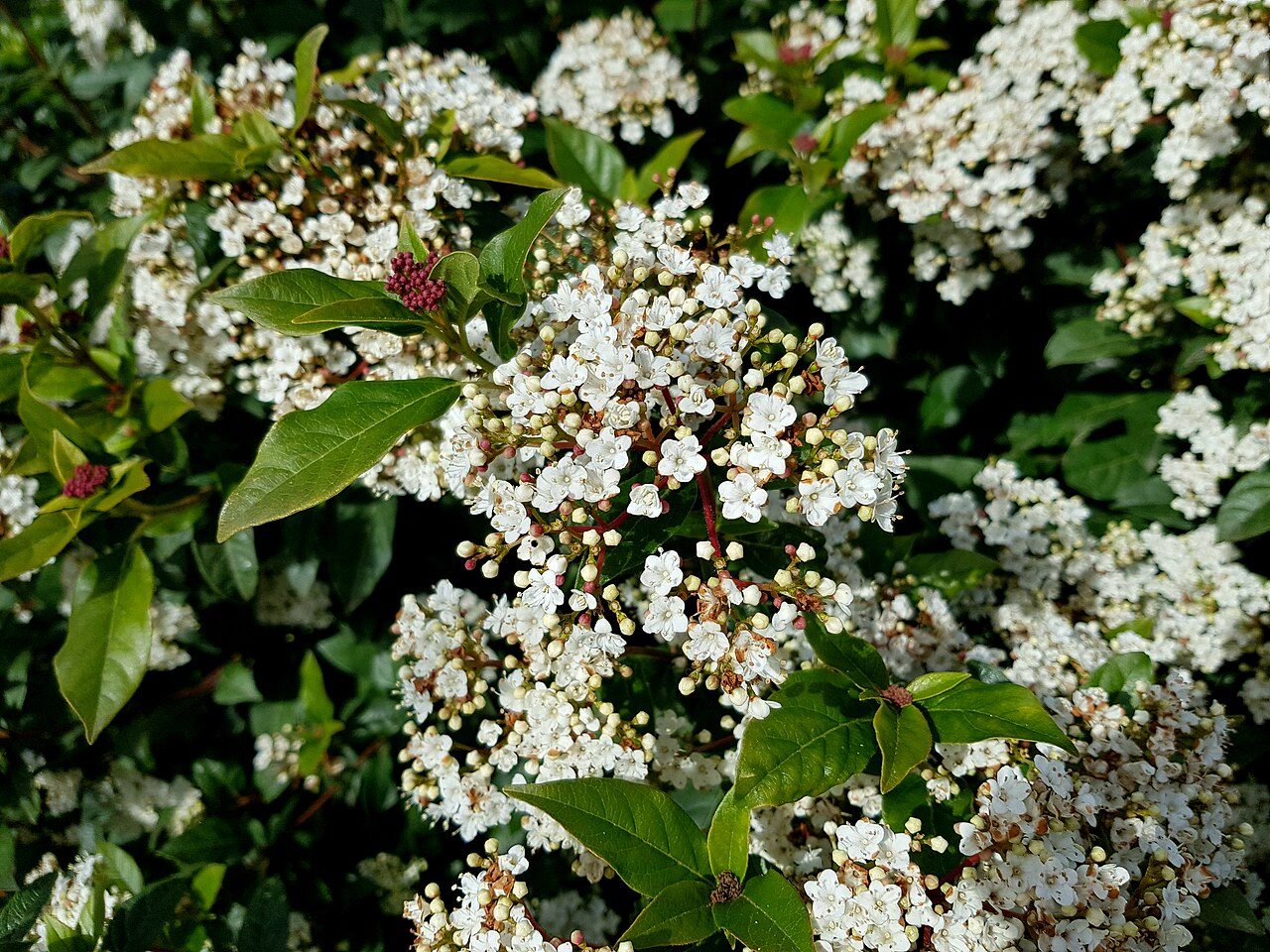
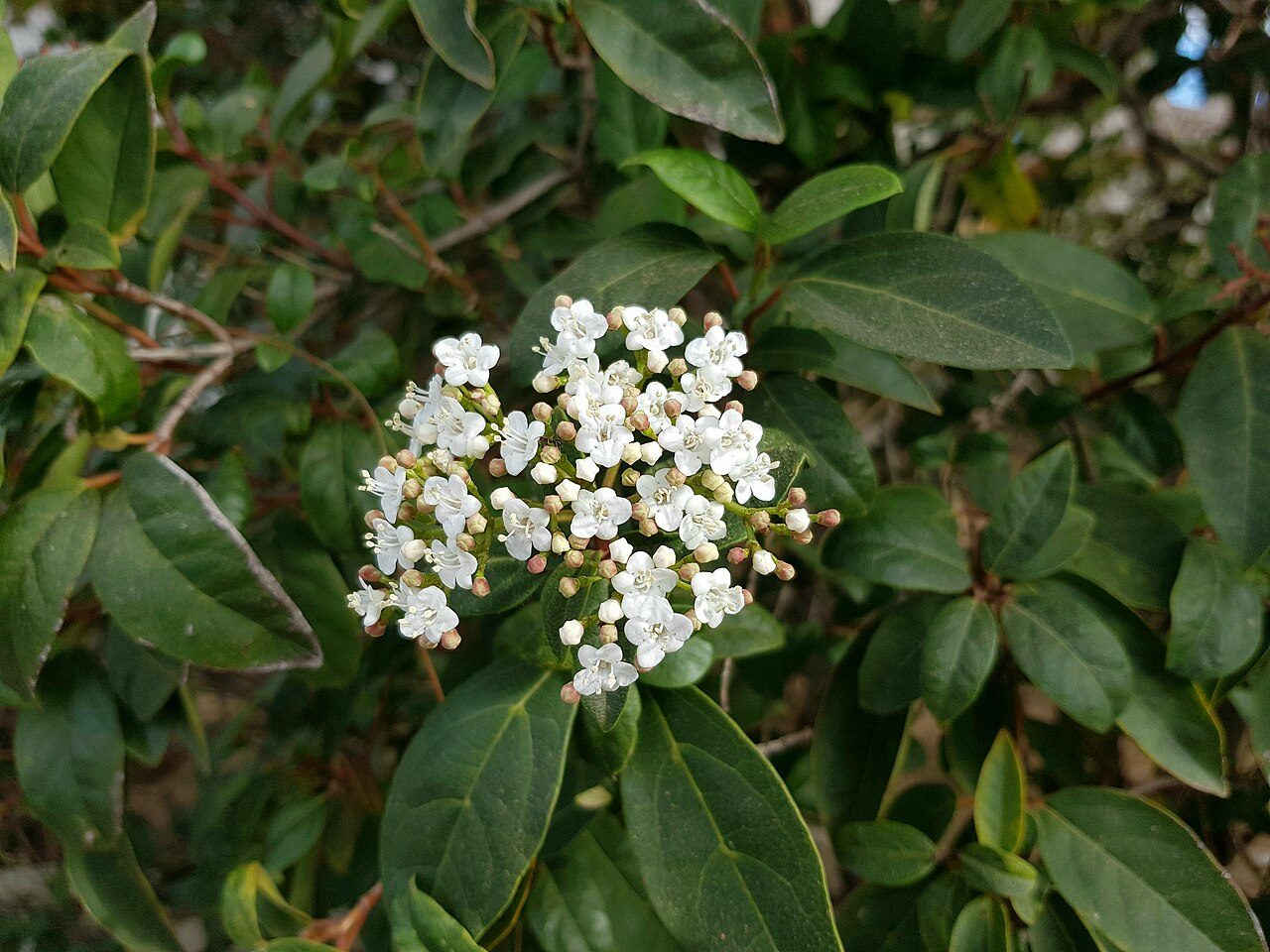
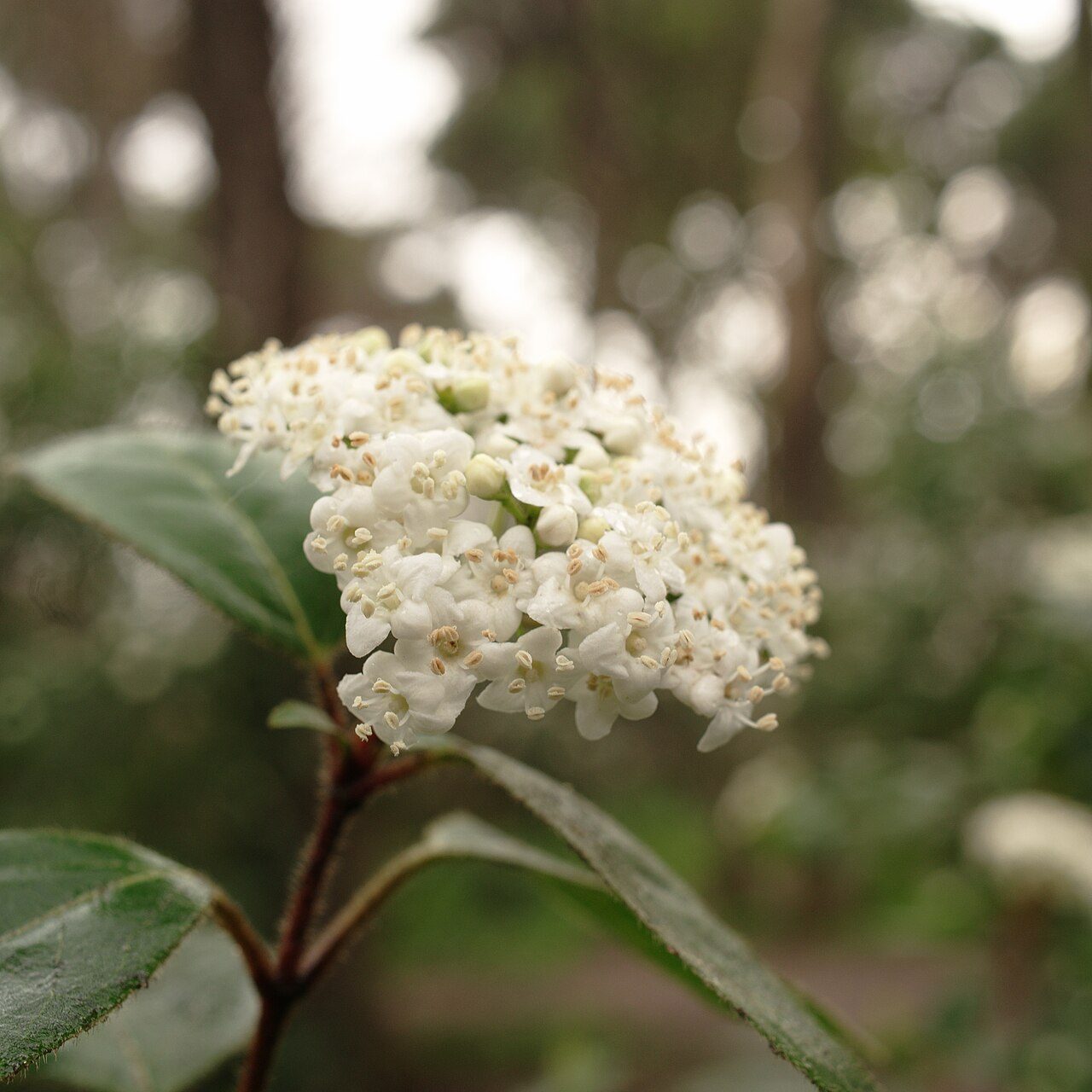
Laurustinus
Evergreen shrub flowering from November to April; in mild Mediterranean winter weather it gives bees a little nectar and valuable winter pollen.
- Nectar
- Low
- Pollen
- Medium
- Flowering
- JanFebMarAprMayJunJulAugSepOctNovDec
- Height
- 2-4 m
- Life cycle
- Perennial
🐝 Add to my apiary
Log in to add it to your apiary.Value for beekeeping
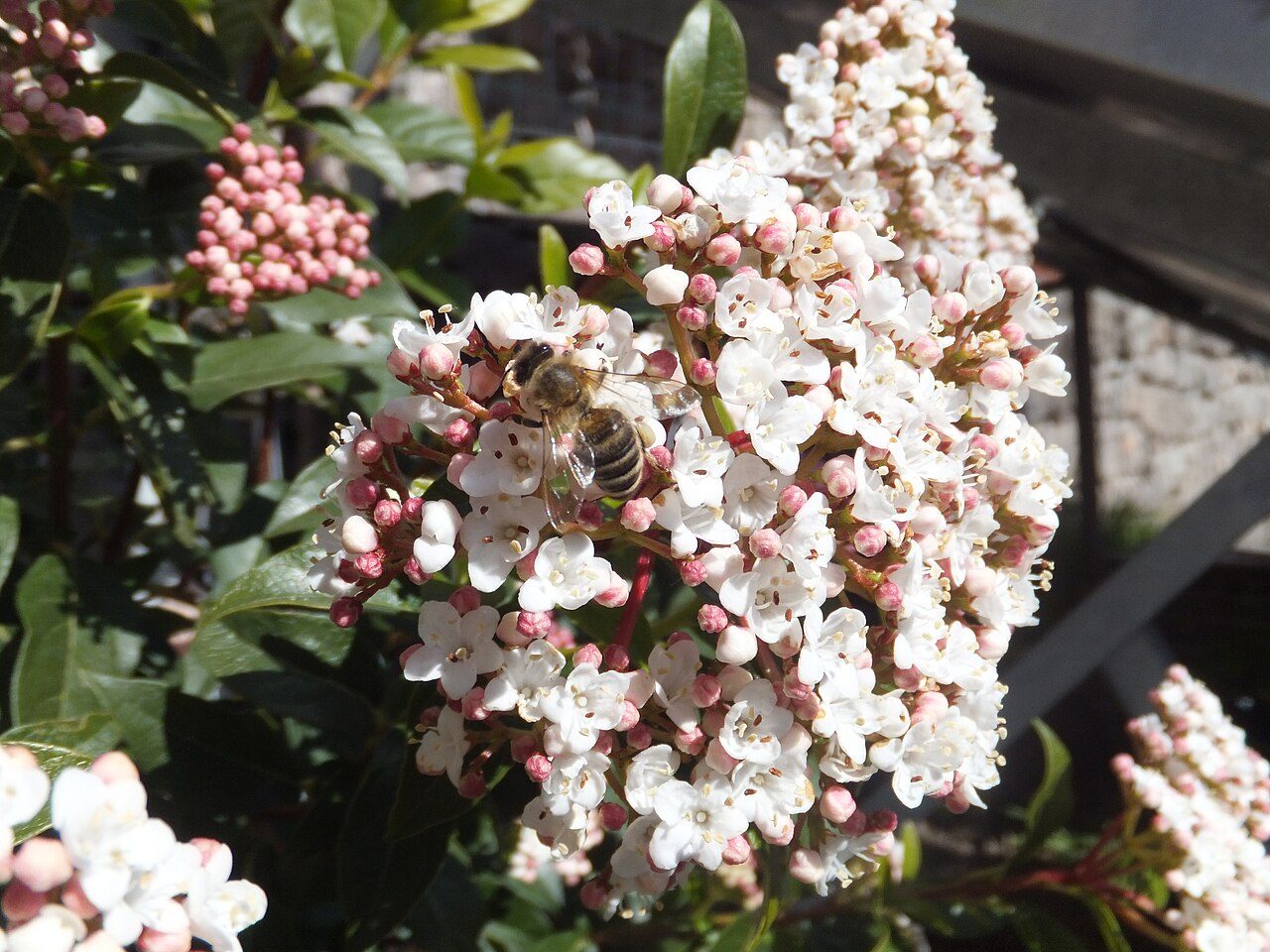
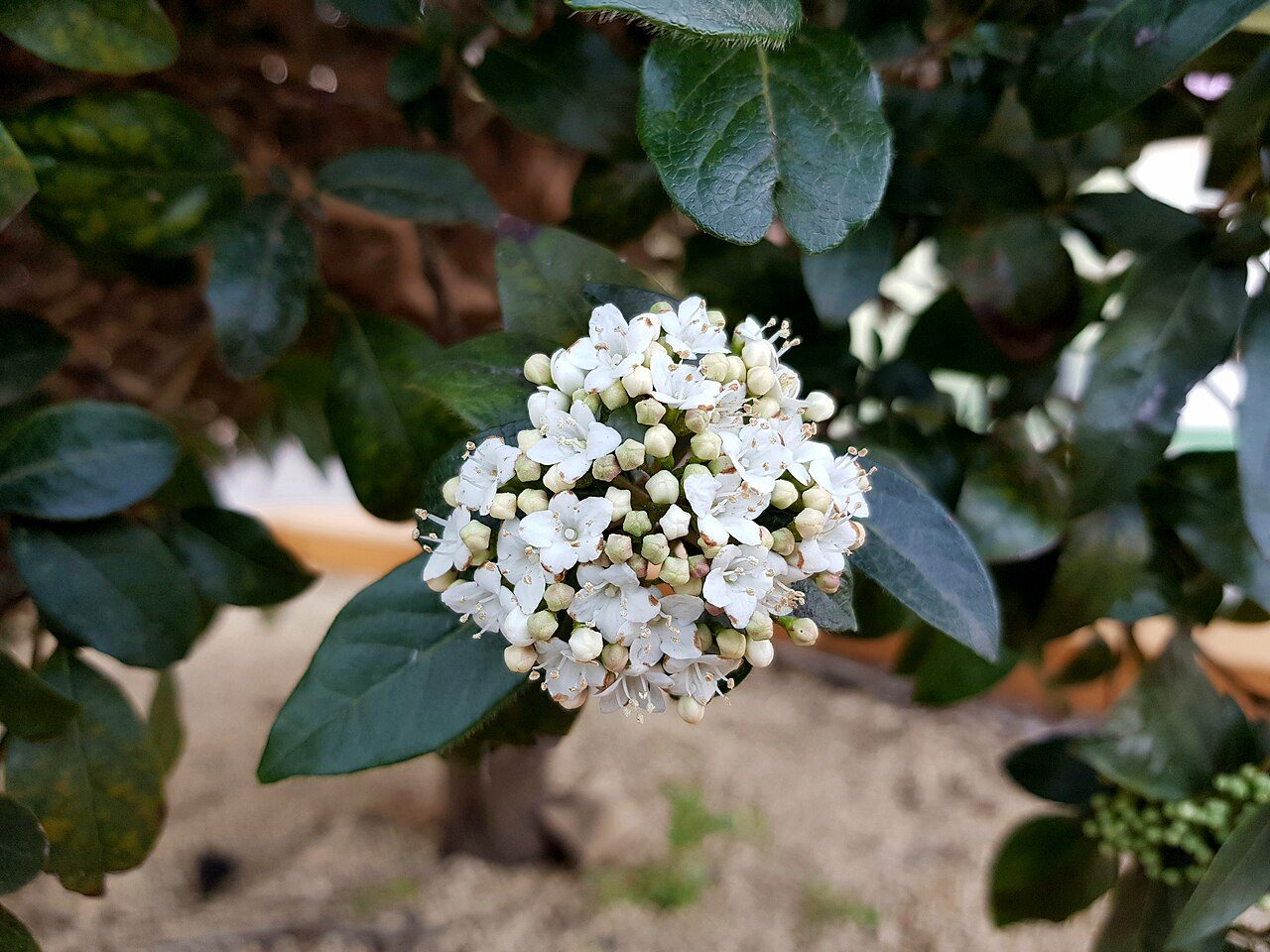
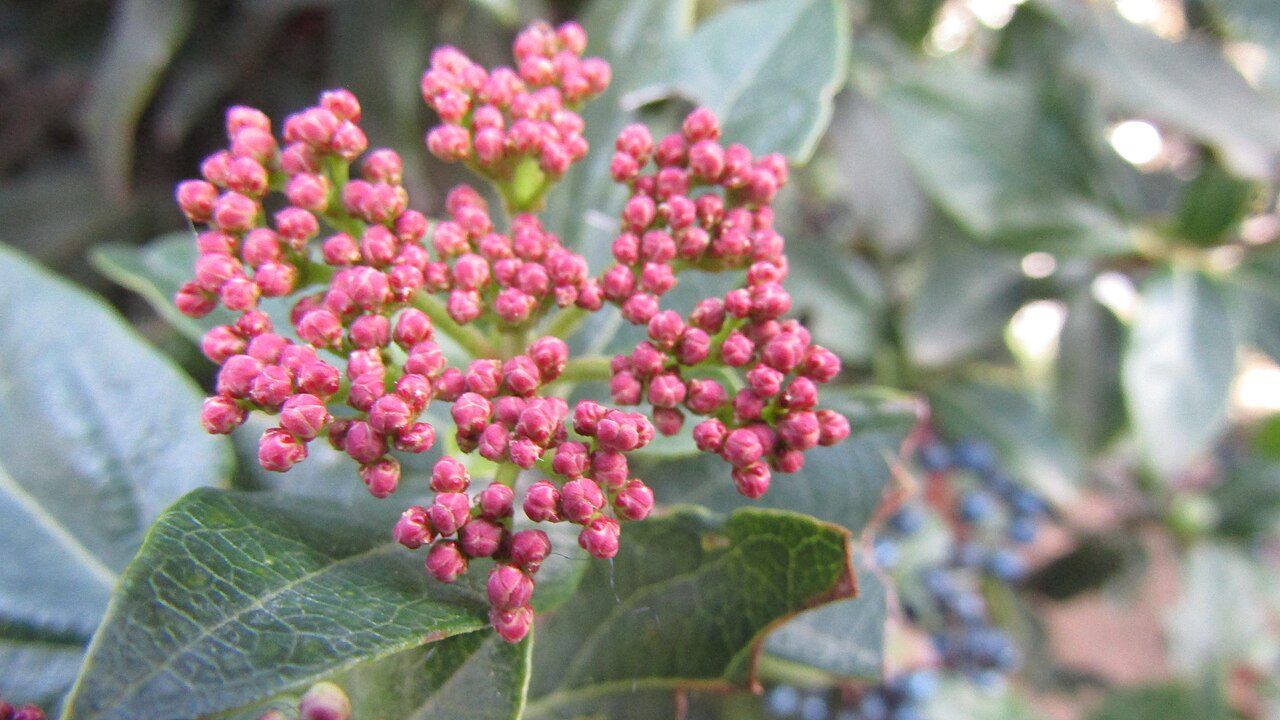
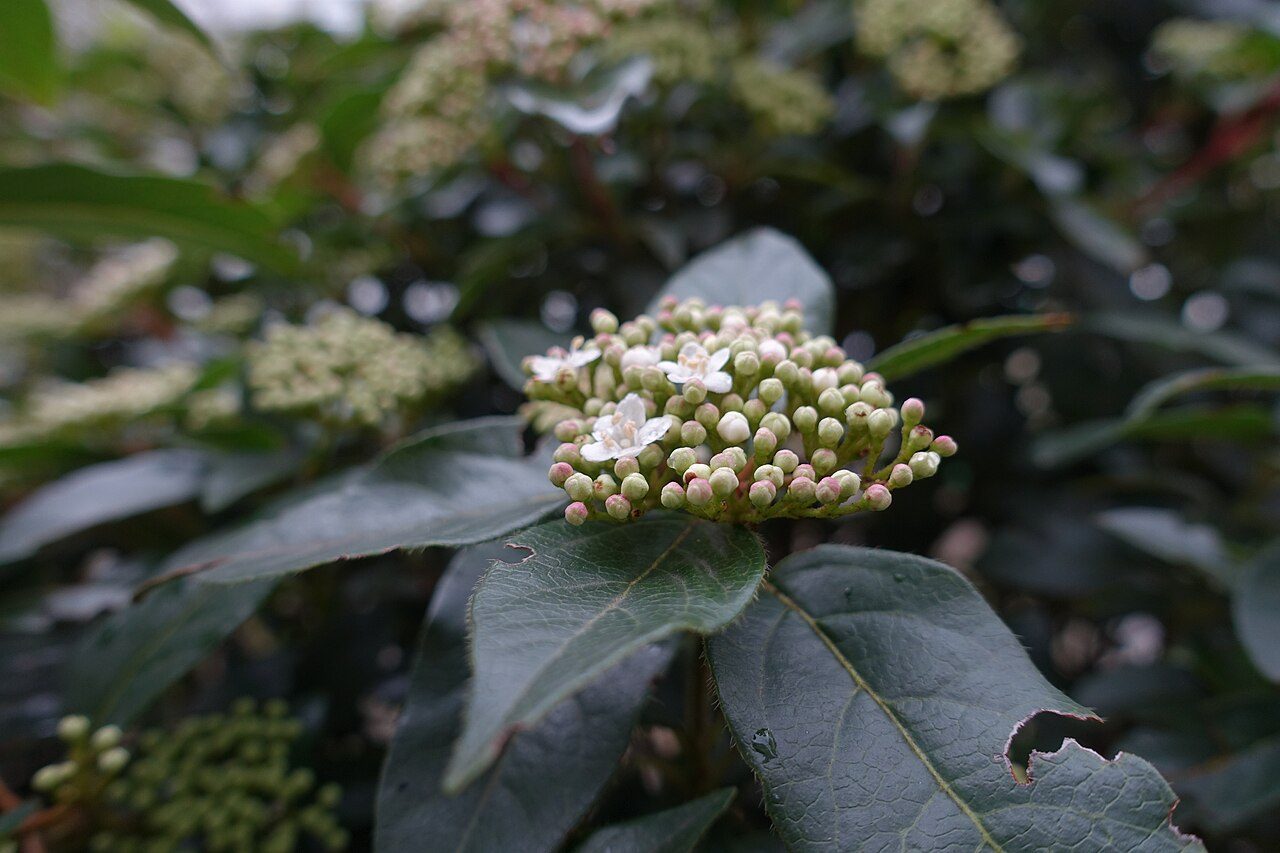
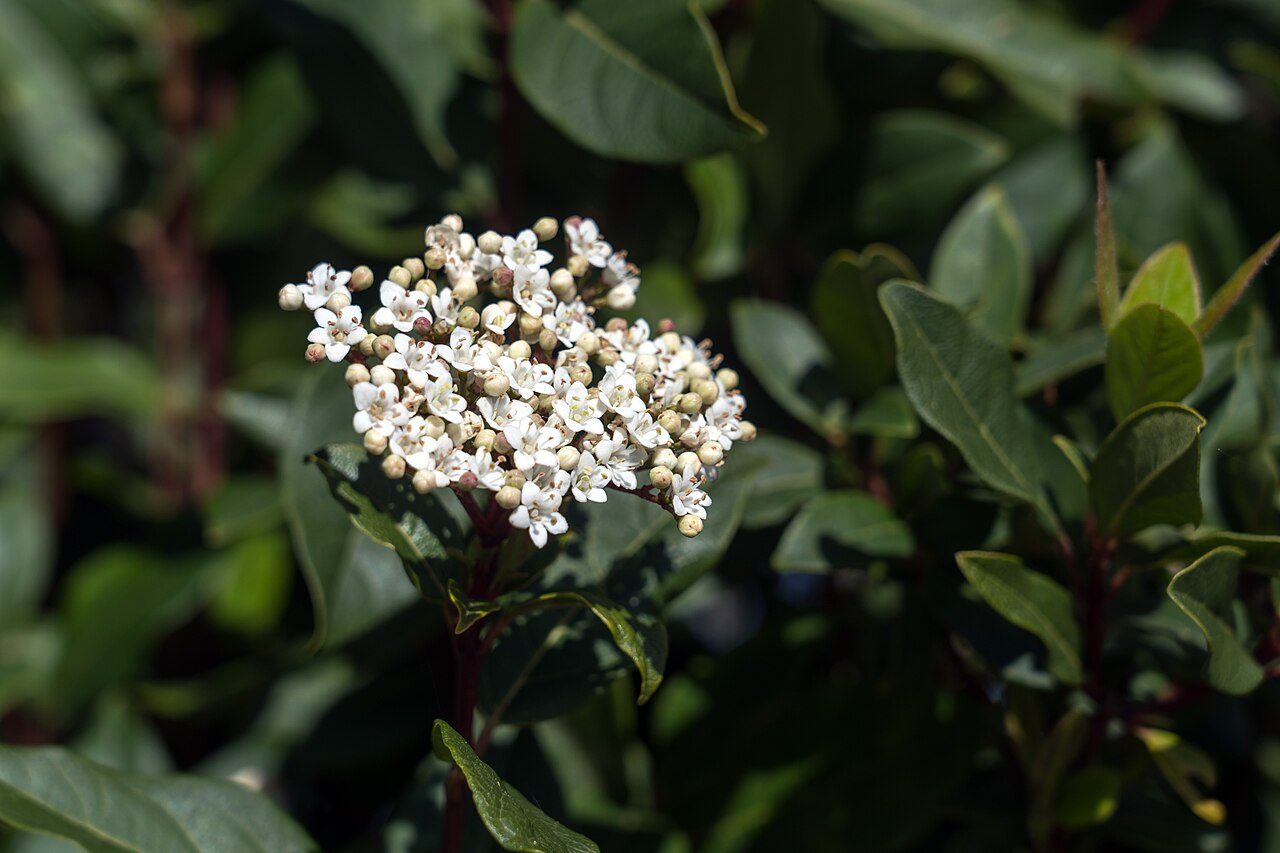
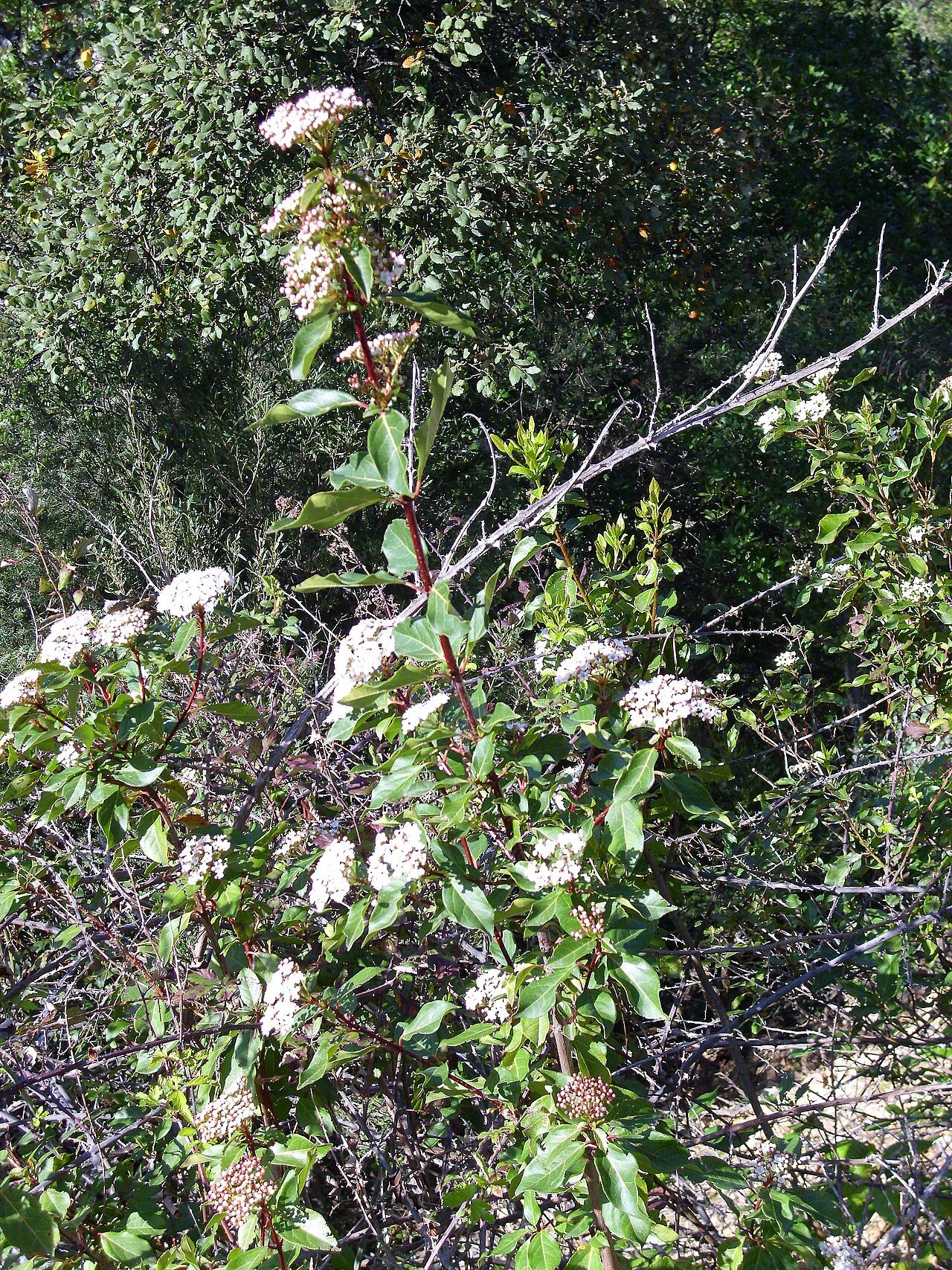
Laurustinus is an evergreen shrub of Mediterranean maquis and moist forest understoreys; in Turkey it occurs naturally in coastal regions and is widely used as a hedge plant in parks. Its white flower clusters, opening from pink buds, are among the few sources that flower in winter. Its nectar is scarce, and its pollen contribution is moderate.
Flowering
It flowers a little at a time throughout winter, from November to April; the peak is in February–March. Bees can use it only on mild days suitable for flying.
Honey and pollen
It is not a honey source. The small amount of fresh pollen arriving in winter supports the early start of brood rearing in coastal regions.
Note for the beekeeper
Planted around apiaries in coastal regions, it eases the winter and early spring pollen gap. Its metallic blue berries are not edible for humans. It tolerates shade and pruning.