Population Decline of Franklin’s Bumble Bee Wasn’t Due to Pathogens, Museum Genomic Research Shows
🌐 Original language: English
📰 Source: ucdavis.edu
Population Decline of Franklin’s Bumble Bee Wasn’t Due to Pathogens, Museum Genomic Research Shows
- by Kathy Keatley Garvey
- October 20, 2025
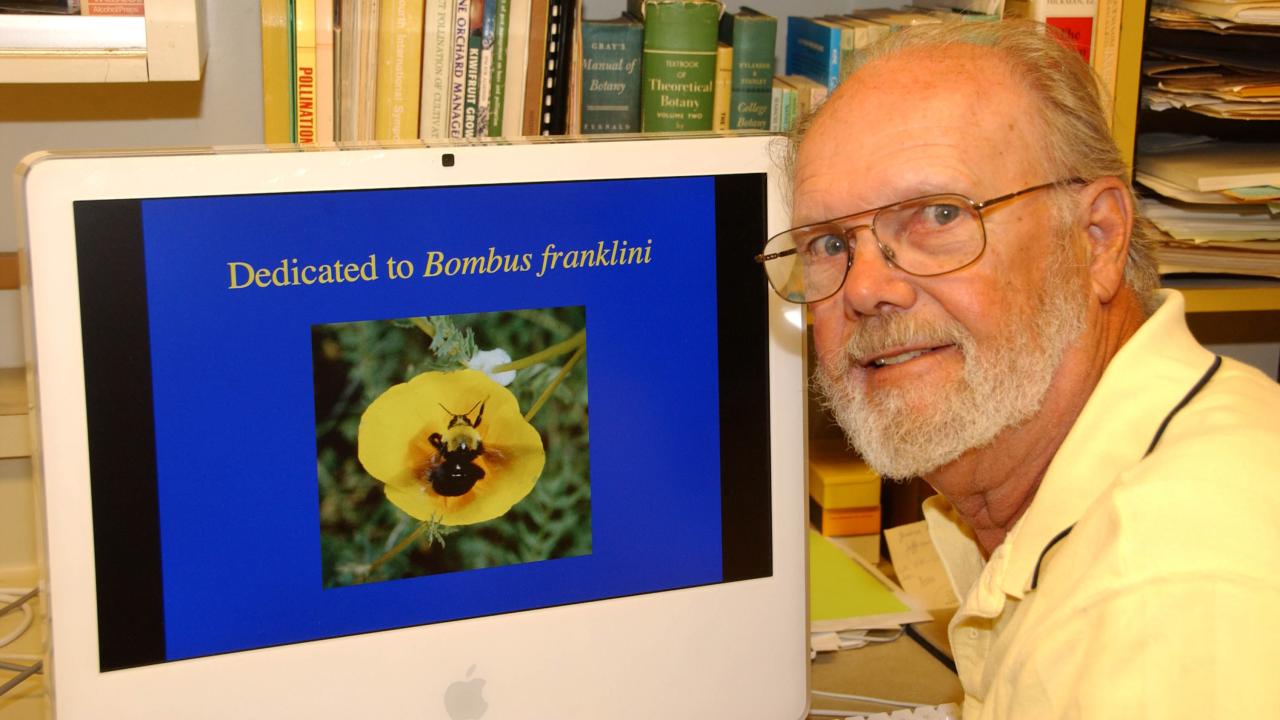
 UC Davis entomologist Robbin Thorp monitored populations of Franklin's bumble bee (Bombus franklini) until his death in 2019. The bee, found only in a limited area on the border of California and Oregon, is now thought to be extinct. A new study of DNA from museum specimens shows that Franklin's bumble bee was likely in a long-term decline before human impacts.
Franklin’s bumble bee (Bombus franklini) once inhabited a remote area spanning northern California and southern Oregon. But the bee’s numbers declined sharply after 1998 and it hasn’t been seen at all since 2006. A new study of the DNA of museum specimens, published this week in Proceedings of the National Academy of Sciences, suggests this decline was most likely due to population bottlenecks and environmental issues such as fire and drought rather than infectious diseases.ÂÂ
Read the full article at the source →
Source: ucdavis.edu
This page is a short summary of the article; copyright belongs to the original source.
🏷️ Bee Diseases