Genome Sequencing Shows Climate Barrier to Spread of Africanized Bees
🌐 Original language: English
📰 Source: ucdavis.edu
Genome Sequencing Shows Climate Barrier to Spread of Africanized Bees
Added Diversity May Be Useful for Breeding Bees
- by Andy Fell
- October 21, 2020
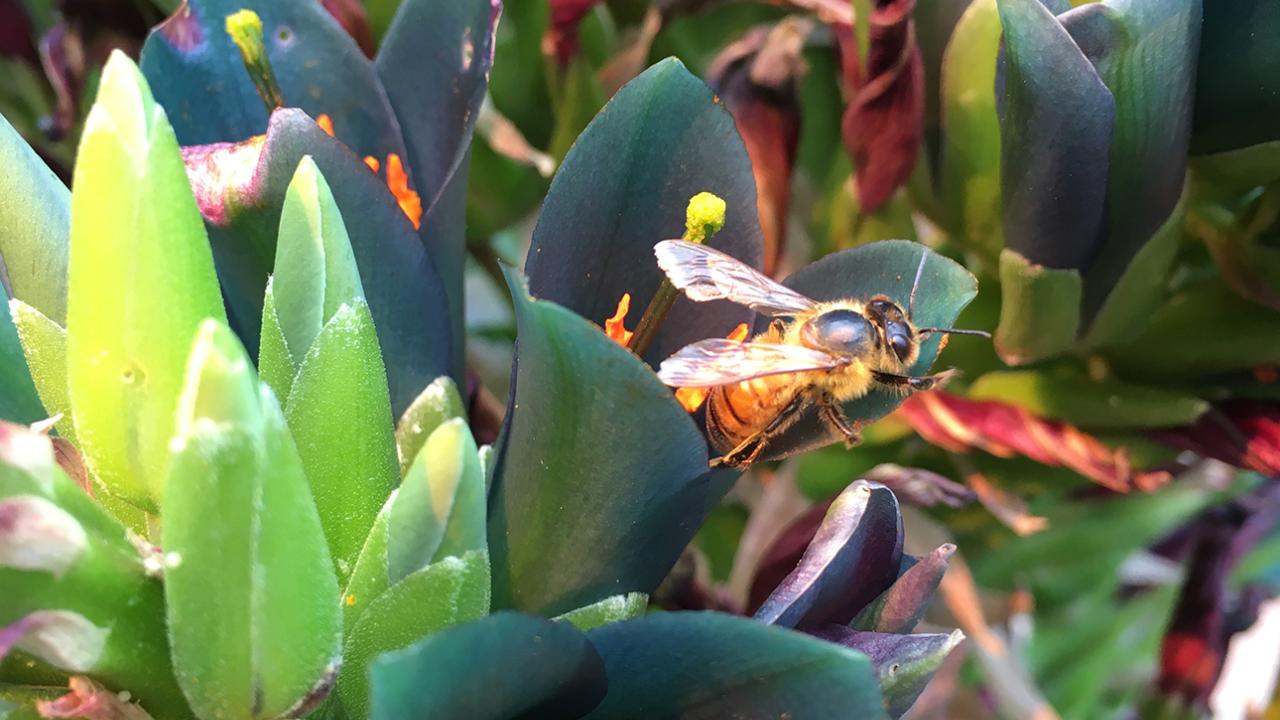
 A wild honeybee in Davis, California. European honeybees (Apis mellifera) were introduced to the Americas in the 1600s. Since 1957, “Africanized” honeybees (Apis mellifera scutellata) have interbred with other honeybees. New genomics research shows that climate forms a barrier to the spread of these scutellata genes to the north and south. (Erin Calfee).
Since the 1950s, “Africanized†honeybees have spread north and south across the Americas until apparently coming to a halt in California and northern Argentina. Now genome sequencing of hundreds of bees from the northern and southern limits shows a gradual decline in African ancestry across hundreds of miles, rather than an abrupt shift.
Read the full article at the source →
Source: ucdavis.edu
This page is a short summary of the article; copyright belongs to the original source.