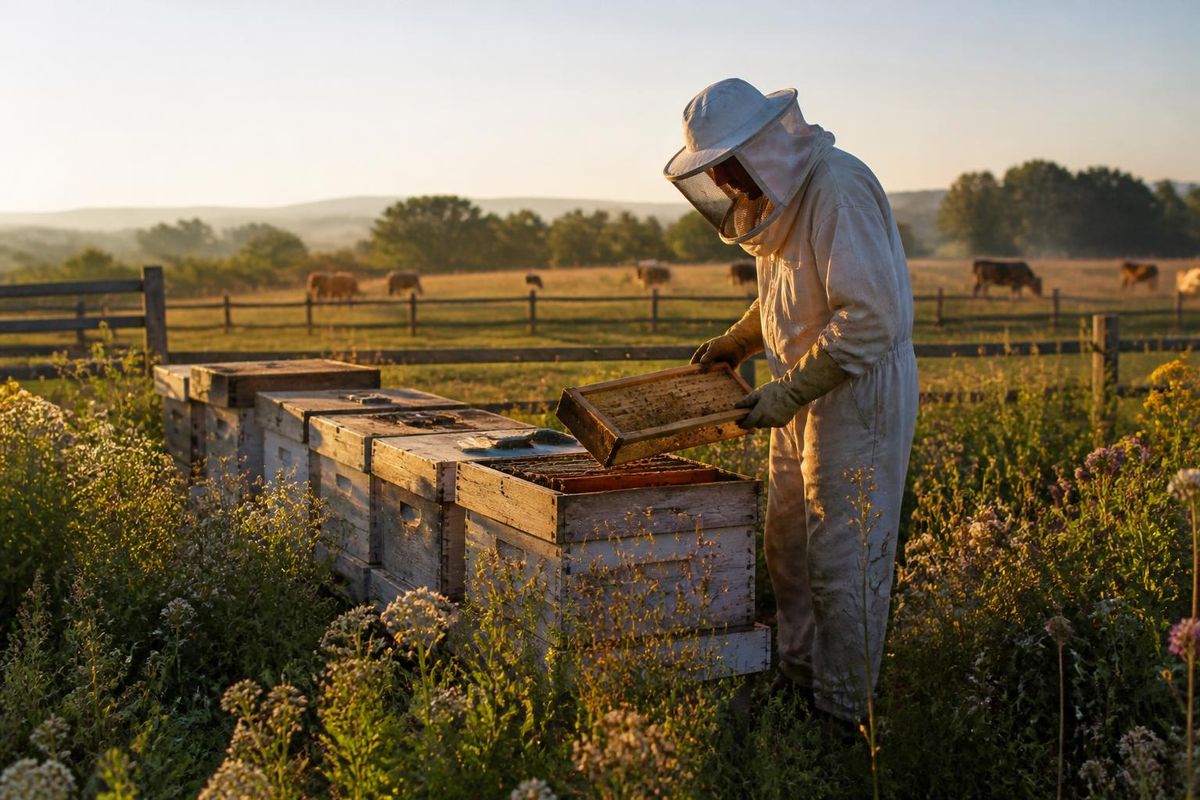
SEASONAL MAINTENANCE TASKS IN BEEKEEPING Spring Care and Inspection The purpose of the spring…
🌐 Original language: Turkish
📰 Source: aricilikgazetesi.com.tr
- Spring Care and Inspection
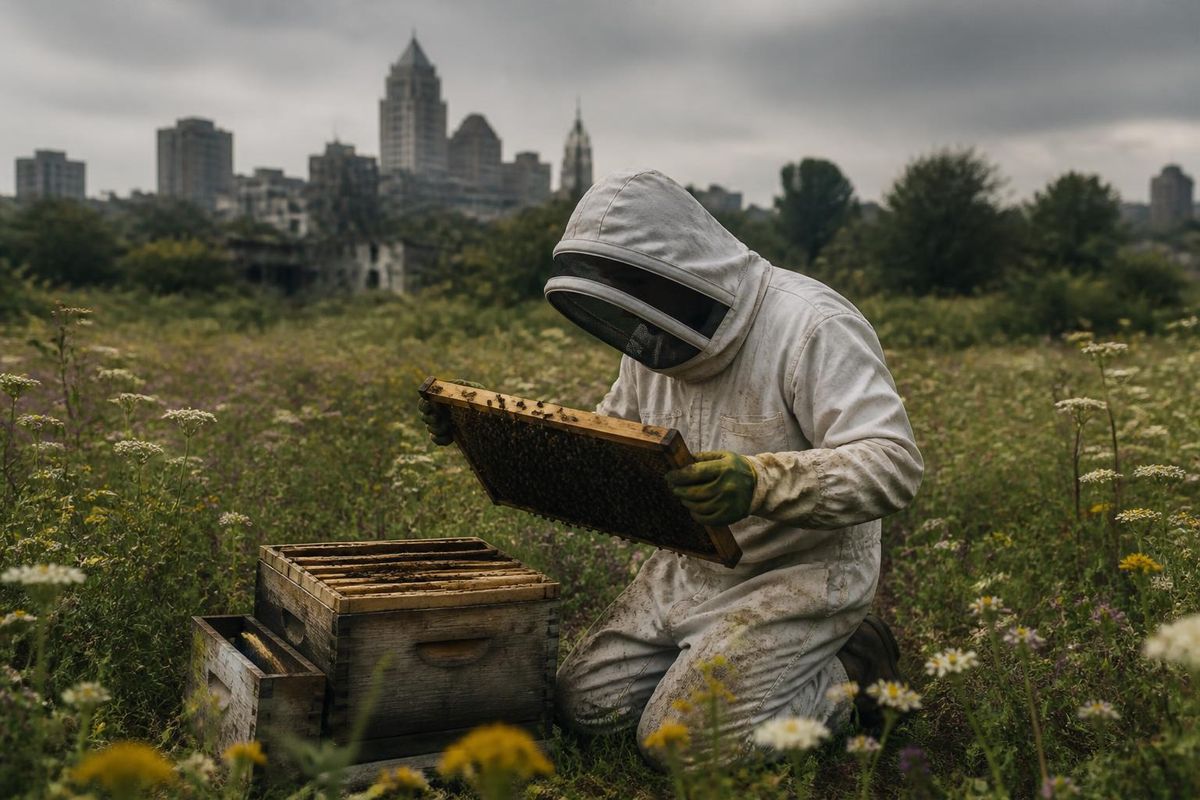
The purpose of the spring inspection and checks of the colonies is to assess how the bees have survived the winter, the amount of food available in the hive, whether the queen bee is present, if so, her egg-laying status, the number of worker bees, whether there is any moldy comb in the hive, and to check for any diseases or pests affecting the hives by opening and inspecting them. - First Inspection and Timing
If the colonies are in enclosed spaces, the timing for taking the hives out of closed apiaries varies by region. As a general practice, colonies are taken outside when the willow tree leaves begin to open. However, in many regions of our country and coastal areas, colonies are wintered in open spaces. The first inspections of colonies, whether wintered indoors and taken outside or wintered outdoors, can be conducted between 11 AM and 2 PM on a sunny, clear, and calm day when the temperature is 16-20 °C in the shade, after the weather has warmed sufficiently and the plum trees have bloomed.
An examination can also be conducted without opening the hives to get an idea about the colony. A good level of flight activity and bees carrying pollen are the first signs of a healthy colony. However, it is best to open the hive at an appropriate time and inspect the colony. During colony inspections, care should be taken not to chill the colony. If the colony is chilled, it should be remembered that the bees will need to consume a large amount of honey to raise the brood-rearing temperature back to 35 °C, creating a suitable environment for diseases. - Bottom Board Inspection and Cleaning
The cleaning of the hive bottom board can be done when the bees are flying. By examining the debris and remnants seen on the bottom board, information about the condition of the colony can be gathered. Sometimes, weather conditions may not be suitable for fully opening the hive. On days when the temperature is not sufficient, inspections can be conducted only from the bottom board in early spring to prevent the larvae (caterpillars) in the comb cells from getting cold and dying. Additionally, bottom boards that have accumulated moisture and water should be urgently replaced.
In some hives, the bottom board is a separate piece from the hive body. During the cleaning of these types of hives, a clean bottom board should be kept, and the brood chamber to be cleaned should be placed on top of it. The cleaning of hives without a separate bottom board should be done during warm and sunny hours of the day, around 16-20 °C. Wax debris and other remnants on the bottom board are cleaned with a hive tool or spatula. However, the collected debris should not be thrown around and should be gathered in a specific place and burned if necessary. Otherwise, an environment suitable for robbing and diseases will be created. - Frame Inspection
During frame inspection, moldy, excessively darkened, and broken comb frames are removed from the hive and replaced with clean frames from the previous year. If there are no processed combs, the frame with foundation should be placed at the end. If broken frames are left in the hive, the bees will create drone cells during their repair work, leading to an increase in the drone population in the colony. The queen bee does not lay eggs in darkened and moldy combs, which can weaken the colony and result in product loss. If the number of bees in the hive is insufficient to fill the frames, empty frames should be removed to reduce the space.
During frame inspection, the frame removed from the hive should be held over the hive and moved side to side. Otherwise, if the queen bee is found on the inspected frame, she may fall out of the hive. During these operations, the hive should not be left open for long to avoid chilling the colony. - Queen Bee Inspection
The presence of the queen bee in the colony directly affects the continuity of the colony. If the queen bee is not seen during inspections, the daily egg-laying status should be checked. If there are daily eggs in the colony, it is highly likely that the queen bee is also present. If neither the queen bee nor daily eggs are seen, the colony does not have a queen bee. In this case, if possible, a new queen bee should be provided to the colony, or this colony should be merged with another colony. - Food Availability Inspection
The purpose of food inspection is to determine the amount of honey and pollen inside the hive. In early spring inspections, if the food stock is found to be insufficient, feeding with cakes made from honey and powdered sugar or thick syrup is more appropriate. Thick syrup is made with 1 part water to 2 or 3 parts sugar. In the later stages of spring, feeding should be done with a more diluted syrup made with 1 part water to 1 part sugar. This feeding will accelerate the development of the colony and enable strong colonies to enter the honey season. - Disease and Parasite Control
Throughout the year, beekeepers should remain vigilant against nosema, brood diseases, and parasitic diseases that may occur in the apiary. If any disease is observed or suspected, it is essential to consult an expert for disease control and management, and to act according to the expert's opinions and recommendations. Otherwise, an uninformed application may cause harm instead of benefit. - Spring Feeding
Spring feeding is a type of feeding done when the food resources inside the hive are insufficient in quality and quantity and to encourage brood development. Temperature is an important factor in spring feeding. If the weather is cold, the syrup should be thick (2 or 3 parts sugar + 1 part water) and filled into the comb cells. Syrup with too much water increases humidity inside the hive, leading to mold and diseases. However, after the weather warms up, feeding should be done with syrup made from 1 part sugar and 1 part water. This feeding is done solely to encourage egg-laying. Since robbing may occur during syrup feeding in spring, necessary precautions should be taken against this. Feeding should be done late in the evening to reduce the risk of robbing.
Another necessary substance for the colony's development in early spring is pollen. If there is not enough pollen in the colony, it should be fed with a cake made from honey and pollen. In this regard, it is important for beekeepers to collect pollen during periods when it is abundant and use it for colony feeding or trade when necessary. It should always be remembered that panic occurs in the colony when pollen is insufficient, and brood production completely halts. - Swarming and Swarm Prevention
Swarming refers to the process in honey bees where a portion of the colony members leave the hive with the queen bee to form a new family to continue the species. Although swarming is a reproductive behavior, the tendency to swarm varies under the genetic structure of the bees and environmental conditions. In technical beekeeping, it is desired that the colony does not swarm, and measures are taken against swarming. Since colonies that swarm become significantly weaker, it is not possible to produce sufficient amounts of honey. Therefore, the conditions that support swarm formation should be well understood, and precautions should be taken against swarming. Conditions that support swarm formation include the colony growing too large to fit in the hive, lack of space for rearing brood and storing honey, insufficient ventilation in the colony, increased temperature within the colony, the queen bee being old, and the influence of genetic structure. Eliminating these conditions that support swarming to prevent natural swarming is an important rule of technical and economic beekeeping. - Artificial Swarm Production
In technical beekeeping, the natural swarming of colonies is an undesirable event. Swarming that occurs during the nectar flow period reduces the strength of the parent colony, thus decreasing honey yield. Additionally, if swarming continues, the young worker bees that serve as brood in the colony may emerge with the swarm, disrupting the brood activities in the parent colony, which can lead to chalkbrood disease. To prevent such negative occurrences in beekeeping, measures should be taken against natural swarming, and if the number of colonies is to be increased, artificial swarming (splitting) should be performed.
Colonies that have reached sufficient strength are evenly divided to obtain a new colony. For this, an empty hive is placed next to the parent hive. Honey and brood frames are divided equally between the two hives. It is important to ensure that forager bees can enter both hives equally. To achieve this, the parent hive is shifted half a meter to the right or left, placing the new hive (the split) in such a way that the old flight path remains in the middle.
After this process, forager bees may still prefer the parent hive; in this case, the parent hive can be shifted slightly further out to allow the majority of the flight path to favor the split.
Another method of artificial swarm production, especially aimed at increasing the number of colonies, is to create 2-3 splits of 3-4 frames from one hive. In this case, one frame with brood and one frame with honey are placed in the new hive. These hives, with their flight holes closed, are moved at least 5 km away to prevent forager bees from returning to the old hive. Another method of obtaining artificial swarms is to take 1-2 frames from each hive according to their strength to create new colonies through grafting. - Record Keeping
Record keeping is very important in beekeeping, just as it is in every production field. For this purpose, a card or a registry book can be used for each hive. During each colony inspection, information about the colony is recorded on these cards, allowing for future tasks to be planned in advance. Records should include information that briefly describes the colony, such as the queen bee's emergence and egg-laying start dates, origin, food (honey and pollen) stock amounts, and brood status. It is not possible to manage the colony correctly without keeping records. - Summer Care
After the spring care of bee colonies, maintenance and inspections continue during the summer. The primary tasks during the summer season include providing frames as the colony develops, reinforcing weak colonies, adding supers to strong colonies, and monitoring the flora. - Frame and Super Addition
With the onset of development activities in bees, the construction of comb also begins. During this period, new foundation frames should be provided to the hive. After making two holes on each side of the frames and inserting wire, the foundation is attached, and the new frame with foundation is given to the colony. It is important that the new frame is given as the second-to-last frame and that the brood production area is not disrupted.
When the brood chamber is full, a super (honey super) should be added to the hive. When adding the super, at least 2 honey frames from the sides of the brood chamber are taken to the super, and new frames are placed in their place. The super, along with one or two new frames, is placed on top of the brood chamber. When the first super is full, the second super is placed on top of the brood chamber, and the first super is placed on top of it. This way, the bees can work on the new frames better and faster. Honey can be harvested when the honey in the supers is sufficiently capped and matured. - Reinforcement
In cases where the bee population within a colony decreases for any reason, reinforcement frames are taken from strong colonies and given to weak colonies. Frames with sealed brood can be given to the weak colony along with bees, using scent to prevent the bees from the two colonies from killing each other. - Flora Monitoring
In technical beekeeping, moving bees from one location to another according to the flora situation is necessary to achieve good yields. This practice is referred to as flora monitoring or migratory beekeeping. Without migratory beekeeping, it is not possible to achieve sufficient profits from the colonies. Moving colonies, in other words, following the vegetation or flowers, is one of the most important rules of technical beekeeping.
The transfer of colonies must be done at night when the bees are entering the hive. Before the transfer, necessary preparations should be made, frames should be secured, cracks and holes from which bees could escape should be closed, and proper ventilation should be ensured. When the bees arrive at the destination, they should be unloaded properly, and the flight holes should be opened using smoke. If the flight hole is opened without smoke, the bees may harm surrounding living beings.
The most important consideration in bee transfers is to ensure adequate ventilation. It should be remembered that when colonies are transported with fresh honey frames, these frames can easily break, especially on hot summer days, leading to colony losses. If the destination cannot be reached in one night during bee transfers in the summer, an appropriate stop should be made during the day, and the transfer should be completed on the second night. Otherwise, colony losses may occur. - Autumn Care and Wintering
- Autumn Period Activities
Immediately after the honey harvest, autumn care should begin without wasting time. The autumn care of colonies is very important for the bees to survive the winter with minimal or no losses.
Frames with stored honey and pollen should be left as winter food for the colonies. However, the frames should not be completely filled with honey; the cells at the bottom should be empty. This is because during winter, bees form a winter cluster not on the honey-filled cells, but on the empty cells just below the honey-filled part of the frames. Honey from moldy frames, fermented honey, low-quality honey, and secretion honey should not be used as winter food. During inspections, a colony covered with 8-10 frames should be left with 12-15 kg of honey as winter food. Especially during the period until fresh pollen begins to come in the spring, at least 3-4 of the honey frames left should also contain sufficient pollen for the bees to start and continue brood rearing.
During inspections, weak colonies, those without a queen, and those with aged and unproductive queens should be combined in the autumn. For successful wintering, it is essential to ensure a period of brood production in the autumn, entering winter with YOUNG WORKER BEES and a YOUNG QUEEN BEE.
Before entering winter, colonies should always be examined for diseases and parasites. Especially in the autumn period, varroa treatment should be carried out after the last honey harvest and when brood activity has decreased. - Autumn Feeding
Even if there is enough honey and pollen left for the colonies, they can be fed with syrup after the honey harvest. The sugar-water ratio of the sugar syrup prepared for autumn feeding should be 2:1 (2 parts sugar - 1 part water). The sugar syrup feeding applied to the colonies increases the queen bee's egg-laying rate again, allowing for the rearing of young, unwearied worker bees. Thus, colonies entering winter with young worker bees come out strong in spring with minimal losses. Colonies wintered with young bees show a more effective brood-rearing pace in the spring period and develop rapidly.
Colonies can also be fed with fondant instead of syrup when entering and exiting winter. Fondant is obtained by mixing one part honey with three parts powdered sugar. The resulting mixture is placed in 0.5-1 kg bags, with holes made in the bottom of the bag, and placed on the frames in the apiary. The important point in preparing and applying fondant is that it should be of a consistency and hardness that melts at the internal temperature of the hive without running over the bees, and soft enough to be consumed by the bees.
Additionally, in regions and periods where there is a pollen deficit, protein-rich substances such as milk powder, brewer's yeast, and defatted soybean flour can be mixed to meet the protein and vitamin needs of the bees. However, it is possible for diseases such as nosema and diarrhea to emerge with this type of feeding. In regions and periods where pollen is sufficiently available, or generally in our country, there is no need for this application. - Wintering
The apiary where the bees will spend the winter should be places that are closed to the north and open to the south, preferably covered from above. Open apiaries should be located in areas that do not receive wind, do not hold water, and do not accumulate moisture. Hives must be elevated on a stand to protect them from moisture and water. Additionally, the wintering site should be away from noise and sounds that could disturb the bees' winter cluster. It should be remembered that the cause of winter deaths is not the cold, but the lack of sufficient honey, which is the source of heat production and energy in the colony, meaning starvation. - THE IMPORTANCE AND PRODUCTION OF THE QUEEN BEE
- The Importance of the Queen Bee
The very short lifespan of bees necessitates the timely and optimal utilization of natural resources. During the spring months when pollen sources are abundant, the colony should be able to complete its development and gather enough honey during the nectar flow period. These conditions, which are essential for productive and profitable beekeeping, are directly dependent on the genetic and physical characteristics of the queen bee possessed by the colony.
In a colony with tens of thousands of worker bees and a sufficient number of drones, the single queen bee directs the entire development and productivity of the colony. Therefore, queen bee breeding and usage is of great importance in technical beekeeping. Whether bred or purchased, having a young and high-quality queen bee in the colony and consequently working with strong colonies is a necessity for economic beekeeping. - Factors Affecting the Quality of the Queen Bee
Colonies of the same race kept in the same apiary may not show the same performance under equal conditions. In this case, if the inefficient colonies do not carry any diseases, the reason for inefficiency is directly related to the queen bee. In this case, the queen bee is either old or of poor quality. To obtain a quality queen bee in queen bee breeding, the following rules must be observed. - Larval Age
The queen bee and worker bee that develop from fertilized eggs exhibit very different characteristics. The sole reason for this is that the larva destined to become a queen bee is continuously fed with richer and more abundant royal jelly from the very beginning compared to the larva destined to become a worker bee. Therefore, the larva to be transferred should be as young as possible, in other words, it should not have been fed in a way that would lead it to become a worker bee. As the age of the larva increases, the quality of the queen bee decreases. Larvae that are 12-24 hours old are the most suitable for transfer. If larvae older than 24 hours are transferred, the acceptance rate of the larvae decreases along with the quality of the queen bee. - Condition of Starter and Finishing Colonies
The starter and finishing colonies used in queen bee breeding must be sufficiently strong and contain young worker bees that will secrete a large amount of royal jelly and pollen. Pollen is the necessary substance for young worker bees to produce royal jelly. - Breeding and Mating Period
Although the queen bee can be bred between spring and autumn, the most suitable period is when nectar and pollen production is at its highest. During the period when the queen bee is produced, having sufficient and balanced nectar and pollen production leads to more abundant royal jelly being left in the queen cells and allows for the instinct of natural reproduction to be utilized since the swarming period continues. Additionally, the active and abundant presence of drones during this period is a good opportunity. - Queen Bee Production
The production of queen bees requires the timely and sequential execution of production-related tasks. The production of a queen bee that starts laying eggs from the preparation of the starter colonies takes approximately one month. The most important factor affecting the queen bee production capacity is the number of mating boxes. During the production period between May and September, 4-5 queen bees can be produced for each mating box. For example, a commercial queen bee production business with 100 mating boxes can produce and sell 400-500 queen bees during a production period covering one year. To reach this number, the tasks listed below must be carried out without interruption. Although queen bee production is not a difficult task, it requires planning and scheduling. - Selection and Preparation of Breeders
The queen bees to be used as breeders must clearly exhibit all the characteristics of their race and have gone through the necessary selection stages. Organizations engaged in commercial queen bee production should base their production on breeder queens that have breeding value and whose offspring have been tested, preferably those that have received breeding certification. Certified breeder queens must have been either artificially inseminated or mated in isolated mating areas. If a breeder colony cannot be obtained under beekeeping conditions, the simplest option is to use colonies that have a high spring development rate, produced the most honey in previous years, do not swarm, have never been affected by disease, and have a calm and docile temperament. Breeder colonies are provided with appropriately colored drawn combs 4-5 days before transfer to ensure that larvae of the desired age are available on the day of grafting. - Preparation of Starter Colonies
Colonies that have shown good development and reached at least 15 frames are selected. The queen bee of these colonies is removed 4-5 days before transfer, leaving them queenless. On the morning of the day of larva transfer, excess frames are removed, and the bee density in the colony is increased, the natural queen cells produced in the colony are destroyed, and frame arrangement is made. These colonies are continuously fed with syrup as long as they are used in production and are supplemented with young worker bees or emerging capped brood. A nucleus box containing 2-3 frames with plenty of young worker bees and pollen and honey can also be used as a starter colony. - Preparation of Basic Queen Bee Cells
In technical queen bee breeding, the basic queen bee cells (cups) where larvae will be placed are artificially prepared from pure beeswax. The bright-colored, odorless pure beeswax is melted in a double-walled melting pot. The water-saturated cup mold is first dipped in water, then in melted beeswax, and then again in water to obtain the cups, which are mounted on a frame with the help of melted beeswax. The resulting cups should be 10-11 mm deep and 9-10 mm in diameter. There are 15-20 cups on a frame, and by attaching three of these frames to a specially prepared frame, it is ensured that there are 45-60 cups for this purpose. In queen bee production, both basic cups made of pure beeswax and those made of plastic for this purpose can be used. - Larva Transfer
A frame with 6-12 hour old larvae is selected from the breeding hive. The bees are cleaned by pouring them into the hive with the help of a brush. This process should be avoided as shaking the frame vigorously may cause the daily honey to flow onto the larvae.
The selected frame is quickly brought to the inoculation site (transfer room) while being protected from wind and direct sunlight. The transfer room should have conditions similar to those inside the hive, with a temperature of 30-33 °C and 60-70% humidity. Suitable aged larvae are taken from the cells with the help of a transfer spoon and placed into the pre-prepared artificial cups. The most important point to pay attention to during this process is to take the larva without damaging it and place it into the cup.
Although larva transfer may seem like a difficult process, those who work in this field can gain experience over time and perform this process easily. Thus, they increase the larval acceptance rates and also gain the ability to perform more transfers within a certain period. Additionally, especially during the initial usage periods of starter colonies, keeping artificial cups in these colonies for one day and applying diluted fresh royal jelly to the cups before transfer positively affects the acceptance rates. - Providing Inoculated Cups to Starter Colonies
When the transfer of 45-60 larvae to be given to a starter colony is completed, the inoculated cups are given to the starter colonies without delay. In the starter colony, where the queen bee has been removed 4-5 days before and the frame arrangement has been made a few hours prior, the frame with transferred larvae is placed in the middle of the colony between two frames, one with open brood and the other with pollen. The other open brood frames in the starter colony should be removed to ensure better care for the transferred larvae. The pollen frames in this colony are necessary for young worker bees to produce royal jelly, and the open brood frame is needed for young worker bees to gather at the location where the transferred frame is placed. The other frames in the starter colony should be capped brood, honey, and pollen frames. This arrangement should be ensured before each larva transfer in continuous productions.
The abundance of young worker bees in the starter colony and the frame arrangement directly affect both the larval acceptance rate and the quality of the queen bees to be produced. Additionally, in continuous productions, new frames should be provided to maintain the young worker bee population in the colony every 5-6 days, and excess frames that are not needed should be removed. - Preparation and Use of Finishing Colonies
Inoculated cups can be kept in starter colonies until the day they are distributed to mating colonies. However, this may not be economical in large-scale production operations and can negatively affect the quality of the queen bee raised during long-term use. Therefore, for continuous queen bee production, the queen bee cells accepted in starter colonies are transferred to the upper level of strong colonies with 16-18 frames, where the queen bee is confined to the brood area with a queen excluder, 1-2 days after being given to the starter colony. This upper level should contain honey, a large number of young worker bees, pollen, and capped brood frames. Every week, frame exchanges should be made between the lower and upper levels for arrangement purposes. A new frame is placed in the finishing colony in place of the transfer frame that was moved from the starter colony, ensuring continuity in production. The feeding and care of the larvae transferred to the finishing colonies are provided in these colonies from this period onwards. - Preparation and Use of Mating Boxes
On the 10th day after transfer, the capped queen bee cells are separated from their frames and distributed to mating colonies that have been prepared one day in advance. Different hive types are used in the formation of mating colonies. These include standard hives that are divided into three or four parts or small mating boxes made of wood or insulated materials.
To allow the queen bees to recognize their environment and return to their boxes after mating flights, the entrance holes of these boxes should face different directions and be placed in a wide area. The front sides of the mating boxes are painted in different colors and shapes to serve as a marker for the queen bee. The continuity of these mating colonies created at the beginning of the production season is ensured by the offspring produced by each queen bee, allowing them to be used throughout the entire season.
The queen bee that starts laying eggs after mating continues to lay eggs in the mating colony for 2-3 weeks until the first worker bee brood cells are capped. After this period, the queen bees are sold, and new queen bee cells that are about to emerge are provided in their place. Care should be taken when removing and distributing queen bee cells from their frames; the cells should be distributed in their original positions on the frame and not turned upside down. After the queen bee cells are given to the mating colonies, the queen bees emerge 2-3 days later, depending on the age of the transferred larvae. During checks conducted 4-5 days after the queen bee cells are given to the mating colonies, cells where the queen bee has not emerged or cells that have been damaged by worker bees may be observed. In this case, new cells should be provided. - Mating of Queen Bees
The queen bees that emerge in the mating boxes perform orientation flights when they are 2-3 days old and then go on mating flights within the next 2-3 days. Mating occurs in a special area called the "Drone Congregation Area," while flying at a height of 10-30 meters in the air. The queen bee reaching the Drone Congregation Area is detected by the drones through the sex pheromone she emits and visually. The queen bee mates with 6-20 drones and returns to her colony (mating box) to start laying eggs 3-5 days later. The drones that mate with the queen bee die after mating. If the queen bee cannot mate with a sufficient number of drones due to a lack of drones in the Drone Congregation Area or adverse weather conditions, she may go on mating flights 1-2 more times on the same day or in the following days.
Queen bees that do not mate within 20 days after emergence lose their mating desire and start laying unfertilized eggs, which means that no further mating will occur. Control of mating can be achieved either through isolated areas with a radius of at least 8-10 km or through artificial insemination. - Artificial Insemination of Queen Bees
In technical beekeeping, artificial insemination can be performed. In this application, sperm collected from male bees of colonies that have special significance for breeding value is injected into a queen bee raised for a specific purpose under a microscope using an artificial insemination device in a laboratory environment. Although artificial insemination of queen bees is not a difficult process, it is a task that requires skill and experience. This application is primarily conducted for research and breeding purposes to obtain pure breeds or hybrids under controlled mating, rather than for the production of queen bees to be used as production material. - Distribution of Queen Bees to Production Colonies
The transfer or sale of laying queen bees from mating boxes, or their evaluation in other ways, is a necessity in continuous production. The most important process in providing laying queen bees to other colonies is to first prepare the colony. For this, there should be no fertilized or unfertilized queen bee or queen cell in the colony where the queen will be placed.
After the old queen bee in the colony where the new queen will be placed is eliminated, the cage containing the queen bee is placed between two frames with brood, with ventilation and feeding holes facing the front and back. The next day, the exit hole on the side where the candy reservoir is located is opened, allowing the bees to eat the candy and release the queen bee. After this, the hive should not be opened and disturbed excessively, but a check on the queen bee and eggs should be conducted 2-3 days later.
Using ready-to-lay queen bees in technical beekeeping provides significant advantages in cases of queen bee losses or in providing queen bees to artificial swarms. Gaining time of about 25-30 days for the queen bees to start laying, eliminating the risk of the queen produced by the colony not being able to mate, and obtaining material with a known origin are some of these advantages. However, despite their significant advantages, the habit of using ready queen bees is not sufficiently widespread among our beekeepers.
Read the full article at the source →
Source: aricilikgazetesi.com.tr
This page is a short summary of the article; copyright belongs to the original source.
🏷️ Bee Pollen