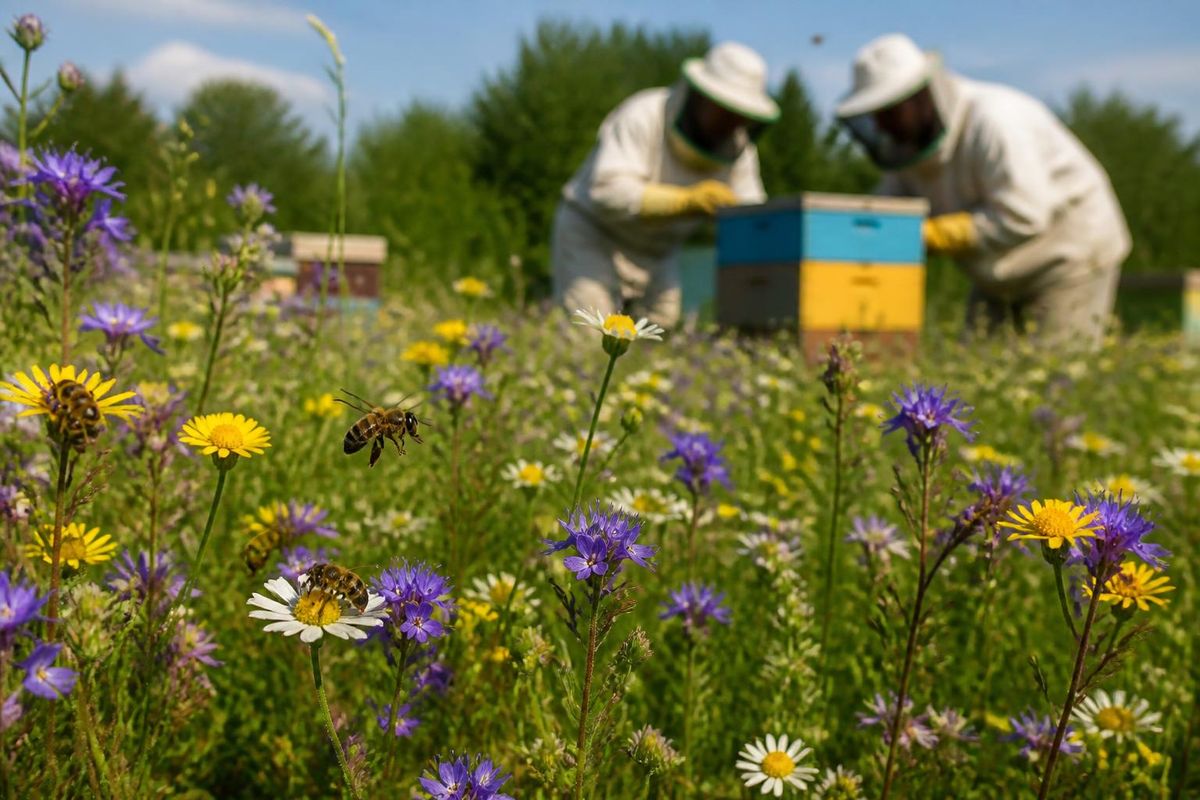
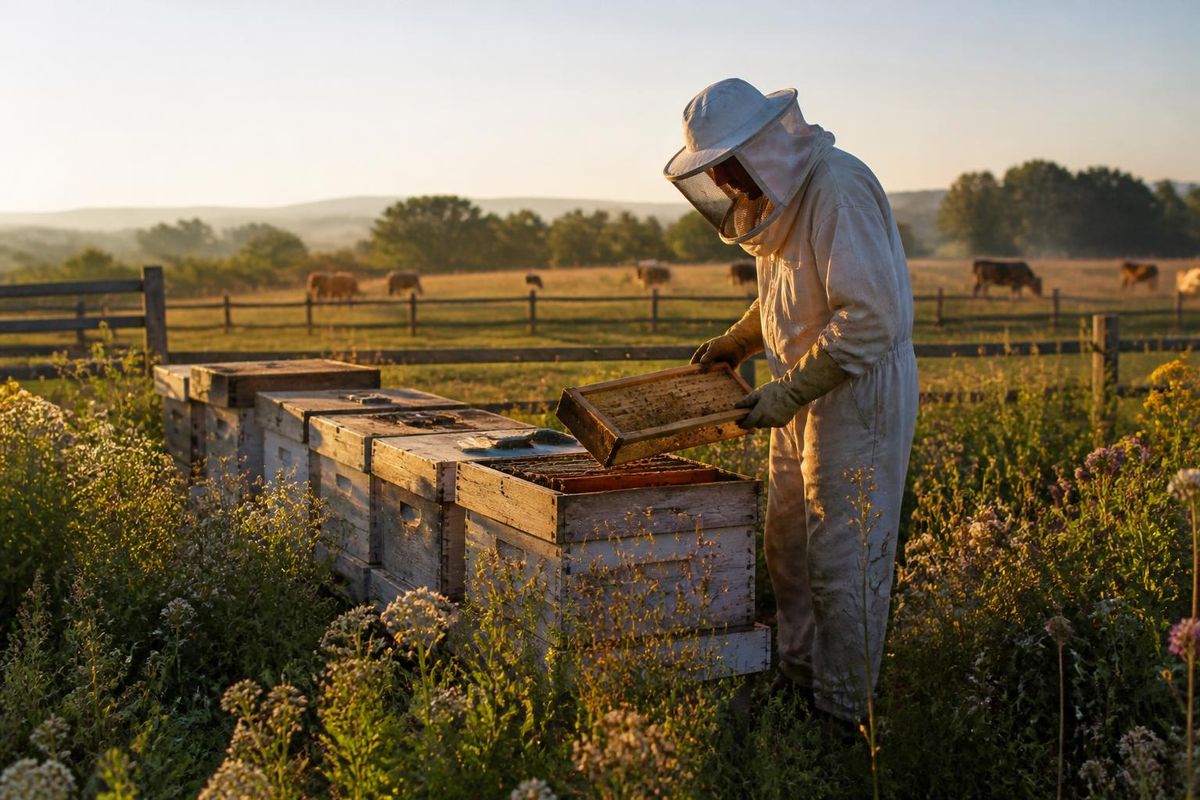
weaken bees by feeding on their organs

Varroosis
Varroa mites feed on the fat bodies of adults and larvae, causing weakened immune systems, decreased body weight, and a shortened lifespan. The external wounds caused by repeated feeding can become infected with bacteria, fungus and virus. Varroa mites also vector numerous viruses. The RNA virus Deformed Wing Virus (DWV) causes infected bees to emerge with deformed and damaged wings that look like shriveled sticks (also called “stick wing”). These bees are unable to fly, die young, and are unable to perform vital functions in the hive. Additional viruses associated with Varroa mites include: Acute Bee Paralysis Virus (ABPV), Kashmir Bee Virus (KBV), and Israeli Acute Paralysis Virus (IAPV)*. A disease called Parasitic Mite Syndrome (PMS) can be found in conjunction with high Varroa infestation. PMS encompasses a range of symptoms including: a spotty brood pattern, sick brood that appears sunken or melted into the cell (often mistaken for European or American Foulbrood, capped brood cells that are pierced or torn open, lack of eggs and / or developing larvae, a rapidly decreasing adult population, bees with deformed wings, and phoretic Varroa mites visibly walking on the comb or on bees. Colonies suffering from PMS will collapse and eventually die.
Read the full article at the source →
Source: ars.usda.gov
This page is a short summary of the article; copyright belongs to the original source.
🏷️ Foulbrood