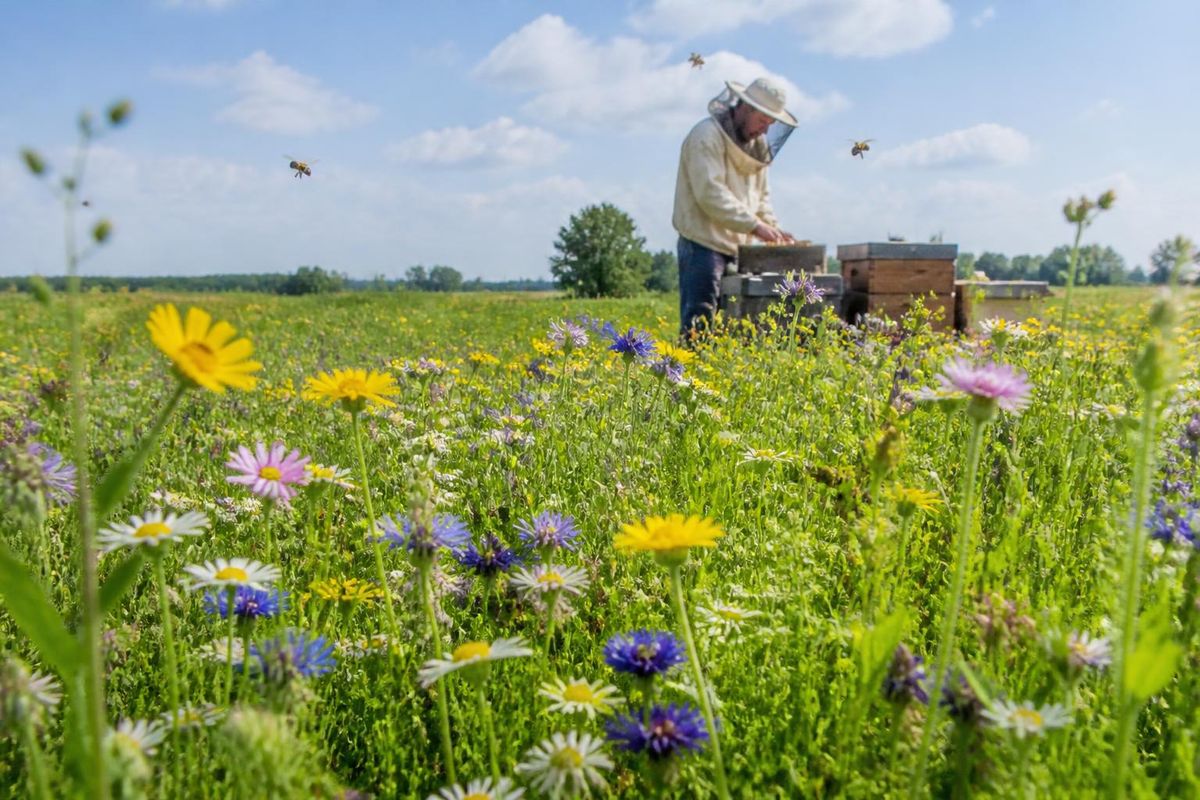
Scientists just found that honey bees follow their own personal flight paths, and in a German farm landscape, some repeated the same route within centimeters because landmarks like trees seem to keep them locked on course
🌐 Original language: English
📰 Source: m.economictimes.com

How scientists tracked bees on their daily commute
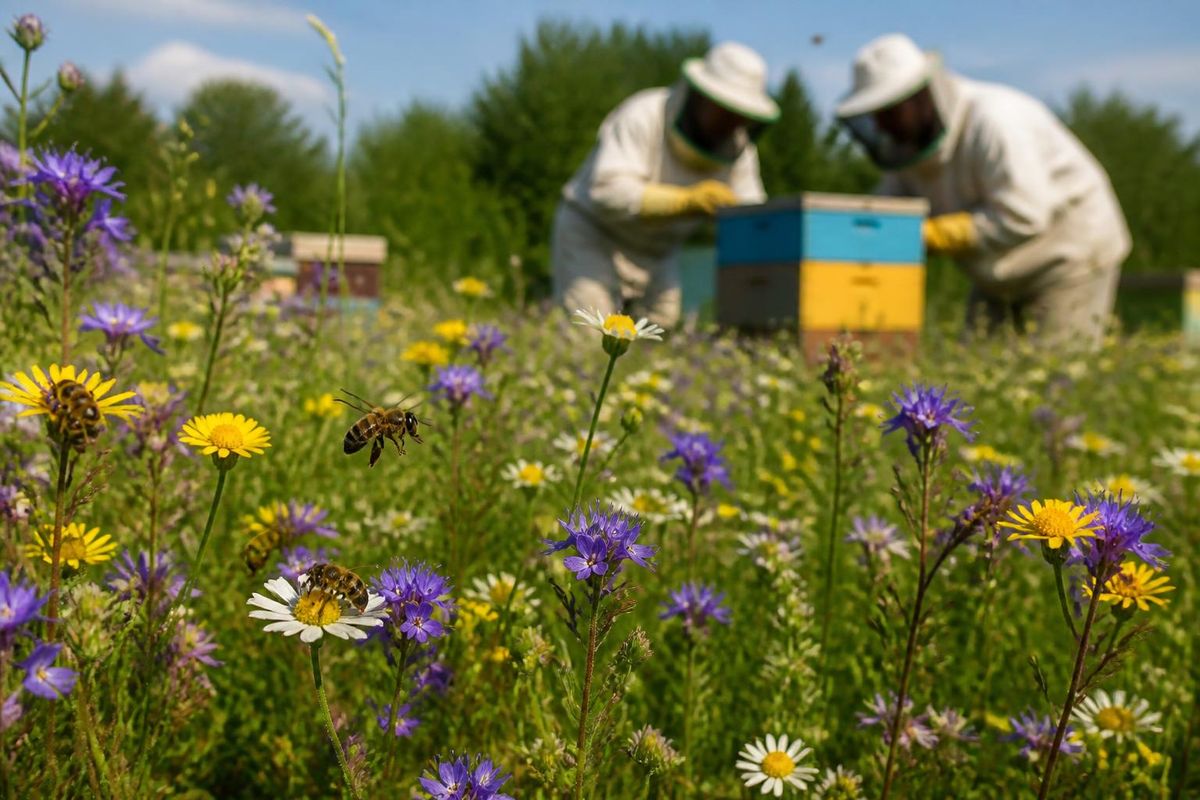
Led by neurobiologist Andrew Straw, researchers established a food source 120 meters from a hive in an agricultural area near Kaiserstuhl, Germany. The landscape included hedges and a tree that obstructed a direct route. Employing Fast Lock-On (FLO) Tracking, each bee was tagged with a reflective marker, allowing drones to monitor their 3D flight paths in real time. This study marks the first instance of capturing such detailed flight data in a natural setting.
The analysis of 255 flights indicated that bees not only navigated correctly but also retraced their outbound and return paths with remarkable precision, often just centimeters apart.

Findings revealed that bees exhibited varying accuracy based on their surroundings. They followed consistent paths near the tree, but their routes became erratic over the featureless cornfield. The researchers concluded that visual landmarks are crucial for bee navigation, while monotonous environments increase uncertainty, similar to how humans navigate unfamiliar cities.
The famous waggle dance isn't as accurate as it looks
This research also sheds new light on the honeybee waggle dance, which conveys food location. According to Straw, the dance's directional accuracy can deviate by about 30 degrees for a food source 100 meters away. Previous studies using radar confirmed this inaccuracy, suggesting that while the dance has limitations, bees generally find food sources effectively.
The Freiburg study implies that this imprecision in the dance does not indicate poor navigation skills; rather, bees are adept at recalling familiar routes, even if their communicated directions are vague. Thus, bees excel at navigating based on memory rather than relying solely on the dance.
Research published in the Proceedings of the National Academy of Sciences indicates that bees utilize an internal map rather than merely memorizing turns. This flexible memory could explain their loyalty to preferred routes and their ability to navigate home after being displaced.
Why this matters beyond the hive
This research highlights that bees, contrary to the assumption of instinct-driven behavior, develop individual habits shaped by their experiences in specific landscapes, akin to human commuting patterns. As Straw notes, observing bees repeat their flight paths with such precision suggests that each bee may possess its own unique personality, showcasing impressive navigation skills for an insect with a brain the size of a sesame seed.
(You can now subscribe to our Economic Times WhatsApp channel)
(Catch all the US News, UK News, Canada News, International Breaking News Events, and Latest News Updates on The Economic Times.)
Read the full article at the source →
Source: m.economictimes.com
This page is a short summary of the article; copyright belongs to the original source.