Tutankhamun, the last pharaoh of the 18th dynasty, ruled Upper and Lower Egypt from 1332 to…
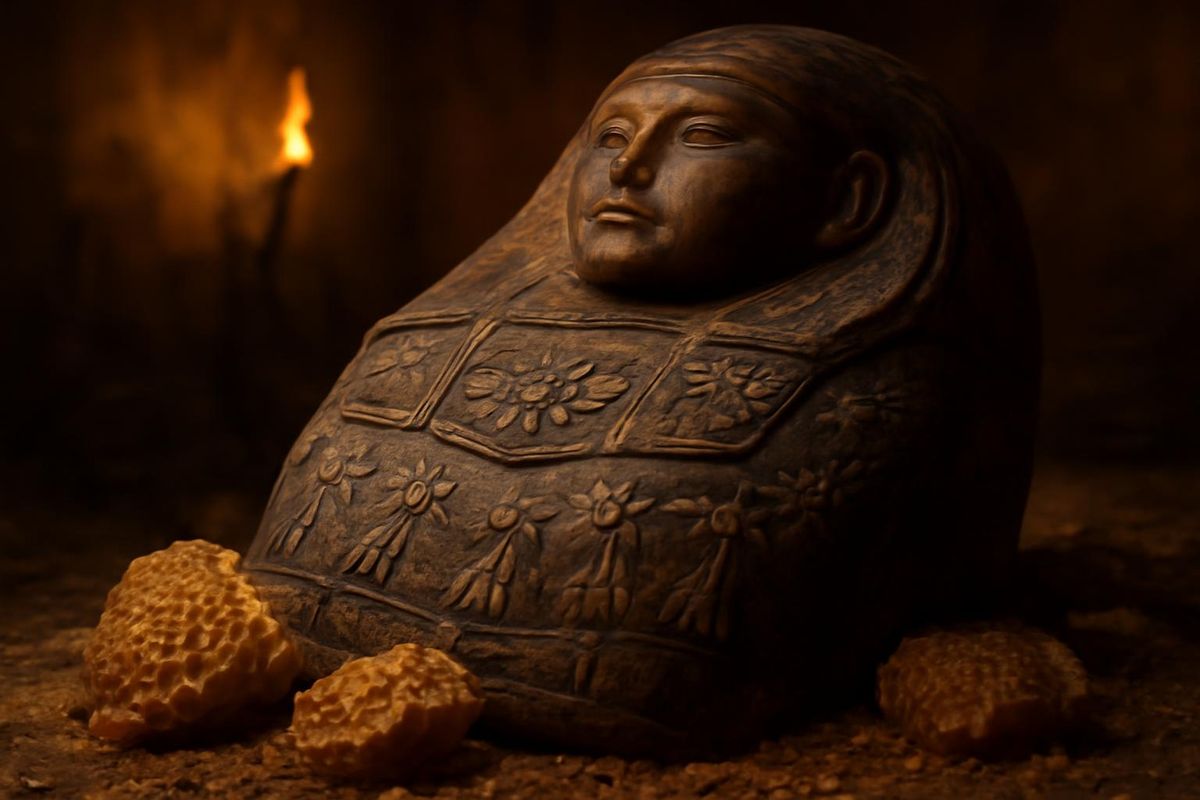
Tutankhamun, the last pharaoh of the 18th dynasty, ruled Upper and Lower Egypt from 1332 to 1323 BC. His life ended prematurely, likely in Luxor, after ascending to the throne at just nine years old. Most scholars believe he died around 18, possibly from a severe head injury, while newer studies suggest gangrene in his left leg due to a serious knee infection, potentially from a chariot accident. His tomb features numerous depictions of bees, which were adopted by Egyptian rulers as symbols of Lower Egypt as early as 3500 BC. In hieroglyphics, Upper Egypt was represented by the lotus and Lower Egypt by the bee. Historian Jean-François Champollion, who first deciphered Egyptian hieroglyphs, found that these symbols were synonymous with "to govern" in the Coptic language. The bee symbolized royalty, specifically associated with princes, princesses, and pharaohs, and was always depicted in relief form. Over Egypt's 3500-year history, the representation of bees has remained consistent (with two wings and four legs). Researchers assert that the bee in question is Apis fasciata, as its honey production was less significant due to year-round nectar availability in Egypt.
Read the full article at the source →
Source: beejournal.ru
This page is a short summary of the article; copyright belongs to the original source.