Several issues of the journal "Beekeeping" have featured articles on winter ventilation of bee…
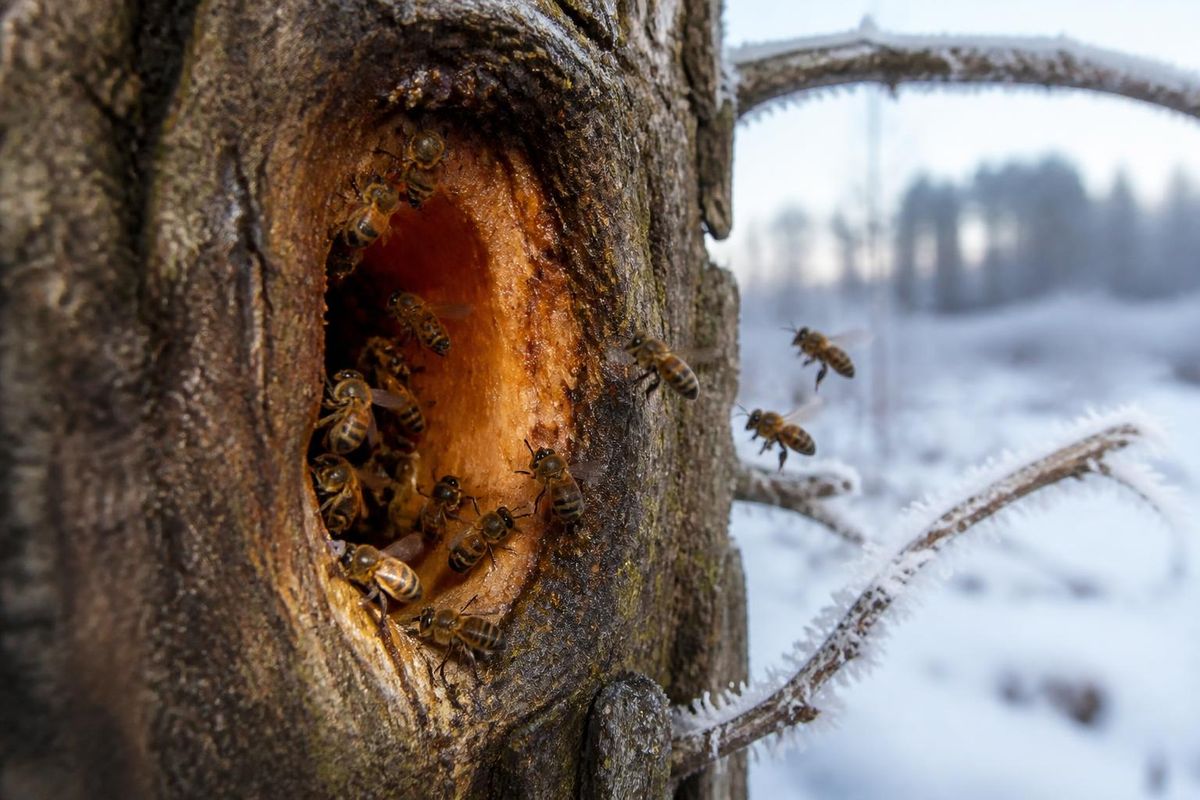
Several issues of the journal "Beekeeping" have featured articles on winter ventilation of bee hives, using tree hollows as a construction benchmark. A review of these materials raises some concerns. For instance, A. Nesterov's article "Methods of Ventilation" (Beekeeping No. 6, 1997) praises the advantages of tree hollows. What are these advantages? 1. Conical shape: hollows can be conical or cylindrical. 2. Sealing: while hollows are not impermeable to air exchange, they do offer some protection from the elements, similar to hives. 3. Honeycomb attachment: hives also secure combs effectively. 4. Air exchange: while hollows have space for ventilation, many hives also have ample space. However, air exchange is primarily needed for the cluster, not the space beneath the frames. 5. Perfect ventilation: who established this? Once a swarm settles, natural air exchange occurs due to temperature differences, similar to hives. 6. Hollows as the pinnacle of bee nesting: bees can build equally effective nests in various locations, suggesting that hives represent a regression in beekeeping development. Nesterov's arguments for creating hive designs akin to hollows are weak, and his illustrations suggest a lack of clarity in his understanding of ventilation.
Read the full article at the source →
Source: beejournal.ru
This page is a short summary of the article; copyright belongs to the original source.
🏷️ Swarming