Ripe honey is a thick, viscous substance with a specific gravity of 1.45–1.48 g
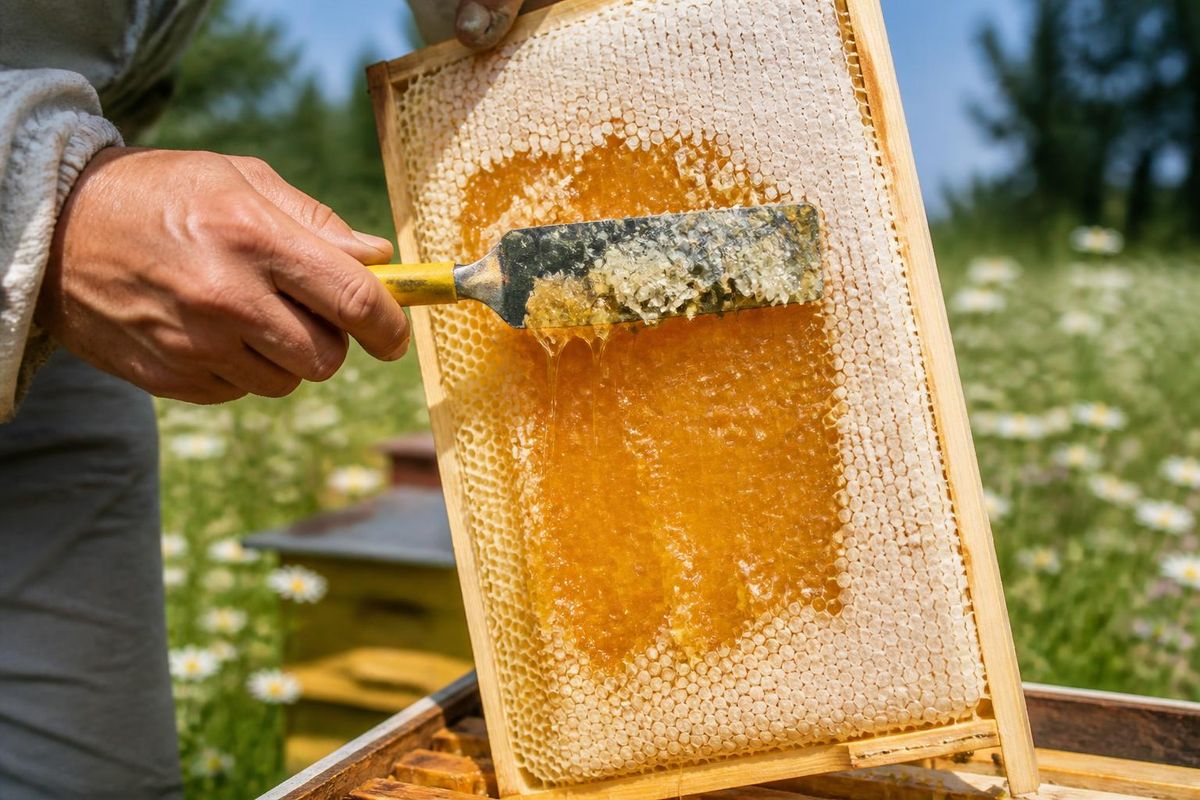
Ripe honey is a thick, viscous substance with a specific gravity of 1.45–1.48 g. Its flowability is a key characteristic, as bees seal it in the comb, which beekeepers then uncap and extract. Honey, derived from flower nectar, retains the medicinal properties of the plants it comes from and contains trace elements from the soil where those plants grow. Information about these properties can be found in reference books, while beekeepers or honey sellers can provide details about the specific soils. The medicinal qualities also indicate honey's quality. Typically, honey is extracted in August at temperatures between 18–25°C, dropping to 10°C or lower at night, while the internal hive temperature remains around 35–37°C. As honey cools in containers, it thickens, becoming available for sale by early September. Over time, honey crystallizes, which is a sign of good quality, although many prefer liquid honey. For instance, my granddaughter and guests favor liquid honey. To address this, I fill a 0.8-liter glass jar with crystallized honey, seal it, and place it in a larger pot in the sink. I run hot water around the jar, ensuring it doesn't exceed 40°C to preserve vitamins. In an hour, the honey liquefies without losing its medicinal properties, and this method can be used year-round.
Read the full article at the source →
Source: beejournal.ru
This page is a short summary of the article; copyright belongs to the original source.